Showing posts with label Kafka. Show all posts

Thursday, 21 June 2018

More truth - governments are bureacracies first and democracies (a distant) second


From Paul Marks at Samizdata:
To most governments and the witchdoctors in universities and media – and the establishment generally, rights are goods and services from government – not limits on the size and scope of government. They may or may not believe that there should be 13 Departments of State seeking to produce “the greatest happiness for the greatest number” like Bentham – they may believe they should be 11 Departments of State controlling society or 14 or some other number, but they agree that there should be a permanent bureaucracy which is neither elected or appointed by people who are elected (thus making elections to some extent a sham) dedicated to the Progressive agenda of spending ever more money and imposing ever more regulations.
We spend a great deal of time, effort and money fretting ourselves into a funk over how we are to influence this bureaucracy. This may be "Holding Them To Account", usually by writing letters, waving banners or signing petitions. Or it's undertaken via a process of electing representatives who, we believe, have the job to do that "Holding To Account" for us. These representatives spend a lot of time looking like they're doing that, certainly this is what they tell us (using our money to do so) but the evidence - at least to me - suggest that it goes more like this:
"One of the operating principles of authorities is that the possibility of error is simply not taken into account. This principle is justified by the excellence of the entire organization and is also necessary if matters are to be discharged with the utmost rapidity. So Sordini couldn’t inquire in other departments, besides those departments wouldn’t have answered, since they would have noticed right away that he was investigating the possibility of an error."
So the Chairman told K. And I fear this is what government is like for most people when they encounter its foibles. Bear in mind that, most of the time (this may come as a surprise to some of those witchdoctors in the media) most of the people are not remotely interested in, or engaged with, politics. You might think this terrible - in that pompous Eleanor Roosevelt "great minds discuss ideas" manner - but I think it is brilliant that we should have a society where many people really don't have to fuss themselves with what the government is doing right now. And, since you ask, I'd like even more of this - we should aspire to being able to live our whole lives free from petty regulation, clip-board waving officials, machine-minded bureaucrats with chewed pens, from the whole ghastly panoply of modern government.

Maybe a revolution would work...except, as Kafka again reminds us:
“Every revolution evaporates and leaves behind only the slime of a new bureaucracy.”

....

Saturday, 13 May 2017

In which Professor Mazzucato discovers government is useless


Various people had a bit of a laugh about a tweet from economist Mariana Mazzucato moaning about the officious nature of the UK Home Office.


The humour came, of course, in that Professor Mazzucato is a popular advocate of the argument that it's the state that drives innovation with the private sector toddling along behind making profits from all those clever things government has done (I oversimplify but not by much). The Professor's entire opus is about how government is brilliant.

I am, however, a little more interested in what this Tweet tells us about government. Mostly it tells us that, when it comes to administrative functions, government is rubbish. This doesn't matter when all it represents is some inconvenience and annoyance to an economics professor but it does matter when the issue in question is whether a family has any money at all. The other day, I was told that a housing association was giving out food parcels to some of its tenants because of the delay between getting an assessment under the new universal credit (or indeed, on occasions, other benefits) and actually getting any money. This isn't because the benefit isn't enough but simply a case of government being unable to process simple administrative tasks efficiently (and yes I know the system is complicated but that's about getting the right boxes filled).

We encounter example after example of this administrative uselessness, most of it annoying and delaying rather than life threatening and all of it reminding us that huge bureaucracies operating without either adequate scrutiny or any competition are, in truth, the very antithesis of innovation. Government, the acme of monopolistic bureaucracy, has always operated this way - in 'The Castle', Franz Kafka summed how this governmental incompetence is married with arrogance and a lack of self-awareness to great the impenetrable barrier of bureaucracy:
“Surveyor, in your thoughts you may be reproaching Sordini for not having been prompted by my claim to make inquiries about the matter in other departments. But that would have been wrong, and I want this man cleared of all blame in your thoughts. One of the operating principles of authorities is that the possibility of error is simply not taken into account. This principle is justified by the excellence of the entire organization and is also necessary if matters are to be discharged with the utmost rapidity. So Sordini couldn’t inquire in other departments, besides those departments wouldn’t have answered, since they would have noticed right away that he was investigating the possibility of an error.”
What Professor Mazzucato, a highly regarded denizen of Britain's Castle and an advocate of its greatness, has discovered is that the system will do what the system does, will do that slowly and badly, and regardless of your job title will treat you with the same impersonal disdain you thought was reserved to common sorts on benefits. Your form will sit in a pile, will be processed in due course and will be returned if it is incorrect or incomplete. And there is no option to expedite matters by buying the mayor an expensive cup of coffee.

In the end government is useless. Then we revolt. And, as Kafka said about revolution:
"Every revolution evaporates and leaves behind only the slime of a new bureaucracy."

....

Saturday, 2 July 2016

The 'March for Europe' reminds us why we voted to Leave

****

We voted to leave the EU on the 23 June because we wanted to live in a democracy. It really is as basic and simple as that - the EU was, and doubtless remains, utterly undemocratic. When Sukarno became leader of newly independent Indonesia after the withdrawal of the Dutch he created the concept of guided democracy where the trappings of democracy existed (elections, MPs and so forth) but the system was controlled - guided - by appointed experts.

Today some few thousand people marched through London demanding that the result of the 23 June referendum be ignored or overturned. The march included the usual bunch of ageing pop stars, alternative comedians and TV personalities accompanied by the go to demagogues of the radical left like Owen Jones. And while the official line was studious in avoiding any suggestion that the referendum should be set aside or its result ignored, this was the subtext - as one of the march's headline speakers, David Lammy MP made clear a day or two ago:

"The referendum was was an advisory, non-binding referendum. The Leave campaign's platform has already unravelled and some people wish they hadn't voted to Leave.

"Parliament now needs to decide whether we should go forward with Brexit, and there should be a vote in Parliament next week.

"Let us not destroy our economy on the basis of lies and the hubris of Boris Johnson."

You see, voters were too stupid to understand the nuanced, subtle argument that wise advocates of the EU were putting forward - just as Sukarno felt that freshly independent Indonesians needed guidance, David Lammy thinks we should just pat the electorate on the head and then say something like, "very good children, very good. Now the grown ups will show you what you should have done."

This arrogance, this assumption that people like David Lammy are better able to judge what's good for voters than those voters themselves, lies behind the leave vote. What we see is an undemocratic system, distant and incomprehensible, that rains decisions - some good, some stupid and many simply nannying and finger-wagging - onto the great unwashed horde of voters. The EU is the acme of this system - an entire government that looks as if it might be democratic but, in reality, has all the accountability and transparency of Kafka's castle:

One of the operating principles of authorities is that the possibility of error is simply not taken into account. This principle is justified by the excellence of the entire organization and is also necessary if matters are to be discharged with the utmost rapidity.

This was what those people were marching to support - an opaque, arrogant, unapproachable bureaucratic morass sold to us with flags, stars, bland statements of brotherhood and the judicious spreading of cash to favoured organisations. It's very likely that the government will ignore this march of the anti-democrats but while it's there it acts as a reminder why we voted to leave. We voted to get more democracy into the world of ordinary people. We voted against the guidance of the elite and in favour of a more free and more open system of government. We voted for democracy and I intend doing my damnedest to make sure we get that democracy.

....

Tuesday, 17 September 2013

Is it ideology or bureaucracy? On the failings of social work.

****

Douglas Carswell points out the cruel truth about the Daniel Pelka case:

The boxes were ticked. Training was complied with. Meetings were held. Meanwhile a little boy went hungry and his injuries grew worse. Officialdom's culture of compliance produced only inertia and incompetence. This should make us alarmed and very, very angry.

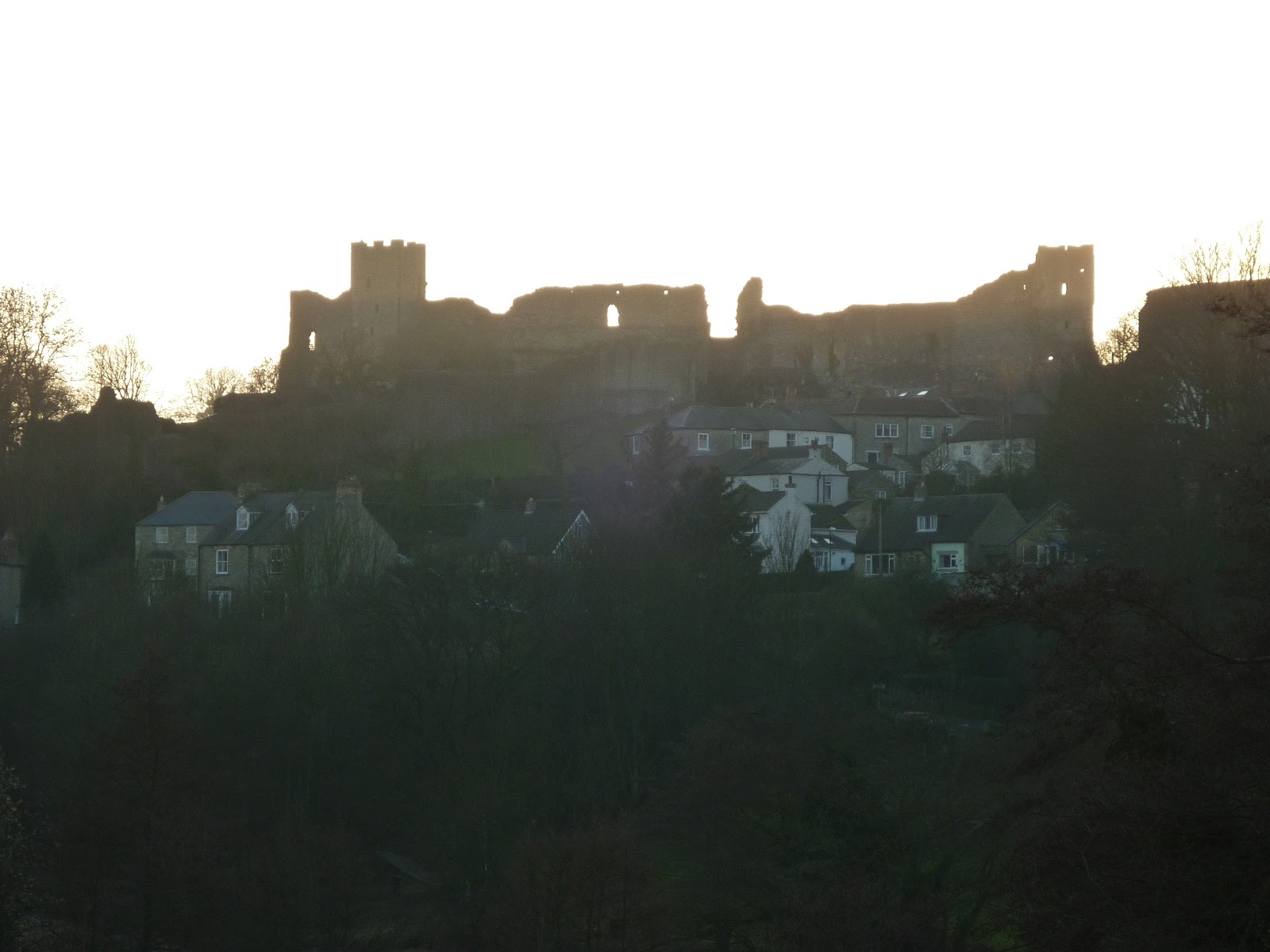
The suggestion here is that bureaucracy - Kafka's castle - was to blame for the lack of intervention. But why when:

Since the 2007 killing of Baby P, there has been a huge surge in the number of youngsters being removed from their families by social workers.

The children’s court advisory service dealt with 10,199 cases between April 2011 and March 2012 – a near-doubling of the numbers in just four years. 

It is almost impossible to believe that, in this world of heightened awareness, authorities didn't think to intervene, merely to jot down details of the child's distress in their notes.

With each case we see the same explanations and excuses, the same sophistry as social workers fail to explain why they pursue some parents to the ends of the earth - parents who are less of a threat than were the parents of this poor child.

And why are councillors - me included - so complacent or reluctant to ask the hard questions of our social services management?  Can we really be content, given that we haven't asked the questions, that everything is fine? Or are we nibbling at out nails muttering "there but for the grace of god"?

The problem isn't simply bureaucracy - that is just a reflection of the problem. The real concern is the ideology of social work, the faux non-judgemental approach, the obsession with 'cultural sensitivities' and the view (unsupported by evidence) that there are no demographic or social factors that influence child abuse or neglect. This isn't true and social workers - as well as the ideologues who define social work practice - know it isn't true.

Like so many areas ruled by experts, social work (and the parasitic growths of lawyers and such that attach to the business) has become impenetrable - the verbiage of the profession excludes anyone seeking to understand, the sophistry of the professionals' defence is iron clad in its certainty and the elimination of challenge is now so sophisticated that it is impossible for us charged with being "corporate parents" to exercise that role in any way beyond the guided tweeness allowed by social workers.

Right now we take too many children into care yet allow children like Daniel Pelka to remain in terrible circumstances. Right now social services leaders prefer to blame the problem on government, "the cuts" or "austerity" rather than explore why they are failing.And when those unfortunates arrive in care, we fail them again  - as a momentary glance at educational performance, crime and the tragedy of grooming would tell us.

Perhaps we need to start behaving like parents - interfering, judging, worrying, badgering and annoying. Getting in the face of those we care fore - not because we don't like them but because that's what parental love is about.

....


Saturday, 17 November 2012

Apathy, elitism and bureaucracy - an ancient problem


Every revolution evaporates and leaves behind only the slime of a new bureaucracy.


So it’s that apathy thing again. You know, people who can’t or won’t be bothered to waddle down to the village hall to vote. Apparently this is “humiliating” for the Prime Minister – or at least that’s what the FT says:


David Cameron’s hopes that Britain would embrace his vision of US-style elected police chiefs lay in tatters as the public turned its back on his latest attempt to change the way the country is run.

An inquiry was launched on Friday by the Electoral Commission into a day of apathy at the ballot box, which saw only one-in-seven voters turn out in an election the prime minister insisted would transform Britain’s policing and which cost £100m to set up.


But it isn’t really as simple as that. And neither should we be as bothered about low turnout as us political sorts say. Don’t get me wrong, I do think we should vote – early and often as the saying goes – but I don’t have a problem with people who choose not to do so. Or indeed for the many folk whose lives are liberated enough for the act of voting not to cross their minds.

Last Thursday’s election saw record levels of apathy – mostly because the government (and the Electoral Commission) lost sight of some basic marketing principles. Police & Crime Commissioners may indeed by a better mousetrap but unless you tell people about this – repeatedly until you’re bored with the sound of it – they won’t avail themselves of your improved rodent catcher.

However, this still doesn’t matter. If people want to vote they will go out and vote. Take note that in Corby where 90% of the UK’s political class – not to mention the hordes of press and TV media folk – has been camped out for the past two months, the turnout was a measly 44%. Every house in Corby had a leaflet – probably a dozen leaflets, if by-election behaviour was normal – and despite this over half the registered electorate didn’t bother.

Why didn’t they bother? Probably because the outcome (and the act of voting itself) really doesn’t matter to them very much, if at all. And why should it unless we make it purposeful? A parliamentary by-election changes nothing, all it does is find a new representative to fill a set of vacated boots. Oddly enough the PCC elections were rather more significant – at least there we were picking someone to be in charge of something!

In an unusual departure the Daily Mail spots the problem:


The reality is that the public is hugely disillusioned with a gilded, out-of-touch political elite which seems incapable of connecting with the aspirations and anxieties of ordinary people.


People really are getting to believe that “it doesn’t matter how you vote, the government always gets in”.  And this is so true – that gilded elite the Mail describes will carry on in ‘power’ even though we vote some of them out and some of them in.

The really funny – or maybe depressing - thing about this is that it’s not new. Here’s S E Finer writing about the world’s first government, Sumer:


“Equally there was a contrast between the mass of artisans and rural labourers, and the ruling elite which comprised the rulers and their courts, the temples and their priesthoods, the scribes and accountants. This elite was very narrow; the more so since the keys to power...were so very difficult to acquire.”


Back then legitimacy – what we like to call “mandate” – didn’t come from those artisans and rural labourers but from the gods. Today, legitimacy in theory comes, via the act of voting, from the people. The thing that those apathetic Britons have spotted is that withdrawing that mandate by not voting exposes the elite for what it is – a self-selecting, self-supporting court surrounding the places where power is executed.

Thursday’s apathy isn’t a reflection on the current government but a consequence of government by the unaccountable gilded by the thinnest sheet of democracy. When I look at the areas where us Councillors are told we have no real jurisdiction (despite de jure responsibility) this becomes ever more clear – education, child protection, planning, licensing; all now so rules bound as to make the councillor’s role little more than a rubber stamp.

To give just one example – you thought, did you not, that the schools are under “council control”? After all there’s an Education Department filled with Directors and Assistant Directors. Think again. The funding goes straight from Whitehall to the schools via a formula set in London. And decisions about the management of those schools are made by a thing called the “School’s Forum” that (in Bradford) meets in private and contains representatives from the schools, council officers and so forth. Councillor’s – the folk you elect to make decisions on your behalf – have no role to play in this at all. Except to be blamed when the school’s fail.

This is where the apathy comes from – MPs and councillors stop being representatives and turn instead into guides through the castle. Our role is to handle ‘casework’ and to act as ‘community leaders’ rather than the idea of representative democracy – that we send someone to the place where the decisions are made so he or she can help make those decisions on our behalf. Today, a councillor or MP can sit on all sorts or panels, committees and boards while doing nothing other than accede to decisions made elsewhere by the bureaucracy.

....