Showing posts with label nannying fussbuckets. Show all posts

Sunday, 10 May 2020

Public health failed us...comprehensively and catastrophically (but nothing will change)


 Public Health England has, as its first purpose, the task of protecting the nation from infectious disease. You'd have thought that an agency with over £3 billion to spend would have been a little better prepared for a pandemic.

There's a reason. Public Health England, cheered on by the wider public health profession, by the NHS ideologues obsessed with "prevention" and by a cacophony of media know-alls, spent 87% of its budgets on something other than protecting us from infection and preparation for epidemic.
PHE’s budget for ‘protection from infectious diseases’ rose from £52 million in 2014/15 to £86.9 million in 2018/19. There have been no cuts in this crucial area. Still, £86.9 million is only 2 per cent of the public health budget. If you include routine vaccination programmes, the amount spent protecting the public from infectious diseases rises to 13 per cent.
If you want to get angry about response to pandemic, don't focus simply on the decisions taken now in the face of a pandemic, look at decades where the official public health position was that the big problem is now NCDs - "non-communicable diseases" - by which they mean drinking, smoking and eating the wrong sort of food. Billions of health cash was splurged on ineffective campaigns to get us to lose a few pounds, to browbeat recalcitrant smokers into quit programmes that mostly don't work, and to nanny the hell out of all for choosing to drink 15 units of alcohol in a week.

I don't expect anything much to change, the ideology of modern public health infects not just those it employs but legions of councillors, doctors, whitehall bureaucrats and MPs who like nothing more but a good nag at ordinary folk for daring to do things those ideologues have decided are a sin against the cult of health. As the coronovirus epidemic wends its inevitable way, it has been accompanied by a steady drip of statements from the usual public health culprits about how the disease shows we must drink less, stop smoking, eat only the approved diet and indulge in all sorts of exercise. We're told, of course, that this will "protect the NHS".

There'll be a perfunctory few little campaigns about disease control ("wash your hands", "use a tissue") but these will pass as the public health ideologues return to their real love - telling people their lifestyle choices are bad for their health and, by implication, a crime against the holy NHS. Endless, ill-informed and unquestioning media reports will be aired explaining how we're all too fat, how vaping is a really bad thing, how having even a sniff of white wine will kill your baby and how we should all get bicycles so we're super fit when the white van kills us.

At the start of this epidemic the public health business, from the WHO down to local council fussbuckets, stood there like frightened rabbits staring unblinking at the virus as if this wasn't something that people had predicted might happen. These ideologues - obsessed with getting government to regulate your life - simply weren't ready, had made no preparation and allowed the misinformation of an authoritarian communist government to determine international policy. At the local level - across just about every developed world country - public health hadn't even bothered to included epidemic response in its plans and strategies. Plenty of room for quit smoking programmes that don't work but barely a mention of what we'd do faced with a pandemic.

Sometime in the coming year there'll be a reckoning. Sadly it'll be the wrong kind of reckoning as the public health ideologues will be the ones asked to write it. What we'll get is how if we had better "general health" (code for not smoking, drinking or eating beefburgers) then we'd be less susceptible to an epidemic, followed by a redoubling of the same fussbucketry about your lifestyle.

If I was in charge of a local council public health budget, I'd be shifting pretty much all of it into programmes aimed at shielding the old and vulnerable from infection plus improving the care we provide for such folk. That would, however, actually help so don't expect the control freaks who run public health, the busybody council leaders, the lobby-victim MPs or the lazy media to do anything other than carry on with the current, officious and ineffective public health policy.

....

Friday, 8 February 2019

Deflection (or how to avoid facing up to your nannying fussbucketry)


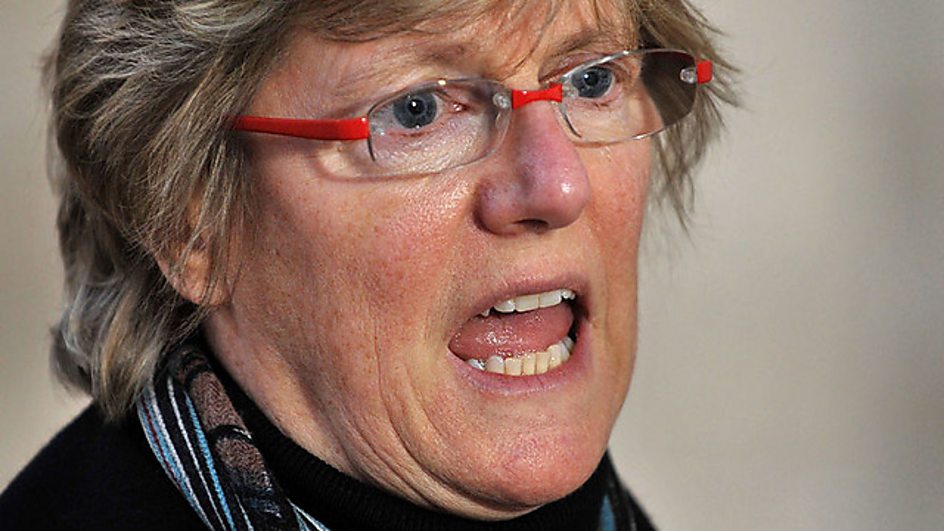
People who are challenged by journalists, politicians or the public have take to responding by accusing the challenger of a sin against proper language - you're sexists or racist or transphobic or just plain patronising. Such a response shifts the discussion away from the substance of the debate focusing instead on what words are being used in the debate. Here, from nannying fussbucket in chief, Dame Sally Davies:
Dame Sally was questioned about the nannying claims by Mr Robinson.

He asked her: "You always have this question, so I know you are familiar with it - this balance you have to get between nannying on the one hand, or being accused of it at least, and on the other hand banality, stating things that are obvious."

Dame Sally shot back: "I thought you were going to be sexist."

Robinson asked, "What bit of that is sexist?" and Dame Sally replied: "I wonder whether you would say to a male chief medical officer..."
The story becomes Nick Robinson's language rather than whether or not it is "nannying" to issue guidance to parents on limiting screen time (what this has to do with the chief medical officer god alone knows). Dame Sally's question is unanswerable because we only have one chief medical officer and she is (if I'm still allowed to say this) a woman.

Over recent times public health people have become really sensitive about being called 'nannies' - Duncan Selbie, the boss of Public Health England famously denied (despite backing sugar taxes, smoking bans, minimum unit pricing and a host of other interventions into people's choices) being a nanny:
It’s important not to say we are into nannyism. That winds me up because I never had a nanny in my life. It’s too important to leave it to the state. This is about individuals.
It seems to me that saying it's 'nannying' to boss the public around, lecture them about their 'bad' habits and treat them as pariahs is both accurate and guaranteed to wind up public health people. Mostly because they know it's what lots of people think.  Dame Sally, Mr Selbie and all the others really are nannying fussbuckets.

....

Wednesday, 30 May 2018

Who are these joy-killers who want to ban Tony the Tiger?


Sunny Jim - the original cereal cartoon character here in stuffed toy form

I could launch into a full scale rant at the raft of proposals from the Health Select Committee aimed at combating child obesity - ad bans, mandatory reformulation, restrictions on fast food takeaways and a ghastly, ignorant polemic about the fiction that is "junk food". It is everything we should loathe about modern government, what Chris Snowdon describes as:
...taking a bunch of policies that do not work and piling them on top of another bunch of policies that do not work in the hope that some weird alchemy turns them into more than the sum of their useless parts
Among this "whole systems approach" is the proposal to stop food manufacturers using cartoon characters in their marketing:
Cartoon characters should be banned from promoting junk food to improve childhood obesity rates, a leading group of MPs has suggested.

The Health and Social Care Select Committee has called for a ban on "brand-generated characters or licensed TV and film characters" which are used to promote foods high in fat, sugar or salt on broadcast and non-broadcast media.
It would mark the death of Tony the Tiger and the Honey Monster as represents the worst sort of crass interventionism - annoying fussbucketry that won't make a jot of difference to obesity. I know this because cartoon characters have been used to promote breakfast cereals since Sunny Jim first sprang into life in 1902.

The characters we're familiar with - Coco the Monkey, the Honey Monster, Snap, Crackle and Pop, and the legend that is Tony the Tiger - have all been around for decades or more. Tony first told us Frosties were Grrrrrreat back in 1954, the Rice Krispies kids (originally goblins but, hey, what's the difference) date from 1930 and the Honey Monster began insisting Henry McGee "tell 'em about the honey, mummy" in 1976. Even Coco - a latecomer (succeeding Tusk the Elephant) - arrived on our cereal packets in 1991. None of these wonderful, child-friendly characters has made children fat, all they've done is give children a smile and helped mums' make a brand choice.


Now a bunch of joyless nannying fussbuckets led by the self-appoint Nanny-in-Chief, Sarah Wollaston want to put an end to all this fun because they like banning stuff and want children to have dull lives featuring uplifting, nanny-approved diets that don't involve anything that looks like it might appeal to those children. Yes folks, Sarah and the Fussbuckets want eating to be a boring, unpleasant, state-approved thing rather than any kind of pleasure. And all to deal with an almost entirely fictional obesity crisis.


.....

Wednesday, 25 April 2018

You want to make food more expensive? For the children? Give us a break.


It is a rare consensus when all the leaders of Britain's political parties get together to agree on something important:
Among other proposals, they call for the tax system to be “used to make healthy food cheaper and discourage unhealthy choices both at home and on our high streets”.

The leaders also say the levels of sugar, calories, salt and fat in junk food should be lowered overall, while more training should be given to medical staff to help people with nutrition.
In a world where there are a thousand problems ranging from poverty and family breakdown to murders and robberies, all our political leaders can manage to agree on is that food should be made more expensive. And who does this affect - has somebody mentioned to these sanctimonious fussbuckets that it will be the poorest in society who will be hurt most by this policy?

We're told that we need more expensive food because obesity is one of the greatest health challenges of our time. Bigger than AIDs, more challenging than cancer, more cursed than malaria, more frightening than dementia. Yes folks, you need to pay more for your food because, damn it, you're all a bunch of lard buckets and the government needs to force you to eat properly. It's for the children.

Yes. The Children. Those children whose mums and dads won't be able to buy as much food as they did before because a self-righteous bunch of snobbish know-alls marshalled by a fat TV chef have decided this will be good for you. I know they'll tell you it's only "junk food" but this isn't true - it'll be bread and cheese and butter and bacon and cereals and burgers and orange juice and...over half of what you buy to make up a balanced diet for you family is what these tinpot health dictators call HFSS (high in fat, sugar and salt). And these jumped up nannies want it all to be more expensive - so your children (who almost certainly aren't fat) don't turn into obese whales and die before you do.

Worse, the plans aren't just about making the everyday food you feed your family more expensive, they'll make it taste less good by forcing the manufacturers to take out the sugar, salt and fat that gives it the great taste.

There is no obesity crisis. It is a manufactured moral panic based on flimsy (I'm being kind here) evidence that we're all getting fatter and fatter. We aren't - we're on average a bit heavier than we were in the 1980s but this is not unhealthy (it could be argued it's actually healthy). The figures are skewed by an ageing population - middle age spread is, as we all know, a reality - and haven't risen for a decade.

I'm probably shouting into the void here but we really need to tell Jamie Oliver, Hugh Thingy-Wotsit, Channel 4, the BBC, leaders of political parties who'll do anything for a cheap headline in the Guardian (every snobby fussbucket's favourite rag), and the massed hordes of public health campaigners to go take a running jump off a very high cliff. We don't need a load of rules telling food manufacturers what they can and cannot put in what they sell (other than ones to make sure it's safe). We don't need a bunch of prissy middle-class media sorts going around telling ordinary people - on the basis of no knowledge or expertise - what they can and cannot buy to feed their children. And, above all, we don't need a load more new taxes designed specifically to make food - food ffs, the basis of life - more expensive. Just leave us alone will you.

....

Friday, 30 March 2018

Tax the poor - the nannying fussbucket's favourite policy


From Chris Snowdon comes this:
Is there anything more nauseating than the sight of billionaires buying up newspaper space to lobby for higher taxes on poor people?
This is the final sentence in an article taking apart an advertorial in the Daily Telegraph paid for by Bill and Melissa Gates. The article in question was absolutely shocking - 'brain dead' I called in on Twitter - and, as Chris points out, pulls out all the usual lines from the fussbuckets about evil corporates, advertising and how the answer lies in more controls, more regulations and in making disapproved food more expensive.


We should also, I suspect, be a little bit worried at very rich people buying newspaper space to promote a political ideology and doing so in a way that pretends it is proper news coverages not advertising.

....

Wednesday, 20 September 2017

East Riding CCG: Nasty judgemental fussbucketing nannies.


You're in pain. You've already waited an age for the operation. And then you get a letter from some nameless, faceless official of the NHS telling you that because you're a smoker or a bit chubby you have to wait an extra six months. Just because the bosses of that nameless, faceless NHS bureaucrat disapprove of your lifestyle.
The measures have been introduced by East Riding CCG, which has denied that it is about saving money, saying it is to "encourage and empower patients to take greater responsibility for their lifestyle choices."
This won't save the NHS a farthing. It's just being used as a painful and unpleasant stick to beat up people whose choices the scummy fussbuckets in the East Riding NHS don't like. I've no issue if a surgeon or doctor says "look mate, there's no point in me doing this knee operation until you lose some weight" or "you should quit smoking if you want this treatment to work" where the evidence is based on the actual case, the real information about a real patient. But to impose an arbitrary delay - a nasty, uncaring delay that might kill people - just to make a point about their lifestyle is worse than unforgivable, the people saying it should be escorted out of their well-paid NHS jobs because they clearly aren't suited for a caring service.

....
The measures have been introduced by East Riding CCG, which has denied that it is about saving money, saying it is to "encourage and empower patients to take greater responsibility for their lifestyle choices."

Read more at: http://www.yorkshirepost.co.uk/news/health/overweight-people-and-smokers-to-be-denied-surgery-for-six-months-in-four-yorkshire-hospitals-1-8763080

Friday, 7 July 2017

Smoking bans - "you've taken away one of the few nice things in the lives of people you've never met."

From Old Mudgie (or his comment section to be accurate):

It is this type of pub that has been murdered by the smoking ban. Not the sort of place that the ban's advocates would deign to visit. Not the sort of area where people talk about hop terroir or food-pairings. But the last community back-bone of already depressed areas where me and my mates would meet for a few beers, a chat and yes maybe a ciggie. Pubs that don't get in the guides, don't get covered by the self-appointed double-barreled beer gurus on the internet. Pubs that provided a meagre living to one or two people who've put their whole life into keeping them open.

The group who've been hardest hit among my acquaintances are working single men, often middle-aged (not a demographic that the crafterati think about very much) for whom the local was often the only social outlet they had. This has led to more loneliness and isolation in this group and, by their nature, they aren't a group that get covered very much.

So as you sit in your smoke-free gastropub commenting on how delicate Pierre manages to get those organic scallops you can rest easy knowing that you've taken away one of the few nice things in the lives of people you've never met.

The smoking ban was unnecessary, illiberal and killed more jobs and maybe people too than it ever helped.

....

Wednesday, 10 May 2017

It's time to close down public health and get our lives back


It has to stop. There is no basis in protecting health. It is quite simply driven by the mission of public health to treat smokers as pariahs, people to be pushed to the margins of society:
The smoking ban should be extended to include all outdoor public areas, according to health experts.

Exclusion zones should stop smokers lighting up in parks, pub and restaurant gardens, at public events and shopping areas.

All university campuses and schools, beaches and sports and leisure facilities should also fall under the crackdown.
Imagine Glastonbury, Reading or Leeds Festival without smoking (of any kind). Consider what will happen to your local when smokers have to move half a street away to enjoy a fag. Those smokers - getting on for a fifth of the population - won't be there. And what happens when a fifth or more of your business goes away? No more local pub. Half the nations festivals and concerts unviable. Empty bars. Closed restaurants. Hundreds of thousands more jobs destroyed by public health.

I'll say it again - there is no health ground for this at all. None. Banning smoking indoors at least had the merit of a very marginal health benefit to non-smokers working in a smoky environment. These proposals from the Royal Society of Public Health are quite straightforwardly an attack on smokers and their right to make the personal choice to inhale tobacco smoke.

I haven't smoked for over ten years but I don't see why those who choose to smoke should be ostracised, excluded and treated like pariahs. In fact I find such an idea to be offensive and the people making it to be the worst sort of hideous fussbucket. The fanatics of public health aren't going to stop until all of the pleasures on their list of sins are marginalised - booze, fags, burgers, fizzy drinks, red meat, bacon, cheese, chocolate, boiled sweets, jam, cheese, cake, cream: all labelled, resitricted, controlled, hidden away, taxed and if they can get away with it banned altogether.

Children will be force fed a grey, dull vegetable diet washed down with tepid water. The legion of tutting health worrywarts will peer over their specs at mums who let their kids have a Happy Meal. We'll be weighed, measured, lined up, checked and made to fill in forms describing, in ever more detail, our bad habits. All so some public health "nurse" can lecture us about eating or drinking the grey uninteresting pap that the Church of Public Health recommends.

None of this is about making our lives better. It's not about our health. It's about an ideology of control. A belief that because the state provides healthcare this somehow gives them the right to tell us how to live our lives, to ostacise us for smoking, to denormalise drinking, to tax sugar, and to force manufacturers to take anything approximating to taste out of the food we buy.

It's time we stopped indulging these nannying fussbuckets. Time we told them to butt out of our lives. Time to point out that whether we smoke, drink, eat cake or go to a burger bar is absolutely none of their bloody business. Time to close down public health.

.....

Monday, 21 November 2016

Public health would really like to ban Christmas (and use your taxes to campaign for this ban)

OK I exaggerate but only slightly. It does feel like it's only the lack of opportunity that's stopping public health from banning Christmas - or at least anything over Christmas involving things they'd like to ban: drinking, staying up late, going out to parties, kisses, eating rich puddings with custard or cream, taking the kids for a festive Happy Meal, lashings of ginger beer, red meat, sausages, cheese, sleeping in the afternoon and anything else involving any sort of pleasure. Including of course the annual (and I'm told, 'much loved') Coca-Cola "Happy Holidays" truck tour.

As you know, I find it very difficult to why it's any part of anyone's business whether or not the Coca-Cola Christmas lorry arrives in town. Especially if your reason for objecting to the bright red truck coming is because you've convinced yourself that somehow Coca-Cola are entirely responsible for children being fat with poor teeth. Here's astroturf "campaign group" Food Active"(100% funded by your taxes):
It is with huge disappointment and concern that we see Coca-Cola are once again using the Christmas period to promote their sugary drinks across the North West in their “Happy Holidays” truck tour.

We are aware of the damage caused by these drinks which play a major role in the soaring obesity and type 2 diabetes figures in our region which place a huge and growing strain on the National Health Service.

The Chief Executive of the NHS has said that “We are now spending more on obesity-related conditions … than we are on the police or fire service.”

In the North West, 35.2% of ten-eleven year olds are overweight or obese and 33.4% of five year olds have teeth decay, largely down to their consumption of sugary drinks.
This contains some untruths - firstly the cost to the NHS of obesity (at least according to those libertarian folk at Public Health England) is £4.2 billion whereas the cost of policing in 2016 was £12.6 billion so Simon Stevens is making stuff up again. And secondly, childhood obesity and tooth rot is not - even a little bit - "down to...consumption of sugary drinks". Even if they were, then it's almost certainly not Coca-Cola that's the primary culprit. More to the point, we know absolutely how to reduce the incidence of dental caries in children - good dental hygeine (you know, brush your teeth twice a day, visit the dentist).

But public health people lying isn't my beef here. Rather it's why on earth they think banning Coca-Cola from promoting its products (including zero and low sugar products that amount to over half of the sales) is any of their business. What is truly offensive here is that your and my taxes are being used to mount an ill-informed and misleading attack on a private business. Hardly a day passes without one or other story about local councils being forced by budget cuts into closing and reducing services. All of the money for 'Food Active' comes from local council budgets in the North West and they are using it for the express purpose of lobbying for national government to change the law (as well as wanting to ban Coca-Cola's "Happy Holidays" promotion).

So next time Manchester or Liverpool council leaders wring their hands about shutting down a library or cutting funding for a community centre ask them how they can justify spending money on astroturf political campaigns like 'Food Active'.

....

Thursday, 18 August 2016

Baby Boomers - living out the great binge!


The human race has not devised any way of dissolving barriers, getting to know the other chap fast, breaking the ice, that is one-tenth as handy and efficient as letting you and the other chap, or chaps, cease to be totally sober at about the same rate in agreeable surroundings.
So said Kingsley Amis and for once he was right. Yet we're collapsing again into the stew of temperance by allowing the obsession with living forever to dictate to those who make the rules. And it seems that us Baby Boomers are the last bastions of sense and decency - OK call it hedonism - in this world. We created the great binge!

Between 1992 and 2006, the average weekly alcohol consumption for people aged 45–64 (capturing the majority of baby boomers) rose by 85%, compared with a 50% rise in those aged 65 and over, and a 45% rise in those aged 16–24. As baby boomers have aged, follow-up studies with this cohort reveal similar findings. Between 2005 and 2013, the percentage of men drinking eight or more units of alcohol (the equivalent of four pints of normal strength beer) on any one day in the past week changed by only 5% in the over 65s. In contrast, this rate of drinking fell by 30% among 16–24s, 19% among 22–44s, and 12% among those aged 45–64.

They hate us for this those New Puritans with their temperance.  The cult of the NHS demands that any health problem that might be seen as 'self-inflicted' must be dealt with. Drinking, smoking, eating too many burgers - these things are not to be tolerated. And when you or I respond with "it's none of your business", the fanatics from the Church of Public Health peer down at you and say: "but it is, think of the cost to the NHS". The argument is closed, action must be taken to stop us from enjoying ourselves by drinking just a little more than they think we should. For some - egged on by the old temperance lobby - even the merest drop of the demon drink will lead to perdition and doom (defined these days as a 'cost to the NHS').

The latest in a long line of misperceptions is that we - the baby boomers that is - don't understand that boozing carries health risks:

Trying to change baby boomers’ behaviour and attitudes towards drinking and drug use is a tough sell to a generation now steeped in lifelong attitudes shaped by a lack of awareness of the harms of alcohol and substance misuse.

This is, of course, utter claptrap. Of course we know it's bad for us, it's just that we're happy with the trade-off implied by hedonism. We're no more victims of advertising than smokers or kids wanting sweets. If not drinking now means we live longer - maybe - can we be so sure that extra bit of life will be a pleasure too? Or will it be an uncomfortable, perhaps painful, few months dribbling slowly to death in a nursing home? Us boomers look around at our friends and neighbours and decide to live for now rather than for some possible future.

There's another aspect of this claptrap. All this high octane living doesn't seem to be killing us off (rock stars aside and even there most aren't dropping dead). The pubs are filled with people in their 60s and 70s living happy and fulfilling lives. Look down the seats on your holiday flight and check out all those boomers spending the kids inheritance on cooking themselves in the Spanish sun (skin cancer - bring it on) and meandering round Florence, Prague and Madrid lapping up the culture (plus the food and wine, of course).

For the po-faced, narrow-minded, judgemental folk at the Church of Public Health all this won't do at all. We (the Boomers that is) need to be stopped because we're killing ourselves and worse still, we're setting a bad example to the young. Think of the children! So they agitate for advertising bans, for higher taxes, for distribution controls, for watering down the beer, and for draconian licensing regulations. Only when we've been nudged with a large baseball bat into cutting down our boozing will these zealots be happy.

The problem is that we aren't budging. Why the hell should we forgo pleasure now for the sake of an uncertain future. We don't want to die but we do at least recognise that this is going to happen, that we aren't going to live forever. So in the diminishing years left to us, why shouldn't we drink and eat for pleasure? Don't expect us to limit our drinking to a couple of pints on a night out and our eating to a fat-free, salt-free, sugar-free, meat-free, taste-free, overcooked pap. We're not going to do this and the more you nanny us the louder we'll get and the ruder we'll get about the fussbucketry of public health. If they want to live a stressful, dull life without pleasure that's fine by me but, for the rest of us, hedonism rocks. We started the great binge and boy do we intend to finish it!


Monday, 15 August 2016

Foucault's Truth - or why most public heath spending is a waste of money


I don't like what's called public health very much. Not because I think there are no environmental contributors to poor health but because what we now call public health isn't about removing things like pollution, exterminating disease-carrying vermin or making the air more breathable. It's about adopting the view that, because government funds healthcare, you have fewer rights over what you consume.

Yesterday I clicked through to a more-or-less incomprehensible blog post written (I think) by a chap called Robert Dalziel*. The post is titled "Nudge, Nudge, Public Health England and Behaviour Change" so is positioned right at the heart of what ought to be the public health debate. It even quotes a critical review of Thaler and Sunstein's 'Nudge':

Though costumed in the guise of pop economics, complete with a cute logo – Nudge is, in fact, a manifesto for the new paternalism… don’t be fooled.

So far, so good. We've a critique of nudge - what I call the sledgehammer approach to implementing behaviour insights - and the hope that the writer is going to reject such paternalism, cast aside the nannying fussbucketry of today's public health, and return the idea to its roots in making our environment more healthy. Sadly, this appears not to be the case:

So what is ‘dispiriting’ you and me Mark is an ostensibly ’arms length’ PHE resourcing and implementing a paternalistic libertarian approach to health improvement driven by the Behavioural Insights Team based on nudge theory and clearly supported by senior Tory politicians and Civil Servants.

Our writer's objection isn't a liberal objection to 'nudge' but is a belief that it's all a cunning Tory plan to undermine what's described in the previous paragraph as an "old-fashioned finger wagging approach to health behaviour change". The unmentioned issue here is the familiar one of more intervention - more bans, more taxes, more compulsion, more mandatory lessons in schools, more forced diets, more 'othering' of people who make the 'wrong' choices. All wrapped up in the cuddly pseudo-sciences of psychology, sociology and ethnography. The sneering use of the word 'libertarian' is a classic illustration of the author's ideological baggage.

This is further illustrated by the author's quoting of Foucault as his philosopher of choice:

“predicated on our societal regime of truth, the types of discourse it accepts and makes function as true; the mechanisms and instances that enable one to distinguish true and false statements; the means by which each is sanctioned; the techniques and procedures accorded value in the acquisition of truth; the status of those who are charged with saying what counts as true.”

Strip away the flash language and we have a definition of relativism. Truth isn't defined by scientific equiry but is determined by society and those who have the status to say what is true. Suffice it to say that you can't - as this author does - criticise others for using 'policy driven evidence' rather than 'evidence driven practice' and then use a post-structuralist philosopher as the supposed source of your ideology. The whole point about Foucault is that truth is defined by the prevailing ideology not vice versa - he says change the ideology not change the truth.

Looking at this, however, and we can see yet again that real scientific evidence is of no consequence to much of public decision-making in health (nudge theory, for all that I find it morally dubious, at least has the merit of some practical scientific basis). As I wrote the other day ideology - the received wisdom - is everything and no evidence that challenges this orthodoxy can be admitted:

The limited evidence we actually received was ignored in favour of signalling that we are "doing something" about obesity. This is despite that "something" being a strategy based on things like planning controls over fast food takeaways, fussing about portion sizes in restaurants and promoting inadequate dinners for primary school children. None of which ideas has any evidence demonstrating its effectiveness in reducing rates of obesity.

Put bluntly, we will (well not me but a majority of the Health & Wellbeing Board) agree to waste over £2 million of public money every year just to indulge an ideological, all-population approach to obesity that isn't justified by the data or supported by evidence. And if this is repeated across England that probably means over £200 million of your and my taxes spend to indulge the ignorant ideological vanity of public health.

When you strip public health back to its basic objectives, we're really left with one fundamental truth: the richer the society the better the health outcomes and the lower the health inequalities. Therefore, the right way to improve those health outcomes isn't nannying the hell out of us about smoking, drinking, bad sex and too many burgers but to invest in those things that make society richer. Suffice it to say that current public health spending (by local government especially) does not contribute to making us richer and is probably a complete waste of money.

I'll grant you a case for looking to improve things such as air quality and providing the means to respond to epidemics (although you'll note that epidemics are also much rarer in richer societies). Everything else. All of it. The last scrap of that nagging about salt, fussing about fags, bothering about booze and flapping about fat or sugar - all the 'interventions' beloved of the fussbuckets who make up public health. It is a waste of money.

.....

*The post is on Mark Gamsu's blog but it's clear it's a guest posting.

Tuesday, 9 August 2016

How alcohol policy is set by temperance campaigners


Fussbucketry Central
Chris Snowdon writing in the Spectator explains the dreadful truth about the UK's alcohol policy - it is designed by people dedicated to teetotalism and temperance:

The Institute of Alcohol Studies (IAS), a small but hardline anti-alcohol organisation, was heavily represented on the committee. The IAS was formed in the 1980s as a direct successor to the UK Temperance Alliance which, in turn, had been formed out of the ashes of the UK Alliance for the Suppression of the Traffic of All Intoxicating Liquors, a prohibitionist pressure group. The IAS receives 99 per cent of its income from the Alliance House Foundation whose official charitable objective is ‘to spread the principles of total abstinence from alcoholic drinks’. Its director, Katherine Brown, was on the CMO’s panel, as was its ‘expert adviser’ Gerard Hastings, although he failed to disclose his IAS role in his declaration of interests.

So when you hear the latest piece of public health dribble about drinking remember that it comes from people with an ideological opposition to drinking alcohol.

...

Saturday, 9 April 2016

So you're fat? It's not your fault you know.

****

Or so says the Government's obesity 'tzar', Susan Jebb, professor of diet and population health at the University of Oxford:

"Obesity has increased so greatly over the last few decades. That's not a national collapse in willpower. It's something about our environment that has changed," she said.

"You need in some cases a superhuman effort to reduce your food intake. Is that their fault? I don't think it is."

Let's get one thing out of the way. This isn't complete bollocks but the environmental change that Professor Jebb thinks is the problem, isn't the cause. No-one is disputing that there are genetic differences in propensity for weight gain, we've known that for decades. Nor is anyone disputing that some people have less (or more) willpower than others, that socialisation - typically parental attitudes and diet - is important and that there is a mountain of misinformation about health and diet.

The problem is that our increased rates of obesity didn't take place in an environment of rising calorie consumption. And whatever fad or fancy you subscribe to in this debate, it is indisputable that the reason for weight gain is consuming more calories than you use. Any sort of calorie, your body doesn't make any distinction between sources. There isn't such a thing as an unhealthy food, just unhealthy diets.

Two things have changed. Firstly (and we'll get this one out of the the way) we are, on average, older and older people are, again on average, fatter than younger people. This isn't a problem (unless you see sub-optimal birth rates as a problem).

The other change is that we live a vastly more sedentary life than we did three or more decades ago. Coca-cola even ran an ad featuring these differences (and, as ever, ad men were spot on). And the environmental change is striking:

In 1970, 2 in 10 working Americans were in jobs requiring only light activity (predominantly sitting at a desk), whereas 3 in 10 were in jobs requiring high-energy output (eg, construction, manufacturing, farming). By 2000, more than 4 in 10 adults were in light-activity jobs, whereas 2 in 10 were in high-activity jobs. Moreover, during the past 20 years, total screen time (ie, using computers, watching television, playing video games) has increased dramatically. In 2003, nearly 6 in 10 working adults used a computer on the job and more than 9 in 10 children used computers in school (kindergarten through grade 12). Between 1989 and 2009, the number of households with a computer and Internet access increased from 15% to 69%. Other significant contributors to daily sitting time—watching television and driving personal vehicles—are at all-time highs, with estimates of nearly 4 hours and 1 hour, respectively

This isn't about whether we do that half hour of 'physical activity' we're encouraged to partake of - that's a red herring. This is about the totality of our lives, about the elimination of activity from more and more tasks. Think about putting a screw in - we've now replaced the screwdriver requiring a vigorous physical act with a power tool. Multiply that across everything from beating eggs through to buying a weeks groceries and we've a striking picture of decreased activity.

We can't deal with this problem (although it isn't really a problem, is it) by taking up jogging. Nor can we wind back from the efficiency and productivity gain - in every aspect of life - that technology brings. And we can't force people to take up a sport, go for bracing country walks or sign up to a gym - not when there's a great Netflix box set just out. We can begin to design environments that promote movement - not just at work bearing in mind that this takes up less than a fifth of a typical week. Plus we can (since we're talking about weight here) reduce our total calorie intake.

Indeed we have reduced how much we eat:


So, if we want to do something about the 'obesogenic' environment, we don't do it by banning fast food shops, taxing sugar or forcing children to eat almost completely nutrition-free salads for dinner. No, we do it by designing in physical movement - stairs instead of escalators, public transport instead of cars, proper going-out-of-the-office lunchtimes. A thousand and one little bits of change that mean people move a bit more.

It might just work. What I know for sure is that Professor Jubb's anti-food, anti-pleasure agenda won't make a jot of difference (except to raise the ire - and blood pressure - a people who want a little pleasure in their lives). And, remember, you all have agency - you can choose. You don't have to be fat. If you are, it really is mostly down to your choice.


....

Wednesday, 30 March 2016

A reminder that prohibition doesn't work

****

In a beautiful example of 'baptists and bootleggers', Scott Beyer tells the tale of drinks laws in two US states - Louisiana and Oklahoma. The former has among the most liberal and the latter the most illiberal with controls over distribution, pricing and the manner of sale plus stonking levels of tax on booze. And the result:

Another rationale may be public safety; officials want to limit the availability and appeal of alcohol, so that it isn’t abused. The only problem is that this doesn’t work, any better than 1920s Prohibition did. According to the Centers for Disease Control and Prevention, Oklahoma is in the upper third of states for its intensity of binge drinking, with Louisiana surprisingly in the middle of the pack. And the Foundation for Advancing Alcohol Responsibility found that in 2012, Oklahoma had the sixth most drunk driving of any state, while Louisiana was outside the top 10. Updated data shows that Oklahoma still has a higher drunk-driving fatality rate than the national average.

Prohibition doesn't work. Not that our public health friends and their allies among the bootleggers give a toss about all that - high taxes mean more nannying fussbuckets on the public purse as well as more opportunities for smugglers, counterfeiters and assorted other criminal riff-raff to cash in.

....

Thursday, 17 March 2016

Sucker Taxes - how we're fooled into believing a tax is good for us


Let's get one thing out of the way. The new impost on fizzy drinks isn't a public health measure it's a tax raising measure. Not a single pound from a single child will be shed because of this new tax. But HM Treasury will have £500m to splurge on a whole load of nannying interferences dubbed 'school sport'. There'll be - if there isn't one already - a new national agency, School Sport England, created to spend the money. It will have a well paid chief executive and some flash offices somewhere in either central London or a shiny regenerated city centre like Bristol, Brighton or Norwich. And it will have a chairman who used to be a (sort of) well known runner, swimmer or rower.

The 'sugar tax' as this measure has been dubbed (at least the Mexicans got their description right by calling theirs a soda tax) will join a load of other measures - from stamp duty through to insurance levies - that are, in as far as this applies to any tax, popular. Over the past couple of years, a coalition of public health agitators have banged on about sugar creating the belief in the public mind that, compared to other ingredients, 'sugar' (and especially that product of chthonic cunning, 'hidden sugar') is peculiarly bad for us. Add to this a campaign by Jamie Oliver of egregious misinformation and weapons-grade hypocrisy and the result is that the public will accept the imposition of a tax on sugar - or rather a specific tax on the special kind of bad sugar that only appears in cheap fizzy pop.

The wedge has been rammed into a crack - one created essentially by the lies of public health campaigners and self-serving celebrities like Jamie Oliver - in the food business. We can now expect an avalanche of further proposals - advertising bans, health warnings, taxes on confectionery, duties on table sugars, the banning of free sugar in cafes and coffee shops, and the further deappetising of school dinners to the point where they're little more than tasteless pap with half a flavourless apple on the side. In the same way that fast food takeaways, for no evidential reason, are being banned near schools, we will see planning controls extended to sweet shops, bakers, cake shops and ice cream vans.

And none of these measures, not a single one, will result in any child losing any weight. But they will result in a new industry funded by taxes on the bad things, and more opportunities to nanny the pleasure out of being a child. Once sugar in food has been taxed to the hilt and given that the illusory 'obesity crisis' will still be with us, public health campaigners and assorted nannies will move on to another ingredient. It might be fat. It might be grains. Maybe red meat. Sausages. Bacon. Cheese.

They'll churn out hundreds of poorly researched, badly referenced, scientifically inaccurate articles for the sort of journals that used to publish real science but now realise that propagating illusory health scares is a better business than science. Newspapers, magazines, TV shows and the new industry funded by the sugar tax will leap on this crappy pseudo-science to push for more taxes, bans, controls and limitations.And the taxman will rub his hands with ill-concealed glee as the public is suckered again into believing paying more taxes on everyday ingredients is good for their health - or rather good for the health of the children.

These are the sucker taxes of tomorrow - measure after measure sold to us as a public health benefit but, when stripped to essentials, nothing of the sort. Just taxes. Just new ways of extracting money from the public to squander on the deranged priorities of the Church of Public Health, its acolytes and useful idiots in the media or celebrity-land. This sugar tax is an object lesson in Colbert's law - we are the goose and we're letting the taxman pluck a load of feathers. Worse still we think this is good for us!

...

Thursday, 28 January 2016

Ban everything, ban it now. For the children.


Back in early 1970s South London, I used to drag my self from bed, throw on clothes and some breakfast down my gullet, get on my bike and cycle to Elmers End News. Where, as generations of children before me had done, I picked up a bag of newspapers and shoved them through a load of doors. As it happens the round I did took me back over the railway bridge and past the cricket club (holding my nose at the stench from the paint factory and tannery) almost to home. I then got into my school uniform and cycled to school in SE19.

There was nothing unusual about all this, it was what loads of other children did. For sure there were some who had other jobs - milk rounds, serving in shops, washing cars at the garage, helping on a market stall. But children worked. In my case it was simple - once I was 13 and could get a paper round there was no more pocket money (as an aside my last pocket money amount was 12p).

Apparently all this wasn't a useful exercise in self-organising and an introduction to work but an offence to my rights:

Turning to newspaper delivery rounds, it said that “allowing children to work before school begins in the morning is, in principle, contrary” to the charter, because it puts at risk their “attendance, receptiveness and homework”.

This 'charter' is the European Social Charter (and before you all get anti-EU on me, this was signed by the UK in 1961 long before we joined that awful organisation) and it has apparently been captured by the 'wrap children in cotton wool' school of thinking along with the deranged idea that making children do anything is some sort of imposition rather than an education.

We live in a world where parents are told that just beyond their sight is a terrible dark place filled with stranger danger, with poisonous plants, with trees that might be climbed, with bicycles ridden dangerously without brakes down steep hills. The idea that an eight year old could safely walk half a mile to a bus stop, get on a bus across town and walk another few hundred yards to school - on his own (or with his nine-year-old sister) would horrify both our fussy authorities and most modern parents. Yet that is what I did every day of school - as did many other children.

And the idea that it infringes a teenager's rights to do an hour's work before school (so as to get a little money for the teenager to spend on sweets, comics, games, trips and records) is such manifest nonsense it makes one wonder what sort of weird old world the people who sit on the European Committee on Social Rights inhabit. I do know, however, that what we see is people who respond to everything they dislike with proposals for a ban, for restrictions, for controls. Instead of an exciting world for children to explore, these people see a world from which children must be protected. Until that day, after the hangover has passed from the 18th birthday party (although our social rights fascists almost certainly disapprove of drinking), when blinking and naive the fully fledged grown up is thrown into that big ole world to make his or her own way.

We damage children more by 'protecting' them, restricting their play, limiting their chances to learn about work and managing their social interactions to the extent that they become stultified, the very antithesis of fun. Everywhere we go there are signs designed to close off the world from children - don't climb trees, don't go on the grass, don't play ball games, don't run, don't sing, don't cross, don't do this, don't do the other. There are no signs that say please play here, have fun, take a risk or two, swim, run, laugh and dance.

Instead we see people who behave like the Childcatcher from Chitty Chitty Bang Bang - corralling children into a dull, purposeful programme of approved activities monitored by the agents of those authorities. Much of the effort here is dedicated to creating obedient little unchallenging conformists. And what we create are a bunch of snowflakes who demand safe spaces, who cry at criticism and who would rather ban free speech than accept that some people are unpleasant or rude. Disagreement is dealt with not through a handshake and "we'll talk about this again" but by one or other party running off to cuddle a teddy bear while listening to calming whale sounds.

"Ban everything, ban it now - for the children" is one of the most corrupting approaches to social policy ever. It creates weak-willed, dependent people who believe they've some sort of right never to be challenged, never to be upset and certainly never to be offended. And it is used - again and again - to control both the transition to being a grown up and to stop grown up people from doing things of which the controlling authorities disapprove. Don't drink - for the sake of the children. Don't smoke - the children, you know. Don't eat fat, salt or sugary foods - think what you're doing to the children.

None of this protects children. All it does is reinforce again the process of creating supine, subservient masses who, in the manner of Huxley's 'Brave New World', gladly accept authoritarianism - "for the good of the children".

....

Friday, 8 January 2016

Why the new drink limits are not just wrong but stupid


All set to break public health boozing guidelines


The government, in the form of the shockingly disingenuous Chief Medical Officer, has announced new guidelines on 'safe limits' for drinking alcohol.

...the new rules now state that both men and women should drink no more than 14 units over the course of three days or more. This is the equivalent of a bottle and a half of wine over the course of a week.

The rules also say that it's best not to "save up units" and drink them all in one go and to make sure you have alcohol-free days.

I don't intend to dwell on how these new guidelines are based on misleading (which is being kind) presentation of science - suffice it to say there's a pretty comprehensive debunking of the basis for the CMO's new guidelines from Chris Snowden.

Instead, I'm going to tell you why the new guidance is stupid. Utterly stupid. It's not just that these new guidelines won't change anything except for a few more very moderate or occasional drinkers to tip over into teetotallerhood and for the nannying fussbuckets to have a new a very big figure of 'hazardous' drinking to beat us up with. No it's that nearly everyone is going to completely ignore the guidance because they think it's a load of nonsense.

A bit like this - from piss take website UlsterFry:

The entire population of Northern Ireland fully intends to ignore the new, more stringent, alcohol limits unveiled by the Department of Health today, a survey made up by The Ulster Fry has revealed.

According to the new guidelines both men and women should limit themselves to 14 units a week, spread over at least three sessions. For the uninitiated, 14 units is the equivalent of not very many pints of beer, a Sunday afternoon amount of wine or a thimbleful of Buckfast.

However most people we spoke to weren’t too worried about the changes. “It seems men are limited to the same as women,” commented Harry Snatter, a 34 year draught excluder from Lurgan. “That’s fine with me, as my missus drinks like a bastard, in fact I’ll probably have to start drinking through the week to keep up with her.”

Every pub, bar, cafe and occasional drinking establishment will contain someone who will tell you - for absolute free - that the guidelines are "complete bollocks from a bunch of nannies". And trust me on this one, people won't believe the slightly unhealthy looking woman on the telly promoting the new abstemious guidance and will believe the bloke in the public bar. Mostly because the bloke in the bar is believable when he says "it probably not wise to get blasted every night -pace yourselves" whereas the crabby nanny on the box telling you that more than two sips of cooking sherry will give you breast cancer - even if you're a fella - is about as believable as Leeds United getting promoted in 2016.

As with everything about public health, it's enthusiasts kill successful programmes. UK alcohol consumption has been falling for a decade and while this doesn't seem to feed through to figures on alcohol harm (raising a doubt or two about whether drinking is, in any way, a public health issue - a problem for the whole population) it is testament to how effective the combination of sensible advice and a liberal approach to licensing the juice has been. Now, with this new temperance agenda - "risks from alcohol start from any level of regular drinking" as the BBC puts it - the public health people have guaranteed that their words and advice will get the sort of response usually reserved for opposition centre forwards and referees. Only maybe not quite so polite.

And we'll carry on drinking because the downside risks - a very small chance that we might have a very small increased risk of cancer - are vastly outweighted by the pleasure of drinking. We like alcohol, it has been with us longer than history and our bodies are pretty good at processing it in quantities far higher than the piddlingly small amounts in the new guidelines.

In the end lets recall that Churchill, that paragon of temperance value lived to 90 and the old Queen Mum got past 100:

As Queen Mum she had a steady pattern in her alcohol consumption that she held onto till her dying days in 2002. Major Colin Burgess, the personal attendant to the queen, describes this in the book Behind Palace Doors. According to Burgess Elizabeth would start at noon with a cocktail with 1 part gin and 2 parts Dubonnet, topped off with a slice of lemon or orange. The official name is a Zaza cocktail or a Dubonnet cocktail, but thanks to Elizabeth everyone around the world now calls it the Queen Mother cocktail.

At lunch the Queen Mum would drink red wine and after the meal a glass of port. According to Burgess she also insisted that the people around her joined her. When anyone dared to ask for water, Elizabeth would ask incredulously: “How can you not have wine with your meal?” At 6 in the afternoon it was what the Queen Mother would call ‘Magic Hour’ and she had herself a martini. And at dinner she would drink 2 glasses of Veuve Cliquot, a pink champagne. 

While trying to hold tight to this drinking schedule, her duties as queen and later Queen Mother didn’t always allow it. That’s why Elizabeth instructed her staff to hide bottles of gin in hatboxes when she was on the road, so she could have a secret sip whenever she wanted. As the Queen Mum herself once said: “I couldn’t get through all my engagements without a little something.”

That sounds about right! Up yours fussbuckets. Let's drink to a great 2016.

....

Wednesday, 6 January 2016

Quote of the day - on the dishonesty of public health

****

My experience tells me this is true - the discipline of public health is no more 'evidence-based' than is theology.

Public health, including the research, politics, regulation, and journalism surrounding it, is an inherently dishonest discipline. By that I obviously do not mean that every single person involved is a liar. I obviously do not mean that everything done or written in the area is wrong. What I mean is that the field has no checks on dishonesty. It does not discourage it, and it certainly does not punish it. In most cases, it actively rewards it. There is no culture of duty or honor in the field, and thus no notion of what it means to behave like a real honest scientist. As a result, nonsense abounds. Those who actively take advantage of the opportunity to be dishonest flourish and rise in stature. The resulting core rot permeates the entire space.

Sad I know but true.

....

Monday, 4 January 2016

Temperance scaremongering about old people drinking

****

Accompanied by a stock photograph of a grey-haired couple with a glass of wine, the latest piece of anti-booze scaremongering has hit the news:

New figures show that dangerously high levels of alcohol consumption by baby boomers are leading to growing numbers of over-65s being hospitalised, adding to pressures on the NHS. “The number of older people drinking unsafely and unhealthily is rising at an alarming rate, putting their health at risk and further strain on NHS services,” said Dr Tony Rao, Britain’s leading expert on older people’s drinking.

It seems that boozed-up oldies are swamping the hospitals as they succumb to something called by the doctors "mental and behavioural disorders related to alcohol use". It's not clear what exactly these mental and behavioural disorders are (or indeed whether they are directly related to alcohol or merely exacerbated by drinking). Dr Rao though has seen a huge increase in patients at his clinics:

“Ten years ago I would have been treating no more than three people at any one time for alcohol-related brain damage. Now there are at least 10 patients with that in the service I work in.”

Yes folks, this entire story is about ten people in South London who have Korsakoff Syndrome - hardly a problem that is going to 'bankrupt' the NHS. And we don't even know whether Dr Rao's ten patients are over 65 and whether what they have is Korsakoff Syndrome or some other form of alcohol induced brain damage. The truth here - and this is hinted at in the article - is that the patients admitted to hospital for these 'mental and behavioural disorders' are people with a long history of heavy drinking. This isn't about that couple in the picture having a glass of wine with dinner but about people we might call 'serious drinkers'.

And all this ignores the well-established evidence showing a link between moderate alcohol consumption and reduced incidence of dementia:

The inverse relationship between moderate wine drinking and incident dementia was explained neither by known predictors of dementia nor by medical, psychological or socio-familial factors. These results were confirmed from data of the Rotterdam study. Light-to-moderate drinking (one to three drinks per day) was significantly associated with a lower risk of any dementia (hazard ratio 0.58 [95% CI 0.38-0.90]) and vascular dementia (hazard ratio 0.29 [0.09-0.93]). No evidence that the relation between alcohol and dementia varied by type of alcoholic beverage was found.

Not that the temperance lobby are interested in this sort of evidence. They prefer to scaremonger.

...

Sunday, 3 January 2016

The threat to working class culture is demonisation, denormalisation, temperance and prohibition not appropriation


Let's start this with the (I'm sure pretty unsurprising) fact that I'm not in the slightest bit 'working class'. It's important we start there because I like pubs, enjoy some of that fatty food, used to smoke and have been in my fair share of working men's clubs, pubs and bars. This isn't showing off but rather an observation about what we might understand by 'working class culture'. We might add greyhound racing, course fishing and pigeon racing to this list plus such delights as bingo, betting shops and seaside amusement arcades. Others might add things about taste in furniture, music, clothing and even styles of gardening.

Some don't seem to get this and, watching what we might call 'social worker chic', get all confused about what is and isn't working class. Just like those trendy middle-class social workers who dressed scruffy because they thought their working class clients would like it, we have a new generation of chippy (and probably middle class) sorts who think bars under railway arches with bare brick walls, uneven tables and unmatched seating are in some way a pastiche of working-class culture:

Visit any bar in the hip districts of Brixton, Dalston or Peckham and you will invariably end up in a warehouse, on the top floor of a car park or under a railway arch. Signage will be minimal and white bobbing faces will be crammed close, a Stockholm syndrome recreation of the twice-daily commute, enjoying their two hours of planned hedonism before the work/sleep cycle grinds back into gear.

Expect gritty, urban aesthetics. Railway sleepers grouped around fire pits, scuffed tables and chairs reclaimed from the last generation’s secondary schools and hastily erected toilets with clattering wooden doors and graffitied mixed sex washrooms. Notice the lack of anything meaningful. Anything with politics or soul.

Now I may be wrong here but the 'authentic' working class wouldn't ever have gone to these sort of places. The pubs and clubs they went to were smartly turned out places with neat upholstery, tidy copper-topped tables and well-polished bars. They had a juke-box, a one-armed bandit and a snug - the customers saw gritty urban aesthetics every day at work and really didn't want exposed girders or plain brickwork on a night out.

For me one difference between the middle and working classes - a practical one but real nonetheless - was shown when I lived in a bedsit in York. One of my fellow residents was a bin-man - every morning he crawled out from bed slung on work overalls and cleared up other people's trash while I (slightly later) headed off to an office all suited and booted. And when I was going out of an evening, I took off that suit to put on something more casual and comfortable. The bloke who emptied bins, on the other hand, bathed, groomed and dressed in the best clothes he owned to go out.

Anyway, to return to our middle-class whinge-bucket who thinks opening a bar with cheap decoration and expensive drinks is appropriating working class culture. The real problem isn't this at all - that some ever-so-hipster folk start food stalls in a traditional London street market helps sustain those places and reminds us they're places for everyone not just one or other class. And there are still plenty of greengrocers selling bowls of veg for a quid - at least in most London markets I've ever visited. The problem is that we disapprove of working class cultural choices.

Take drinks, for example. We're pretty cool about charging £8 for half-a-pint of over-hopped craft beer but when some lads buy a six pack of cheap lager to drink while having a kickabout in the park then it dreadful 'binge drinking' and the middle-classes cry for laws - minimum pricing - that price them out of drinking altogether. Rather like Titus Salt banning boozers in his 'perfect' village while serving fine wines to guests at his mansion, today's middle class fussbucket believes the working classes can't be trusted with drinking especially when that drink is lager, cider or cheap vodka.

Look again at that list of working class pursuits above - those same middle-class worrywarts think greyhound racing is cruel, fishing is barbaric and betting shops are filled with devices that are impossible for punters to resist (working class punters of course, they're too dumb to understand). All the pubs or at least the sort of pubs those working class blokes used to frequent, have gone - you occasionally see an older bloke in one of these trendy over-priced hipster bars looking like a bewildered alien visiting from another better planet. And, as well as those pubs, the smoking ban has decimated the bingo halls and working men's clubs - every community used to have at least one of each but now they're gone or else counting the sad days before brewery loans can't be covered by the handful of customers.

Even something like vaping, which should be a public health bonanza, is sneered at by these middle-class do gooders. Just like the cheap lager, these do gooders see the electronic cigarette as something naff used mostly by fat, unattractive working-class people. And we - the middle class public sector managers, councillors, MPs and MEPs who decide these things using crappy research from our middle class friends with sociology doctorates - know better. The working classes mustn't be allowed to make their own choices - mistaken or otherwise. And if we can't actually ban aspects of working class culture then we'll 'denormalise' it, turn it into something so marginalised that those who indulge can be safely treated as pariahs.

Drinking, smoking, vaping, one-armed bandits, betting shops, burgers, fried chicken, over the top Christmas lights, paved front gardens, outdoor drinking, fizzy drinks, chocolate treats in the kids' lunch boxes, sugar pourers on the cafe table, salt, cheap chicken, bacon sarnies, cream, best butter, standing outside for a fag...there seems to be no end to the disapproval - nearly always of working class things - from the nannying fussbuckets, greeny-greeny nutters and know-all 'experts'.

So no dear writers, it's not appropriation or gentrification that's the problem for working class culture it's bans, controls, taxes and an endless nannying chorus of disapproval. It is demonisation, denormalisation, temperance and prohibition that's the threat to working class culture not a load of well-paid Londoners getting ripped off at some craft bar in a railway arch.

....