Showing posts with label parks. Show all posts
Showing posts with label parks. Show all posts
Sunday, 17 February 2019
Rewilding the city - greening Bradford's dereliction
Today they blew up Jacob's Well. Another ugly concrete lump is removed from the skyline of Bradford following in the unmissed footsteps of the National & Provincial Building and soon to be joined by some equally foul tower blocks running up Manchester Road out from the city centre. Elsewhere in the city centre there are plans to demolish the Oastler Centre and the now empty Morrisons Supermarket attached to this market. After a tragic fire, Drummond Mills a short walk from here has been cleared leaving behind another few acres of open land. Add in land at Leeds Road, at Barkerend roundabout and alongside the former Forster Square station yard (now featuring a bunch of retail sheds). What we have is a huge amount of land, supposedly for development. The problem is that everyone knows that this development isn't going to happen because most of the land has no - or even negative - value. Even a site at Fairweather Green, halfway to popular Thornton village remains derelict because the cost of remediation, highways and related infrastructure makes building houses there impossible without subsidy.
Meanwhile developers are frustrated at the lack of development sites in places where building houses on a speculative basis is possible. Vast swathes of unproductive and not especially attractive open land sit languishing within the 'green belt' safe from the hands of those developers. And this is despite the fact that other protections ranging from special landscape area designations through conservation areas to habitat protection zones and areas of outstanding beauty (to mention just a few) provide strong planning protections for the attractive, the ecologically-important and the historically significant.
So what to do? What we're doing now doesn't seem to be working. The council is stuck in the mentality that if you bung in some up-front subsidy it will somehow transform how the market behaves - despite the evidence from just about everywhere that this doesn't work. We can add that the council is also lumping most of its eggs in the basket of a high speed rail line that, right now, is unlikely to be built and, even if it is, may not have a stop in Bradford. I'm being slightly unkind here as the Council has some strong ideas around skills and education that are beginning to bear fruit. But the development point is still important - that anti-development masterplan of Will Alsop's still presents the best hope for a transformative approach to Bradford's inner city.
Which means we should green the city - rewild it even. Instead of trying to find a developer to build another ugly square box on the Jacob's Well site (that we'll have to knock down in 25 years), lets turn it into an orchard, get some beehives, plants some trees - rewild the centre. And let's do the same for all those other empty, derelict and unattractive sites that litter the centre of our city - instead of growing houses that we don't really need (at least if the house prices are a guide to demand - which they usually are) lets grow trees, have allotments, perhaps a duck pond, maybe a maze for kids to get lost in.
Instead of building houses on that Drummond Mills site and the other big clear sites in Manningham, let's cut and cover - putting car parking underneath parks, recreation and open space. And then let's gate off all those narrow terraced streets nearby to provide safe outside space for the families in those homes. Let's set a target of pedestrianising half of our inner city terraced streets - we'll see the great benefit of fewer kids run over and lots fewer young folk with asthma. I know there'll be people - mostly men - who'll moan about not being able to park their car in the living room but the world is changing and Bradford can be ready for a society where car ownership isn't an assumed status and where driverless cars, buses and taxis provide safer transport for all.
Imagine the difference if, in twenty years time, flying over the city means looking down onto woodland, park, orchard and meadow rather than urban decay and crammed, amenity-free housing developments rejected by the better off and dominated by social housing and the private landlord.
Let's say this will cost £100 million to do (that's not a quotation just a convenient round figure). Where does the money come from? If I told you that Bradford Council already has plans to borrow £80 million for regeneration - only part of this on a spend-to-save or income generating basis - you'll see that this is possible. A one-off 5% increase in Council Tax would provide enough revenue to fund the programme and this is without looking to other possible funding sources from the Environment Agency's flood mitigation funding through funds for air quality improvement to a vast range of private and charitable sources. And then there's income - maybe from that car parking, perhaps from users of the new open spaces. We can do it - and make Bradford a better, healthier and, above all, different place. Wouldn't that be worth the risk?
....


Friday, 22 June 2018
Urban wilderness anyone?
From a comment on an earlier post about some bright spark suggesting Birmingham should be a national park:
I naturally don't agree with creating a new national park there (?) but a rethinking of the value of "brownfield" sites would be welcome, as such sites are often much more ecologically valuable than "greenfield" sites which have been ploughed for decades or centuries; is such a (heavily subsidised) place really worth more than a stand of self-seeding trees along the canal?I think this is a cracking idea, not only is my commenter (Asquith) spot on about the ecological desert that is agricultural monoculture but a lot of former industrial sites in the urban north (Mr A lives in Stoke, not so very different than Bradford) have no intrinsic value as development land - indeed, in many cases, the cost of remidiation and decontamination vastly exceeds any assumed land value.
Near where I was brought up is the South Norwood Country Park. When I was a kid it was called "the sewage farm". It seems to me that rewilding inner urban areas is not only ecologically valuable but also creates new leisure spaces helping raise the value possibilities of those urban places.
Urban wilderness?
....
Monday, 21 May 2018
Paint, tiles, flower pots and park benches - lessons from Estepona's regeneration
I've always been a little doubtful about the "let's be like Barcelona" school of urban regeneration. This leads to enthusiastic proclamations about how Bradford will be the "Shoreditch of the North", as if this is somehow either achievable (Bradford's not two stops on the tube from the City of London, for a start) or desirable (why would we want a child free and expensive city filled with achingly trendy beards). I do think, however, that we can look at what other places have done successfully - even Shoreditch - and ask if some of what they've done can help make our place a better place.
We've been visiting Estepona on Spain's Costa del Sol off and on for over a decade. And during that time, we watched the building explosion of the 2000s, fevered speculation about high speed railways and more recent twitchiness about Brexit, at least among ex-pat residents. Oh, and most of the local council went to jail:
The socialist mayor of Estepona, Antonio Barrientes, and ten other council officials have been arrested on corruption charges related to property development fraud.It has dragged on a little too:
Since 2006 a judge has been diligently carrying out an investigation before bringing the case to trial. Some 113 witnesses have been interviewed, 26 police reports written, 800 volumes of documents have been collated and the final report ahead of the trial is 226 pages long. Of those questioned, 94 are still formally under investigation. The inquiry has taken so long that three people being investigated have died.In and amongst all of this Estepona has slowly transformed as a place, mostly through old-fashioned place-making - public and private - and a realisation that today's Costa visitor is less interested in the flash night life of Puerto Banus (now a decidedly Russian affair albeit with the same number of Ferraris, Aston Martins and Lambos as ever) and wants a quieter, more-measured place to enjoy. We are, after all, ten years older, a little greyer and just a tad slower than we were when we first visited.
The result is a really lovely town where residents, businesses and the council (helped by a few dollops of EU cash) work together to keep it looking good:

The streets of the old town - like the one above feature coloured pots filled with geraniums. Every night in summer council workers water these pots - a pretty big commitment but it makes for a fantastic display:

What this investment - over about ten years - has done is encourage residents to add their own pots and plants to the show:

Each street has it's own colour schemes - red in one, yellow the next, one street has yellow with pink polka dots - and it melds into some brilliant public squares:

This square not only features a lovely stone elephant (alongside a lovely restaurant Casa Dona Jeronima) but some brilliant features and details:


The most recent public space - once a tatty square where the buses used to stop - not only has an underground car park (what a good use of the space) but more great planing as some lovely murals:


Most of the town is pedestrianised (or with access limited to residents) and has been gradually improved with the same palette of colours and materials mixing with creative tiling and mosaics to make a pleasant place for an evening stroll. The whole town centre has the feeling of a park albeit one where people live, where businesses are run and where visitors enjoy beer or tapas (often both). And on the back of this better public space, you get the refurbishment of great old buildings:


The result of this (and I've no doubt that thousands of Northern European visitors - semi-resident in many cases - is a factor in the town's success) is that the old chiringuitos are sharpening up their act to serve this affluent audience and not lose them all to traditional street cafes and restaurants in the town:

There's also investment in the beachfront (Estepona has an artificial beach but beyond the town itself the beaches are smaller and rockier) like this boardwalk:

To return to where I started, this isn't an argument for other places to do the same - that doesn't work. Rather it's for us to think how these relatively simple investments in the street scene, in features and details, and in soft elements such as plants or flowers make a place so much more effective. When I argue for us to treat city and town centres like parks rather than as CBDs or "economic drivers", it's this sort of work I'm talking about. Andalucia isn't a rich place (per capita income is lower than for Bradford) but this town has, having escaped from the mania and corruption of Spain's housing boom, focused its efforts on making what it has work well.
Of course, Bradford isn't the Costa del Sol any more than it's Shoreditch but I do think the lesson here is to step back from those voices telling us it's all about some sort of competitive race between different cities for investment, business attention and development. Perhaps we should think more about paint, flower pots and park benches than about whether one or other bunch of sharp-suited developers are going to arrive in town to build.
.....
Monday, 1 May 2017
Voluntary bans - smoking and the power of tutting!
Oxford City Council has just rolled out its 'voluntary ban' on smoking in children's play areas across all of its 87 such places. This follows a three month trial in three parks. The coverage reports that stickers have been placed at the sites advising parents not to smoke - for the sake of the children, of course, because ASH have said that second-hand smoke is bad. Even on a windy September morning. And even when the playground is a few yards from a busy road filled will fume-spewing diesel motor vehicles.
This is a voluntary ban as the resident fussbucket (or, if you prefer, Council Board Member for Leisure, Parks and Sport) puts it:
"It's something we need to keep an eye on.A bit of a warning there, I suspect, as the councillor invokes the "do as you're told citizens or we'll have to take sterner action" approach that we love so much. Right now the signs have all the enforcement power of tutting and a bit of side-eye and, I guess, the Council wants to enlist the self-appointed school gate enforcement team.
"I don't think a PSPO is necessary at the moment; it's just asking people to respect other users and respect the children playing."
Most parents will probably abide by the advice, mostly for the sake of a quiet life, but I think the response from one hints at a growing appreciation of the smoking issue:
Alex Thomas, a father-of-three from Botley, said: "I suspect it's a good idea in terms of encouraging children not to see smokers as a norm."Well said Alex. Shame that public health bosses seem unable to summon anything like this degree of respect for other humans.
But the 34-year-old said he 'wouldn't mind' if he saw people smoking in play areas, adding: "I think it's entirely their right.
"There are enough places smokers aren't allowed to smoke and if a parent needs a cigarette to get through an hour in the playground on a cold November day, fair enough."
....
Saturday, 8 October 2016
Building tomorrow's suburbia - some thoughts and connections
I'll start with this blog from Orwell Prize winner, Graeme Archer - perhaps the best conservative writer in Britain.
But what – to quote a character in an early Ruth Rendell novel – is supposed to be so wrong with suburbia? A desire for a nice bit of garden and good (selective! free!) state schools; the desire to be unsurprised, should one hear English spoken on a bus; the desire for one’s country to have its own bloody passport, for God’s sake – to list just a few Mayist-Tory objectives which leave the Left spluttering with saliva-specked fury – these aren’t desires, shall we say, uncommon to those whose grandparents were in service, whose working-class parents went out on shift or opened their cornershop before dawn, so that their tiny “bought hoose” was warm and that their own children – I’m talking of myself, of course – had enough time and encouragement to study. So that they - I - could end up in suburbia, from where I commute, despicably, to and from work.There is still, however, a desire in suburbia to make that place less affordable for the rising sons and daughters of today's working classes. Giving us this sort of commuting:
A study by online estate agent Emoov seen exclusively by City A.M. has found it would be cheaper to buy a house in seven of the UK's largest cities, fly down and stay in a budget hotel for a week, then fly back at the weekend than it is to live and work in the capital.This isn't about rent controls, densification, or even finance - it's our bonkers planning system that's created an oligopoly of builders in an over-regulated environment of deliberately restricted land availability around the UK's golden goose of London. And it will kill that goose before long.
In the meantime the plight of high rents brought about by urban containment policies with continue to generate angst-ridden social commentary - most of it nonsense:
When they return to Britain, they face the near impossible task of buying a home without help from the Bank of Mum and Dad. I have earned more from my move up the property ladder than all the money I have earned at the Guardian in the past 17 years. This exponential increase in property values relative to incomes, particularly in parts of the south-east, will not be seen again, for a generation at least. Why aren’t the younger generation rebelling? Maybe they simply can’t afford to.Truth is that, housing aside, the coming generation will be better off than we are - the rise in technology will see to that. And we could solve the housing crisis too if we stopped trying to plan our way out of it. Starting with embracing new ideas - not the crushing of good space standards that our housing minister (he's from Croydon which explains a lot) wants but real ideas:
London’s biggest housebuilder Tony Pidgley, boss of Berkeley Homes, has been experimenting with kit homes. “It’s a culture change but there’s a compelling case for modular,” he says.And while we're about all this we need to think differently about transport. The days of the private car are coming to an end. Not only is there little need to own a car in a city like London but autonomous systems and digital connectivity mean that we can summon transport when we need it rather than have it sitting there doing nothing for most of the time. OK it's a couple of decades away but, for transport and transport infrastructure that's the timescale - we should be thinking about our cities accordingly. Meaning more space for this sort of initiative:
He has committed 20 per cent of his output to factory-built homes, and plans a bigger amount in future via its own modular housing factory.
The first “Urban Houses” for the company’s 5,000-home scheme in Kidbrooke, south-east London, are already rolling off a Midlands production line, creating good-looking town houses with roof gardens.
Toronto has more than 2,400 publically owned laneways, covering more than 250 linear kilometres of public space. This offers a huge amount of untapped potential for multi-purpose public space. Consisting of planners and urban designers, The Laneway Project works with city officials and community groups to green, beautify, and breathe life back into these back alleys in the city.Or for making new use of redundant infrastructure:
Anders Beremsson Architects (ABA) have been commissioned by the Kungl Djurgårdens förvaltning (Swedish Royal Court) to investigate the potential of repurposing twelve power towers. The towers are located in the urban national park, Norra Djurgården, in central Stockholm. ABA has proposed transforming one or two of the power towers into sky-high picnic towers.Or more space for the increased leisure time the robots will give us:
The idea for the project emerged in 2010. Every year, a so-called cultural capital is named by the European Parliament, and in 2010, the city of Essen in the Ruhr region was designated the European cultural capital. We launched a project called Still-Leben (Still Life), during which the most important highway in the Ruhr region, the A40, was closed to car traffic for a day. The A40 is a highway with six lanes. In one driving direction, we set out a long picnic table and on the other side, in the other three lanes, people could circulate as pedestrians, on their bikes, rollerblades, or whichever way they chose, between the city of Duisburg and the city of Dortmund, which is a distance of approximately 50 miles. That day, I biked from Essen to Dortmund and for the first time in my life I was in a traffic jam caused by bikes — a completely new experience. 3 million people came out for the event.Town planning is mostly about stopping things from happening not making places better. We should change this to allow a bit of inspiration - everywhere we look there are fantastic projects hacking their way through thickets of bureaucracy. Helping these projects should be the priority for planners rather than dreaming up some sort of perfectly zoned and balanced utopian city. Help us build tomorrow's suburbia.
...
Monday, 22 August 2016
Stuff to read: Driverless buses and trucks, night parks, stupid planning rules and Tokyo's housing
Driverless buses in Finland:
Residents of Helsinki, Finland will soon be used to the sight of buses with no drivers roaming the city streets. One of the world's first autonomous bus pilot programs has begun in the Hernesaari district, and will run through mid-September.
Finnish law does not require vehicles on the road to have a driver, making it the perfect place to get permission to test the Easymile EZ-10 electric mini-buses.
The buses look cute too:

And self-driving trucks are on the way too:
By joining forces with Uber we can fast forward to the future. Together, Otto and Uber can build the backbone of the rapidly-approaching self-driving freight system. We can help make transportation as reliable as running water, everywhere for everyone, whether you’re talking people or packages.
All web-enabled too:
Veniam, a startup coming out of the University of Porto with offices in Silicon Valley and Singapore (besides its homebase in Portugal), turns moving vehicles such as cars and buses into live networks that allow people to be online without being dependent on a cellular network. The platform is also capable of using the data it collects to keep track and better manage traffic flows and alternate routes. Veniam’s technology was launched 18 months ago in Porto, where its hardware has been installed onto the public transport system. The company claims that about 73% of the city’s bus riders are using Veniam’s free Wi-Fi. The next market for the company this year is Singapore.
And yet again Singapore is at the forefront.
Anyway. Should parks be open at night?
A couple weeks ago, it was a beautiful summer evening in Milwaukee and some friends and I decided to meet up at our favorite park to toss our light-up frisbee. It was about 9:30pm when we finally gathered, so we spent the next couple hours tossing the disc. We also spent the next couple hours keeping a constant eye out for the police. This is because all the parks in our area “close” at 10pm and it is technically illegal to be in this public space at night.
Singapore embraces new technology the disruption of existing market models - Spain on the other hand:
A month ago, Barcelona City Hall introduced a €1.3 million raft of measures to crack down on owners letting out apartments using sites like Airbnb, but without a license. The authorities set up a website and called on residents to report apartments being rented out illegally. So far, some 500 complaints have been made.
And you wondered why Europe was falling behind?
Mind you it's not just Europe with daft planning rules - here's New Zealand:
Just look at the mess in Auckland where a developer wanting to build housing for 1500 households in an old gravel pit at Three Kings, turning much of it into parks and open spaces, has bought almost a decade’s worth of objections and processes and hearings. How can anybody build anything to scale under those conditions? In the middle of a housing crisis, with daily news stories about the number of children having to live in cars with their parents because there are not enough houses to go round, NIMBY activists block new construction.
This consultation has been going on for eight years - helps explain why Auckland is one of the world's least affordable cities.
It doesn't have to be that way - here's Tokyo as an example:
As FT’s Tokyo bureau chief Robin Harding wrote in the article, the city had 142,417 housing starts in 2014, which was “more than the 83,657 housing permits issued in the state of California (population 38.7m), or the 137,010 houses started in the entire country of England (population 54.3m).” Compare this, also, with the roughly 20,000 new residential units approved annually in New York City, the 23,500 units started in Los Angeles County, and the measly 5,000 homes constructed in 2015 throughout the entire Bay Area.
And this is in a city with no empty land. This is what laissez faire planning policies get you. Take note London.
....
Tuesday, 8 March 2016
Making a 'sustainable' park - thoughts from a visit to Rome

"Towards a sustainable park" proclaims the blurb on the posters that have been carefully pinned to the solid but, one hopes, temporary fencing. Or rather it says that in Italian complete with diagrams, pictures and the mindless impenetrability of bureaucratic language.
So what is this 'sustainable park' you may very well ask? After all that word 'sustainable' is one of those weasel words so confounded by being discussed and contested that the sense and purpose of the original word is lost in a fog of verbal concern wrapped around with calls for poorly specified action.
As we arrived in the park, it was clear that is was - as your mum would say - in a rather sorry state. It wasn't just the temporary fences or the lack of grass where the grass should be but rather the impression that nothing much had happened for a very long time. Yet the park had sustained - it's probably among the world's oldest parks (the very definition of 'sustainable' one might suggest) so it's not its continued existence that is the bother for those bureaucrats but something else.
Indeed, despite its slight sad state the park was well used combining the dog-walking and children playing functions of parks with a newer purpose of providing a place for African immigrants to lounge around - taking a break from the tough job of trying to flog cheap stuff to tourists (the plaintive cry of 'selfie selfie' being the newest street call from those trying to get folk to buy a selfie stick). And there's a basketball court (or rather whatever the Italians call a 'multi-use games area') where a bunch of young men were playing volleyball as well as what might once have been a properly laid out five-a-side pitch.
Along the sides of the slightly potholed paths are trees. Big trees - mostly stone pines, that icon of Italian treedom - and smaller trees. A multitude of trees. And it's these trees that are the problem with that sustainability. We have - as well as the conflict with regular every day uses of the park - an additional complication for this is Rome and the park is the Colle Oppio, one of the original seven hills of ancient Rome. Meaning, of course, that underneath every inch of the park lies irreplaceable ancient heritage. Those lovely trees - and most of them are lovely - have root systems that are gradually destroying that precious remainder of the lost city. The structures that remain - old bath houses, thermal springs, mosaics, monuments and homes - are unstable, quite literally crumbling away resulting in the project to do something.
And the something is - at its core - trying to get to a balance between the park as a place of play, the park as a green place in an urban environment and the park as a preservation of the past. You get a sense that each tiny piece of completed betterment has only come as a result of careful bartering between the heritage champions, the greens and the local folk who want somewhere to sit or a place for their children to play.
When people ask about political decision-making, we tend to think about new laws or grand strategy. We seldom consider that the toughest political places are these very contested places where many good things are wanted but their priority is contested - ancient ruins worth saving, trees that help the city breathe, playgrounds for toddlers to swing and gardens for us to walk. We can have all of these things but only if we accept some limitation and it falls on the political process - in its broadest meaning - to decide on those constraints, to broker agreements between trees and ruins, and to referee the disputes and disagreements. While all the time knowing that there's an imperative to get the job done, to make that sustainable park.
Right now the Colle Oppio is a mess. At some point it won't be. The challenge will be - and I hope this is the case although my Italian is far too limited to understand everything the signs say - to balance those competing needs, to make a place for tourists (Colle Oppio is 400 yards from the Colosseum), residents, workers and the inevitable flotsam of a city park.
....
Friday, 26 February 2016
Some stuff to read....on peer review, marketing, witches, school dinners, parks, Africa and Uber
 |
| My choice for World Book Day |
Worth it just for the title alone - an interesting and depressing read about peer review and the fixing of academe:
In the case of Lord Voldemort, the trick is to unleash so many fallacies, misrepresentations of evidence, and other misleading or erroneous statements — at such a pace, and with such little regard for the norms of careful scholarship and/or charitable academic discourse — that your opponents, who do, perhaps, feel bound by such norms, and who have better things to do with their time than to write rebuttals to each of your papers, face a dilemma. Either they can ignore you, or they can put their own research priorities on hold to try to combat the worst of your offenses.
Marketing as engineering - pretty interesting even though I don't really get the argument. Certainly makes you think (apologies for the presentation behind that link - ad agencies, pah!)
So how do we re-engineer corporations so they are able to thrive? I think we need engineering thinking. Engineering is defined as ‘the creative application of scientific principles to design or develop structures, machines, apparatus, or manufacturing processes’. It has been applied in many different areas leading to different types of engineering - civil, mechanical, electrical, chemical... I think we have a new one to add to the list and that’s digital engineering.
Do you believe in witches - how it has to be someone's fault...
Meanwhile, the sciences of human behavior have not been so successful. True, many scholars now understand that social phenomena such as prices are, in Adam Ferguson’s words, “the result of human action, but not the execution of any human design.” But many ordinary humans still think that prices (and immigration, and drug use, and practically all other social phenomena) arise directly from the actions of capitalists or legislators, and thus that the ill will or goodwill of such people shapes the world directly.
How Jamie Oliver made school dinners worse:
Today, I watch my students play with tiny bowls of sugar-free jelly and fruit salad. I’m all in favour of five a day but those who deem banana and pear to be an enjoyable dessert for a 10-year-old need their head examined.
A traveller's case for Uber:
These scams all have to do with one of three things: the choice of the route, the setting of the fare, and the exchange of money. When I use Uber, all three of these issues are solved, utterly. Firstly, Uber’s satnav/GPS system tells the driver what route to take, and I as a passenger am shown the route on a map. If the driver diverts too far from that route without a good reason, I make a simple complaint, my money is refunded to me, the driver suffers reputational damage, and he does not get paid. The fare is decided by a third party (whose terms and conditions the driver has agreed to) and quoted to me in advance, either as a flat amount or a fare per mile. The “meter” is controlled by that third party, and cannot be rigged. And I pay the money to a third party, and the money is essentially held in escrow until I have completed my journey and have said I am happy with it. The driver knows he gets paid if he does his job properly, and I know that there will be no attempt to scam me over money. Because I know he is not going to scam me and he knows I am not going to scam him (and anyway, because there is recourse if one of us does) there is no reason for us to not trust one another, and we are therefore invariably polite and friendly to each other. Which makes my day nicer, and very likely his also.
All a bit boilerplate and local government speak but still any creative thinking about parks is welcome:
Accurate financial data and park user insights, working with partners who bring new skills, resources and ideas, and providing space to quickly test ideas are all necessary to find out what mix of management practices and revenue opportunities are best able to sustain their park.
There's much that's not right about Singapore but no-one can deny its success.
The year of independence was 1965. It was the ninth day of August. In a national broadcast, a tearful Lee announced the separation between Malaysia and Singapore: “The whole of my adult life… I have believed in Malaysia, in merger and the unity of these two characters, you know, it’s a people connected by geography, economics and ties of kinship.”
Want a reason to leave the EU? Forget migration - focus on the damage it does to Africa:
There are at least three ways in which EU policies affect Africa’s ability to address its agricultural and food challenges: tariff escalation; technological innovation and food export preferences.
African leaders would like to escape the colonial trap of being viewed simply as raw material exporters. But their efforts to add value to the materials continue to be frustrated by existing EU policies.
....
Sunday, 14 February 2016
Why Will Self is wrong about public open space

The writer, Will Self has decided that it is a terrible thing that open space in cities is not in public ownership. Using his familiar flowery language he bemoans this as some sort of loss:
“What people don’t understand is that it does affect you psychically. It constrains you in how you think about what you can do in a space, and it constrains your imagination. It’s like a condensing of time and money and space – it needs to be resisted.”
Self added: “The kind of ludic, playful potential of living in a city is being significantly impoverished by this kind of stuff.”
What I don't get here is why, when publicly-owned space has been the subject of interminable (and often seemingly arbitrary) rules, the campaigners have suddenly latched onto the problem with these rules only when they are set and policed by private organisations. Bradford Council, to take one example, has a 16 page booklet explaining the rules governing its parks and covering such things as the flying of kites and model aeroplanes, bathing and ball games. You'll be delighted to know that cricket balls are banned, for example, as is climbing trees and archery.
We're also familiar with 'no ball games' signs on corner patches of grass and a host of other limitations, restrictions and bans used by public authorities to control the activities of the public using that public open space. So Will Self, in saying that the rules imposed by private organisations on land they own with public access rights constrain 'what you can do in a space', is completely missing the point that public authorities have done exactly the same on land that they control. As the public we have, in effect, no more control over the rules governing a public park than we have over the rules in a private park.
The difficulty comes when the rules imposed clash with what somebody wants to do - most shopping malls, for example, ban leafleting and especially political campaign literature. And I suspect most of the mall users - the public - would probably support that, just as they would support controls on chuggers, pedlars and signature collectors (it's worth noting that, while these activities can't be banned on the public highway they are banned in Bradford Council's parks).
Self, by trying to make out that the problem he sees is a problem of the privatisation of open space, completely misses the point - especially when he rails against Public Space Protection Orders (PSPOs). These orders aren't available to private organisations they have to be imposed by a public authority, most usually a local council. Now I've some sympathy with the criticism levelled at these orders as they are a lazy approach to policing space since they, in effect, give the police power to criminalise things that aren't criminal - drinking in the street, smoking, singing, shouting and selling. But these powers are not a consequence of space being private but a consequence of the popular desire for what we might call 'order' being more valued than the unpopular desire of people like Self to act freely in public spaces.
It is a huge mistake to make the debate into a private versus public contest for it is nothing of the sort. Everywhere we go, we see the conflict between different uses of public space. We see this with cyclists, dog walkers and horse riders sharing the same green lane in a country park through to the clash between the right to protest and people's right to go about their business without interference. And in between these contestants we see authorities setting rules so as to allow (at least in their eyes) the moderation of a contested open space.
All of this reflects the persistent desire of public authorities to see private activity in public spaces curtailed and controlled (if not outright banned). As Barbara Ehrenberg observed in her book, Dancing in the Streets: A History of Collective Joy, authorities, public and private, dislike gatherings of people (regardless of the reason for gathering):
Although sixteenth-century Europeans viewed mass festivities as foreign and "savage," Ehrenreich shows that they were indigenous to the West, from the ancient Greeks' worship of Dionysus to the medieval practice of Christianity as a "danced religion." Ultimately, church officials drove the festivities into the streets, the prelude to widespread reformation: Protestants criminalized carnival, Wahhabist Muslims battled ecstatic Sufism, European colonizers wiped out native dance rites.
So what Self is protesting isn't a new phenomenon, just a new set of tools and excuses prepared by government to justify the controlling of open space. And what those lovers of order - trust me when I tell you that those dreadful PSPOs are popular with the wider public - fail to appreciate, which I guess is part of Self's point even though he makes it clumsily, is that 'main street' needs those gatherings.
Other consumers and retailers describe social activities on Main Street, which they associate with a variety of experiences, including dining; window shopping; strolling for relaxation; jogging for health reasons; pub crawls; wine tastings; book clubs; language clubs; craft guilds; charity events; art events; parades; demonstrations; mass celebrations following major sports victories; and meeting friends.
....
Wednesday, 15 October 2014
Why Boris Johnson should never lead the Conservative Party
****
I'm a Conservative. I've been a member of the Party for nearly forty years - much longer than the current Mayor of London. And I am deeply worried that Boris Johnson may become the leader of what I see as my Party.
Let's be clear that this isn't about the Darius Guppy affair. It's not about Boris's inability to keep his trousers on and his serial infidelity. Nor is about his seeming shallowness, the jolly old Boris image all bluff and bluster, bonhomie and bounce. My concern is about what Boris Johnson has done, tried to do and proposes to do as Mayor of London. For me this is the absolute measure of the man and whether he should be allowed anywhere near the leadership of the Conservative Party.
I'm like lots of you. I love Boris, he is charismatic, exciting, different from the average politician. Boris is one of the people with the ability to make you smile, look up and listen - or at least think you're listening and not rather basking in the sunshine of the Mayor's personality. Only - dare I say it - Nigel Farage comes close to Boris Johnson in that sense of approachability. Boris is that rare sort of politician who'll get taxi drivers to peep their horns, and builders to yell his name out as he passes. And all this makes him the most dangerous sort of demogogue - someone who can persuade us to accept what we wouldn't accept from the regular sort of politician.
I also like the fact that Boris Johnson is Mayor of London and not Ken Livingstone. Boris is a much, much better Mayor of London than Ken. But then my cat would make a better Mayor of London than Ken. I like - or rather Londoners should like - the fact that Boris has managed to persuade the UK government to continue pouring nearly all of its limited infrastructure spending into London. This is pretty effective lobbying - with both Labour and Conservative led adminstrations in Westminster suckered into making London their investment priority.
The problem with Boris is simple. He likes government's bossiness all too much. This is the man who thinks it a good idea to buy some second hand water cannon to hose the unwashed and unwanted off the capital's streets. This is the politician whose first act was to impose a blanket drinking ban on the tube just to get a headline. And this is the leader who has supported bans on drinking outside pubs, curfews and the imposition of bouncers on suburban pubs.
Boris, when he got to be Mayor, looked around for a soulmate and found it in Michael Bloomberg, then the Mayor of New York. And Boris, capitivated either by Bloomberg's charm or his billions (hard to tell really), lapped up Mike's particular brand of municipal fascism, a world of bans and controls, greater police powers and the demonising of the homeless, the fatty and the smoker. This nannying fussbucketry has been embraced with enthusiasm by Boris - a man whose private behaviour belies his political desire to boss other people around about the way they live their lives.
Today the crysalis has cracked open and the complete Mayor Boris butterfly has emerged. What a splendid creature it is - a blonde, bouncy worrywart, a gaudy tousled version of Mike Bloomberg, a municipal fascist with a smiling jokey manner. Today Boris has announced proposals to ban smoking in parks and squares, minimum pricing for alcohol, controls and bans on fast food and a host of officious 'nutritional' information on restaurant menus. I'm sure that, given half a chance, Boris - channelling the Bloomberg model - will be taxing fizzy drinks, closing down street vendors and banning horse-drawn vehicles.
Once upon a time the Conservative Party was about choice, personal responsibility, tolerance and freedom. It seems this only applies - in the world of Boris Johnson - if you choose the approved lifestyles and directed behaviours of London's authorities. If you're a smoker, you're to be hounded even further to the margins of society - not for reasons of health but because Boris Johnson has decided - urged on by the health fascists - that you are not normal. And if you want to start a business selling kebabs or burgers, you'll be excluded from much of the capital's high streets by the planners.
This is not the Conservative Party I joined as a fifteen-year-old in 1976. But I am watching as privileged silver-spoon chewing men like Boris Johnson swallow the anti-choice, anti-freedom line of public health directors, chief constables, doctors and council chief executives. I am watching as the political party I have given so much to is destroyed by people who think there's something right in telling people they aren't normal because they smoke. People who want to give the police military hardware because they've lost the trust of big parts of the population.
There are still plenty of people in my party who still believe in choice, independence, freedom and personal responsibility. It's just that Boris Johnson isn't one of them. And if he - god forbid - ever leads my party, I shall have to think long and hard about whether to stay.
....
I'm a Conservative. I've been a member of the Party for nearly forty years - much longer than the current Mayor of London. And I am deeply worried that Boris Johnson may become the leader of what I see as my Party.
Let's be clear that this isn't about the Darius Guppy affair. It's not about Boris's inability to keep his trousers on and his serial infidelity. Nor is about his seeming shallowness, the jolly old Boris image all bluff and bluster, bonhomie and bounce. My concern is about what Boris Johnson has done, tried to do and proposes to do as Mayor of London. For me this is the absolute measure of the man and whether he should be allowed anywhere near the leadership of the Conservative Party.
I'm like lots of you. I love Boris, he is charismatic, exciting, different from the average politician. Boris is one of the people with the ability to make you smile, look up and listen - or at least think you're listening and not rather basking in the sunshine of the Mayor's personality. Only - dare I say it - Nigel Farage comes close to Boris Johnson in that sense of approachability. Boris is that rare sort of politician who'll get taxi drivers to peep their horns, and builders to yell his name out as he passes. And all this makes him the most dangerous sort of demogogue - someone who can persuade us to accept what we wouldn't accept from the regular sort of politician.
I also like the fact that Boris Johnson is Mayor of London and not Ken Livingstone. Boris is a much, much better Mayor of London than Ken. But then my cat would make a better Mayor of London than Ken. I like - or rather Londoners should like - the fact that Boris has managed to persuade the UK government to continue pouring nearly all of its limited infrastructure spending into London. This is pretty effective lobbying - with both Labour and Conservative led adminstrations in Westminster suckered into making London their investment priority.
The problem with Boris is simple. He likes government's bossiness all too much. This is the man who thinks it a good idea to buy some second hand water cannon to hose the unwashed and unwanted off the capital's streets. This is the politician whose first act was to impose a blanket drinking ban on the tube just to get a headline. And this is the leader who has supported bans on drinking outside pubs, curfews and the imposition of bouncers on suburban pubs.
Boris, when he got to be Mayor, looked around for a soulmate and found it in Michael Bloomberg, then the Mayor of New York. And Boris, capitivated either by Bloomberg's charm or his billions (hard to tell really), lapped up Mike's particular brand of municipal fascism, a world of bans and controls, greater police powers and the demonising of the homeless, the fatty and the smoker. This nannying fussbucketry has been embraced with enthusiasm by Boris - a man whose private behaviour belies his political desire to boss other people around about the way they live their lives.
Today the crysalis has cracked open and the complete Mayor Boris butterfly has emerged. What a splendid creature it is - a blonde, bouncy worrywart, a gaudy tousled version of Mike Bloomberg, a municipal fascist with a smiling jokey manner. Today Boris has announced proposals to ban smoking in parks and squares, minimum pricing for alcohol, controls and bans on fast food and a host of officious 'nutritional' information on restaurant menus. I'm sure that, given half a chance, Boris - channelling the Bloomberg model - will be taxing fizzy drinks, closing down street vendors and banning horse-drawn vehicles.
Once upon a time the Conservative Party was about choice, personal responsibility, tolerance and freedom. It seems this only applies - in the world of Boris Johnson - if you choose the approved lifestyles and directed behaviours of London's authorities. If you're a smoker, you're to be hounded even further to the margins of society - not for reasons of health but because Boris Johnson has decided - urged on by the health fascists - that you are not normal. And if you want to start a business selling kebabs or burgers, you'll be excluded from much of the capital's high streets by the planners.
This is not the Conservative Party I joined as a fifteen-year-old in 1976. But I am watching as privileged silver-spoon chewing men like Boris Johnson swallow the anti-choice, anti-freedom line of public health directors, chief constables, doctors and council chief executives. I am watching as the political party I have given so much to is destroyed by people who think there's something right in telling people they aren't normal because they smoke. People who want to give the police military hardware because they've lost the trust of big parts of the population.
There are still plenty of people in my party who still believe in choice, independence, freedom and personal responsibility. It's just that Boris Johnson isn't one of them. And if he - god forbid - ever leads my party, I shall have to think long and hard about whether to stay.
....
Friday, 15 November 2013
Parks and the city....
Picture a city (Bradford) from Architecture Player on Vimeo.
Anyone who has played Sim City will know how effective green space is in raising values and in making your city happier, healthier and attractive to the sort of folk who make cities buzz. And, when we think about it, this makes sense. I recall my wife's criticism of central Manchester (where she worked at the time) as a place without trees or greenery. I also know how the little patches of grass and tree in Bradford's Centenary Square are, at the first sign of sun, covered with people lunching.
So the idea of pocket parks - creating little oases of green space in the city - is a great one:
Mayor Boris Johnson has come up with a plan to make London both greener and friendlier by creating 100 tennis court-sized “pocket parks.” City Hall has agreed to put £2 million into the first 30 schemes across the capital, including a miniature inner-city “hop farm”, a community herb garden and an green amphitheatre.
This idea isn't just about greening the central business district - taking its hint from Will Alsop's wonderful masterplan for Bradford City Centre (see above) - but about a wider idea of an open, parked city. The idea of removing the bad stuff and, rather than building some new bad stuff, creating open spaces and places where we can try out new ways, pop-ups and follow the shifting nature of the city.
We should do more of it.
.....
Sunday, 25 March 2012
Let us also have fountains!

I doubt if I ever saw one, even the smallest, without some tingling of delight.
They enchant me in the daytime, when the sunlight ennobles their jets and sprays and turns their scattered drops into diamonds.
They enchant me after dark when coloured lights are played on them, and the night rains emeralds, rubies, sapphires. And, best of all, when the last colour is whisked away, and there they are in a dazzling white glory!
Our towns are crammed with all manner of rubbish that no people in their senses ever asked for, yet where are the fountains?
By all means let us have a policy of full employment, increased production, no gap between exports and imports, social security, a balanced This and a planned That, but let us also have fountains - more and more fountains - higher and higher fountains.
Wonderful - go and see them! By day with children playing in them:

Or by night when we celebrate:

....
Tuesday, 20 March 2012
A playground for people not a showcase for developers - thoughts on Bradford City Centre

I spent a pleasant hour talking to Jim Greenhalgh from the T&A this afternoon. He’d rung me with a question along the lines of: “so how did we end up with Bradford Centre Regeneration?”
The result was that long conversation – we started with Odsal (remember “Superdome”) where I remarked that we had a scheme, it was funded, we’d given it planning permission only for a certain John Prescott to refuse permission because of the proposed Tesco supermarket that made the finances stack up. We got the Tesco – it’s at Great Horton less than a mile away from Odsal – but we never got the new stadium, not even while Gerry Sutcliffe the local MP was Sports Minister.
But the real conversation was about the City Centre. I don’t know what Jim will take from our chat or indeed what he’ll write but these are the things that stood out for me:
1. We need to look at the Alsop masterplan again – not at the teddy bears or the weird architecture but at its essential principle. Alsop gave us an “anti-development” masterplan, something of a reverse field of dreams. Knock down all the 1960s rubbish and replace it with a park. And then see what happens. It took me five or so years to realise just how insightful this vision was – with a future where town centres have to change with our retail habits, this ‘wait and see’ approach now seems very wise.
2. Think more about Bradford’s changing demographic rather than trying to attract a specific trendy middle-class audience. Over the past twenty years, Bradford’s middle-class has become less white – we now have a significant and important Asian middle class and the City Centre needs to reflect their preferences, what entertain them as much as it does the white population in places like Cullingworth. You only have to take a peek at the queues for iPads to understand the significance of this Asian demographic.
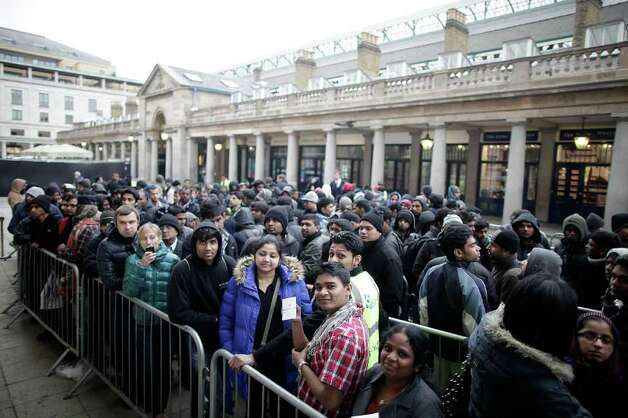
3. Take control of our own destiny – for years we’ve wrapped ourselves in complicated developer-led schemes that, with one or two exceptions like Eastbrook Hall and Manningham Mills simply haven’t materialised. The Council needs to take command for once rather than hiding behind other bodies and assorted “special purpose vehicles”. Right now there’s the chance to build on the success of the Council-funded City Park – perhaps working with the Media Museum to complete a wonderful set of developments around that museum, the Alhambra Theatre, the old central library and the former Odeon. And we can put up much of the funding ourselves – Bradford Council has £180 million in reserves and an annual income of over £1.3 billion.
4. Assume there won’t be any “funny money” – for twenty years the City has sat waiting for the generosity of central government or else the good fortune of lottery or other “bids”. This is a regeneration strategy akin to using the 4.30 at Kempton Park as an investment strategy. It might work but the chances are it won’t!
5. Animate the City – spend more on events, on dance, on music, on street markets, on things that bring people into the City. Aim for a situation where Mr & Mrs Bradfordian wake up on a Saturday morning and discuss what to do that day concluding with “let’s go into Bradford, there’s always something on”.
We have been hesitant, over-reliant on private investment and lacking in the understanding needed to implement that masterplan we paid so much for. It wasn’t about developers and development. It wasn’t about retailers and office blocks. It was about a park, about creating a great place for Bradford’s people to promenade, to party and to play in.
Perhaps, after nearly ten years of pretending otherwise, we can get on with delivering that vision of a different kind of City centre. A City centre that’s a playground for people rather than a showcase for developers.
...
Friday, 14 May 2010
Pride and the Parks Department

We brushed up the broken glass
Gingerly picked up the condom some youth left at the bottom of the slide
Tried to get the swing gate back on its hinges
And wondered…
…do we just give up?
We stepped round the spit and sick
Shook our heads at the fresh gum on the tarmac beside the benches
Picked up the crisp packets and the beer cans
And wondered…
…maybe we did give up?
Glass smashed in the phone box
The swing twisted, broken – no use to local kids
That skateboard park the youngsters petitioned for…
…burnt
We come back.
We mend, we clean, we tidy…
So good kids can play, mums can chat and nice folk sit in peace
Or play bowls
…we didn’t give up.
Gingerly picked up the condom some youth left at the bottom of the slide
Tried to get the swing gate back on its hinges
And wondered…
…do we just give up?
We stepped round the spit and sick
Shook our heads at the fresh gum on the tarmac beside the benches
Picked up the crisp packets and the beer cans
And wondered…
…maybe we did give up?
Glass smashed in the phone box
The swing twisted, broken – no use to local kids
That skateboard park the youngsters petitioned for…
…burnt
We come back.
We mend, we clean, we tidy…
So good kids can play, mums can chat and nice folk sit in peace
Or play bowls
…we didn’t give up.
....
Subscribe to:
Posts (Atom)