 |
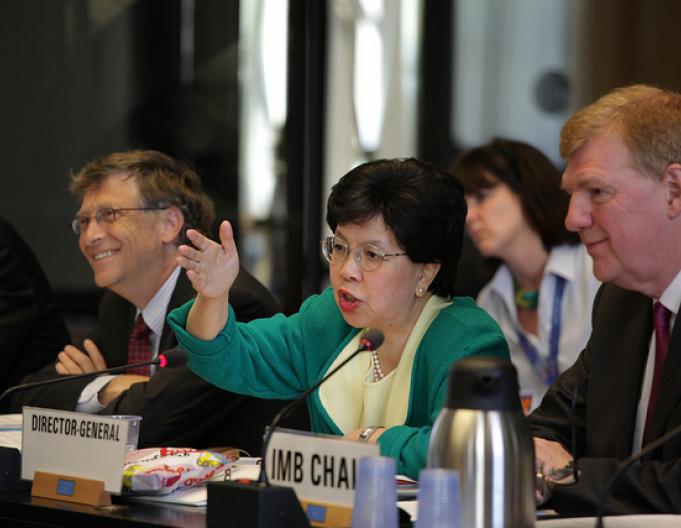
| Does the man on the left have too much influence over international health policy? |
Today's egregious piece of nannying fussbucketry is about the health risks associated with eating processed meats like sausages and bacon:
The World Health Organisation is reportedly planning to declare that bacon, sausages and other processed meat cause cancer.
Red meat is also expected to be listed as being “probably carcinogenic to humans”.
A source told The Daily Mail that the announcements were expected to be made on Monday with processed meat put in the same category as cigarettes, alcohol and asbestos.
Truth be told, the WHO isn't really doing this at all merely repeating again that there is some evidence linking the heavy consumption of these foods to bowel cancers. The problem is that, as we're finding out with sugar and found out with salt, the health establishments in western countries use the WHO as the source for 'evidence' to substantiate decisions around all-population health interventions (erroneously called 'public health').
For once, I'm not going to raise questions about the validity of the research on which the WHO bases its argument (although the reporting in the Daily Mail, Independent and other media is utterly misleading and appalling). Instead I want to talk about the World Health Organisation itself.
The WHO was set up in 1948 and describes its primary role as to "direct and coordinate international health within the United Nations’ system". To do this the WHO employs over 7000 people working in 150 country offices, in 6 regional offices and at their headquarters in Geneva. The organisation's recently approved budget is $4,385 million which is spent across the following areas: health systems, promoting health through the life-course, noncommunicable diseases, communicable diseases, corporate services, preparedness, surveillance and response. Although most of the spend is still on communicable diseases, disaster response and preparedness, there has been a gradual shift towards a focus on 'non-communicable' diseases like cancer, heart disease and diabetes. This reflects success (not much of which is down to the WHO) in reducing levels of communicable disease.
Now you'd have thought that this $4.4 billion budget comes from the members of the WHO - the 194 countries who subscribe to the organisation. However, you'd be wrong. While a lot of money does come from members (which is means tested to reflect differentials in national wealth), the biggest part of the WHO's income comes in the form of 'voluntary' contributions.
That money comes from two separate sources of funding: assessed contributions from WHO’s 194 member states (means tested) and voluntary contributions from member states and non-government funders such as foundations, investment banks, multi-national corporations, and non-government organisations.
Back in 2011, 80% of the WHO's income came from those voluntary contributions with the single largest contributor in that category being the Bill & Melinda Gates Foundation (BMGF):
Just one foundation, the Bill and Melinda Gates Foundation (yes Bill Gates, the man who gave the world Microsoft and his wife) donated most of that – slightly more than $446m in fact. That’s more than any other donor except the United States and 24 times more money than Brazil, Russia, India, China and South Africa combined
And these voluntary contributions aren't freely available to the WHO, they come with strings attached - how that $446m gets spent is determined by Bill and Melinda not by the WHO.
On one level this isn't a problem because the WHO gets extra money to spend on its great work improving the health of millions. But on another level it is a problem. The WHO is, as a UN agency, granted authority and influence over public policy decisions. In most cases this isn't direct - the WHO has no regulatory authority - but things such as the Framework Convention on Tobacco Control show how the organisation can lead on international, regional and national policy. As vapers discovered when directing their campaign to the European Union, that body was able to use the FCTC's statements on e-cigs as the basis for decision-making.
This means that private organisations like BMGF and Bloomberg Philanthropies, by providing much of the WHO's funding while exercising control over how that money is used, are more influential than the majority of national governments. And because these are philanthropic institutions there is little control or regulation of that influence (unlike for corporations or groups of corporations). The truth is that the WHO is more accountable to Bill Gates and Mike Bloomberg than it is to its recognised governance structures, let alone national member governments or the public in general.
The WHO - like other UN agencies - has a veneer of democratic accountability covering over its effective control through collaboration between private foundations and the organisation's management. You might have thought the WHO was accountable to governments, but you'd be wrong.
...


