Showing posts with label New Zealand. Show all posts

Thursday, 27 June 2019

We've forgotten, in our rush to densify, that homes need gardens


The urge to make cities more population dense has led to us building homes without gardens - or indeed without any private outdoor space. This process, driven by policy and the transience of housing markets dominated by rented property, denies people's expressed preferences - here's a survey from New Zealand:
Among the respondents, nearly one-half (49 percent) considered a back yard “essential,” while another 42 percent rated the back yard as “nice to have.” Only nine percent considered a back yard to be “not important.” Among first home buyers, there was an even greater larger 55 percent considered a back yard as “essential.”
If we consider our own lives, then we'll quickly appreciate just how important "private outdoor space" - garden, yard, large balcony, veranda - is to people. Even in places that have poor weather, this private outdoors provides a vital space. The garden is less formal than indoors with fewer rules - it's a fun space too the part of our world given over to play, to letting out hair down, to leaning back in a chair and watching the world pass us by.

So, if we're to have more dense cities (because the NIMBYs in the outer suburbs won't let us have new land for housing, even tatty and underused land) then we've to work out how we design private outdoor spaces into the development. Communal gardens are great but they come with the community's rules. The garden out back of your house doesn't have these rules any more than does your living room or your garage.

Even in our screen age (perhaps more so) the ability to get outside is vital and having a small piece of outside that it ours provides an escape from the cabin fever of sharing lives with family and friends, with a space to chill or party or cheer, with somewhere that keeps our connection to soil and place. The public park with its playgrounds and planting is brilliant but when it's lunchtime we can't just walk away from the toys and go indoors, we can't leave the make-believe bus made from packing cases there for us to return to later. Our own outdoors let's us do these things - from putting off cleaning the barbecue all the way through to cutting out toenails or picking our nose.

Now travel to out cities and towns where planning rules make denser development inevitable. Look at the brand new blocks of flats and ask whether they provide that essential outdoor space? I sit at Leeds station sometimes and look around at all the fancy flats built with a fine view of the locomotives. If they've got a balcony it's just about big enough to put out one chair (or more commonly a bike and a few boxes of stuff) - you couldn't have friends round for a sunny meal or a glass of wine, using the terrace would be a solo act.

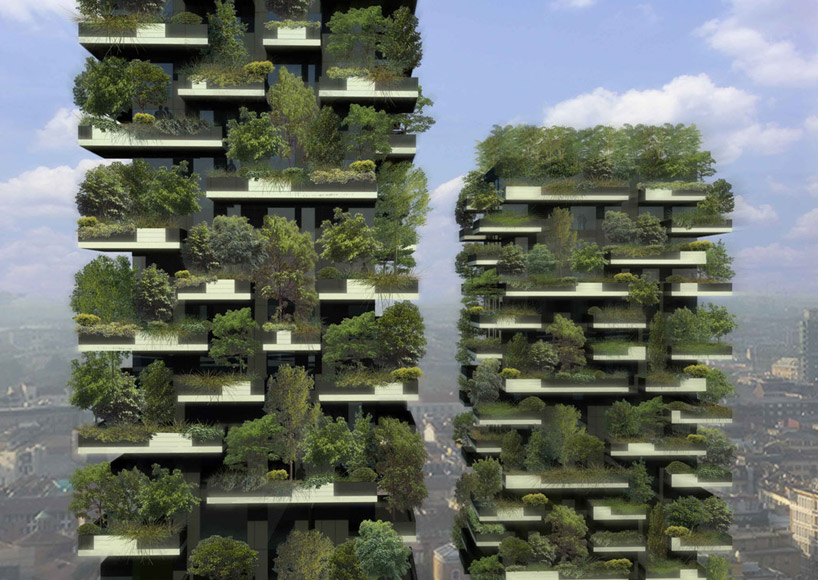
I'm not picking on Leeds here, London's world of high rise living is still more devoid of outdoor space and all the worse for it. Everywhere you go flats - apartments if you're feeling grand - are built with at best a minimal nod to the need for private outdoors and, more usually, little or none of this space. Yet it's perfectly possible to build high an densely and have gardens - here's the most extreme example, Milan's 'bosco verticale':
https://www.designboom.com/weblog/images/images_2/lauren/bosco%20verticale/bv01.jpg


....

Monday, 22 August 2016

Stuff to read: Driverless buses and trucks, night parks, stupid planning rules and Tokyo's housing


Driverless buses in Finland:

Residents of Helsinki, Finland will soon be used to the sight of buses with no drivers roaming the city streets. One of the world's first autonomous bus pilot programs has begun in the Hernesaari district, and will run through mid-September. 

Finnish law does not require vehicles on the road to have a driver, making it the perfect place to get permission to test the Easymile EZ-10 electric mini-buses.

The buses look cute too:


And self-driving trucks are on the way too:

By joining forces with Uber we can fast forward to the future. Together, Otto and Uber can build the backbone of the rapidly-approaching self-driving freight system. We can help make transportation as reliable as running water, everywhere for everyone, whether you’re talking people or packages.

All web-enabled too:

Veniam, a startup coming out of the University of Porto with offices in Silicon Valley and Singapore (besides its homebase in Portugal), turns moving vehicles such as cars and buses into live networks that allow people to be online without being dependent on a cellular network. The platform is also capable of using the data it collects to keep track and better manage traffic flows and alternate routes. Veniam’s technology was launched 18 months ago in Porto, where its hardware has been installed onto the public transport system. The company claims that about 73% of the city’s bus riders are using Veniam’s free Wi-Fi. The next market for the company this year is Singapore.

And yet again Singapore is at the forefront.

Anyway. Should parks be open at night?

A couple weeks ago, it was a beautiful summer evening in Milwaukee and some friends and I decided to meet up at our favorite park to toss our light-up frisbee. It was about 9:30pm when we finally gathered, so we spent the next couple hours tossing the disc. We also spent the next couple hours keeping a constant eye out for the police. This is because all the parks in our area “close” at 10pm and it is technically illegal to be in this public space at night.

Singapore embraces new technology the disruption of existing market models - Spain on the other hand:

A month ago, Barcelona City Hall introduced a €1.3 million raft of measures to crack down on owners letting out apartments using sites like Airbnb, but without a license. The authorities set up a website and called on residents to report apartments being rented out illegally. So far, some 500 complaints have been made.

And you wondered why Europe was falling behind?

Mind you it's not just Europe with daft planning rules - here's New Zealand:

Just look at the mess in Auckland where a developer wanting to build housing for 1500 households in an old gravel pit at Three Kings, turning much of it into parks and open spaces, has bought almost a decade’s worth of objections and processes and hearings. How can anybody build anything to scale under those conditions? In the middle of a housing crisis, with daily news stories about the number of children having to live in cars with their parents because there are not enough houses to go round, NIMBY activists block new construction.

This consultation has been going on for eight years - helps explain why Auckland is one of the world's least affordable cities.

It doesn't have to be that way - here's Tokyo as an example:

As FT’s Tokyo bureau chief Robin Harding wrote in the article, the city had 142,417 housing starts in 2014, which was “more than the 83,657 housing permits issued in the state of California (population 38.7m), or the 137,010 houses started in the entire country of England (population 54.3m).” Compare this, also, with the roughly 20,000 new residential units approved annually in New York City, the 23,500 units started in Los Angeles County, and the measly 5,000 homes constructed in 2015 throughout the entire Bay Area.

And this is in a city with no empty land. This is what laissez faire planning policies get you. Take note London.

....


Sunday, 21 August 2016

Abolishing the Corn Laws again - the case against 'food security'


It's not every day that you read an article saying that it was a mistake to repeal the Corn Laws:

The situation created by the British vote to leave the European Union is momentous for UK food. It is on a par with the Repeal of the Corn Laws of 1846 when Britain decided its Empire could feed it, not its own farmers.

The point about the Corn Laws was that they existed for the sole reason of keeping grain prices high so as to sustain marginal British agriculture. With the expected effect of making food prices higher:

The high price caused the cost of food to increase and consequently depressed the domestic market for manufactured goods because people spent the bulk of their earnings on food rather than commodities. The Corn Laws also caused great distress among the working classes in the towns. These people were unable to grow their own food and had to pay the high prices in order to stay alive.

By opening British farmers up to competition, the repeal of the Corn Laws resulted in cheaper grain and, therefore, cheaper bread (and beer). We forget, however, that the main justification for the corn laws wasn't landowner self-interest but the belief (at the end of a long war and a series of poor harvests) that what we'd now call food security was more important than open trade. At the heart of the food security concept is the idea of self-sufficiency.

My concern is that the security of food might get lost in the debacle. The UK must not let that happen. Food stocks are low in a just-in-time economy, an estimated three to five days’ worth. The UK doesn’t feed itself. It has dropped to 61% self-sufficiency, Defra reported last month.

Now leaving aside how the UK being self-sufficient in food is compatible with membership of the EU, let's ask instead what the consequence of self-sufficiency might be - here Professor Lang's article is helpful. The consequence - a policy aim in the professor's world - will be more expensive food:

Part of the challenge now is the UK’s love of cheap food. This was the legacy of the Repeal of the Corn Laws which sought cheap food for workers. Cheapness as efficiency is still central to the neoliberal project today, as Michael Gove stated in the referendum campaign. But in food, cheapness encourages waste and makes us fat. Good diets are too expensive for the poor.

Again, we'll ignore that Professor Lang also tells us in his article that Brexit will make food more expensive, and ask instead whether there is any practical basis for deliberately making food more expensive (for there surely isn't any moral basis). We'll note the negative impact on the economy from people spending more of their income on food - a huge and unnecessary opportunity cost. The main - probably the only - case is a health one:

The researchers found that healthier diet patterns—for example, diets rich in fruits, vegetables, fish, and nuts—cost significantly more than unhealthy diets (for example, those rich in processed foods, meats, and refined grains). On average, a day’s worth of the most healthy diet patterns cost about $1.50 more per day than the least healthy ones.

The problem here is that we have to accept the premise - Diet X is healthier than Diet Y - and to agree that there is a reason for government to intervene in food pricing (for example by making grain more expensive). And to understand just how much more expensive. Plus of course, we have to agree with the researchers that the price differential is so substantial remembering that these are extreme measures - the 'most unhealthy' diet set against the 'most healthy' diet.

So instead we get food policy planning that uses the idea of 'food security', on the assumption that there is a genuine threat to the supply of food meaning that, in the worst case, we get food riots. Indeed, Professor Lang thinks these are on the way because of Brexit:

But given that the WTO rules are “the lowest common denominator” and the Codex Alimentarius is determined in meetings that are “dominated by big business and lobbies [making] the EU look like the most democratic organisation in the world”, this is far from ideal. The result would be food riots, says professor Lang.

The agricultural sector is very keen (especially the bit that actually owns the land) to get this idea of food security high up on the agenda when food is discussed. It is the biggest justification for the continuance of agricultural subsidy post-Brexit and for the sorts of high-tariff models loved by the EU, USA and Japan. We should be resisting such a model (subsidy plus tariffs) since - as we can see from the corn laws experience - the result is more expensive food acting as a drag on the economy to the benefit of a tiny proportion of the UK's population. Smaller even than you think:

Each year we’re seeing a further concentration of benefits in the hands of fewer,
larger landowners, who seem to use their subsidy cheques to buy up more land and more subsidy ­entitlements,” Jack Thurston, the co-founder of farmsubsidy.org, told the Scotsman. “Most people think farm subsidies are there to help the small guy but we’re seeing it’s quite the reverse. The bigger you are, the better your land, the more public aid you get,” he said.

So we've a system of support (as, unintentionally, Professor Lang shows) not far removed from those 19th century corn laws. We know also that the main impact of subsidy comes in raising land values meaning that those agricultural subsidies and supports are doing little or nothing to maintain food security but represent a straight transfer of money from the taxpayer to the owners of agricultural land.

We should explore whether there is a model that works rather than promising to stay in the warm bath of subsidy after we've left the EU. Perhaps starting by asking how New Zealanders can grow onions that sell in a Kentish farm shop for the same price as locally grown onions. And why those Kiwis can produce lamb, ship it to the UK, sell it for less than British producers and make a profit:

New Zealand is the largest dairy and sheep meat exporter in the world, and a major global supplier of beef, wool, kiwifruit, apples and seafood. New Zealand-grown produce feeds over 40 million people, with 7,500 animal products and 3,800 dairy products going to 100 countries every month.

All of this without any subsidy:

New Zealand agriculture is profitable without subsidies, and that means more people staying in the business. Alone among developed countries of the world, New Zealand has virtually the same percentage of its population employed in agriculture today as it did 30 years ago, and the same number of people living in rural areas as it did in 1920. Although the transition to an unsubsidized farm economy wasn’t easy, memories of the adjustment period are fading fast and today there are few critics to be found of the country’s bold move.

So ask yourself a question. Do you want the sort of protectionist, subsidy-hungry food security that sucks up over £10 billion each and every year. Or an agricultural sector that contributes to a growing and successful economy? For me food security isn't about self-sufficiency but is about diversity and choice - we're more at risk if we've only one supplier of grain than if we've 50 suppliers. Yet the advocates of policy based on food security still argue that protectionism, trade barriers and expensive food (plus rich landowners) is the way to provide that security. The argument we thought we'd won back in 1846 when those Corn Laws were scrapped is still here today and we have to make the case for open trade in food all over again.

....

Saturday, 6 August 2016

Trade deals are more likely to be about fruit and fungus than tariffs


Yesterday New Zealand suspended exports of Kiwi Fruit to China. Not because of some new form of vegetable-based trade war but for reasons of biosecurity:

New Zealand has suspended its lucrative kiwifruit exports to China after authorities there say that on some shipments they found a type of fungus that can cause the fruit to rot.

Kiwifruit exporter Zespri said in a statement Friday it hopes to have new pre-shipping protocols in place within days so it can resume exports.

We should note that China has a bit of a dodgy track record on using health concerns and biosecurity issues as a weapon in trade battles - most notably over the cordyceps mushrooms (the weird parasitic fungus sometimes called Himalayan Viagra) - and there's a hint of some of this activity here:

New Zealand Trade Minister Todd McClay said last month he had been made aware of reports claiming China could take retaliatory trade action if New Zealand investigated allegations of steel dumping there.

But regardless of these issues, it's important that we appreciate how sensitive biosecurity is for many agricultural products. We laugh and joke about giant poisonous spiders in banana shipments but by far the biggest problem is the spread of fungal contamination. We should remember that fruit and vegetable production is often in a cloned, genetic monoculture - the starkest example of this is those bananas (with or without spiders):

A type of Fusarium wilt appeared this year in Australia’s main banana-growing state after spreading to Asia and Africa. While the fungus has been around since the 1990s and has yet to affect top exporter Ecuador, Fresh Del Monte Produce Inc. called it a potential “big nightmare.” The United Nations says the disease threatens supply, and Latin American growers are taking steps to limit the risk.

Every single banana is a clone of the same Cavandish banana plant - they are genetically identical and have no protection against Panama Disease, a fungal infection that is spread via contaminated soil. It is no joke for a multi-billion dollar industry (and don't give me any fair trade nonsense - those small plantations have worse biosecurity than big plantations) as it could be wiped out. As an aside here, it's worth noting that the EU's criminal opposition to GMOs might prevent a solution to the banana crisis that's being developed in East Africa.

To take a third example: Egypt is the world's biggest grain importer but has, until recently, consistently prevented imports with even the slightest trace of the fungus ergot. Without going into too much detail this makes it nearly impossible to import grain from anywhere with a damp climate. After a flurry of negotiations - and remember Egypt needs this grain to feed its huge urban population - a fix was found:

Egypt, which rejected several wheat cargoes this year for fungus contamination, is set to instruct officials to follow international standards that permit a small amount of the fungus known as ergot in imports.

The Cabinet on Tuesday backed allowing shipments containing 0.05 percent ergot and Agriculture Ministry spokesman Eid Hawash said an official decree ordering the quarantine office to accept that level may be issued Wednesday.

All this stuff has become - because of the Brexit vote - rather more significant for the UK. In the Egypt example, officials were applying a law (itself derived from UN FAO regulations) dating back to 2001 rather than more recent ones. And we should remember that the problem doesn't just relate to the exporting nations - in many ways imports matter just as much. The impact of grain shortages in Egypt would be higher food prices in Cairo and Alexandria - with all the dire possibilities this might bring.

If you're sad enough (like me) to have news alerts set for fungi then you'll see the concerns about spreading fungal infections - from ones killing bats or amphibians through worries like ash die-back to the concerns we see above about negative impacts on biosecurity and public health. When we talk about 'trade negotiations', we need to understand that these aren't about striking deals between one country and another (such 'deals' are just grandstanding for politicians). Negotiations are about agreeing rules that permit trade while protecting against the possible negative affects of that trade and getting consistent regulation on things like how much hallucinogenic mycotoxin it's OK to have in a bushel of wheat.

It also means that botanists - and mycologists - are as important as lawyers or economists in getting the best deals for the UK!

....

Wednesday, 21 October 2015

Urban planning is bad for the poor

****

Here's the Deputy Prime Minister of New Zealand:

"Poor regulation of housing has the largest proportionate effect on the lowest quartile of housing costs and rents. So when we're having the debate about whether there is sufficient land available, we have to recognise that the people who lose the most from getting that decision wrong – and who stand the most to gain from fixing those decisions – are those on the lowest incomes."

Housing costs are becoming a larger proportion of incomes – and that matters the most at the bottom end of incomes among people who have few choices. The new supply of lower-priced, affordable housing has dried up. There are parts of Auckland where no new houses are entering the market priced at the affordable end of the market. It is not surprising to see prices and rents rising disproportionately at the bottom end given this lack of supply."

Bear in mind here that Auckland is one of the ten most unaffordable housing markets in the world. What the DPM is saying is that planning has lost its way. Once we had urban planning in order to try and include the externalities to development but now:

"For those among you who are economists, I would go so far as to say that while the justification for planning is to deal with externalities, what has actually happened is that planning in New Zealand has become the externality.

It has become a welfare-reducing activity.

And as with other externalities, such as pollution, the Government has a role to intervene, working with councils to manage the externality."

I suspect this might be right.

....

Saturday, 30 June 2012

‘‘15 teaspoons of sugar with some pig in it’’.


Not sure whether Burger King are offering this delight in the UK - I suspect Bradford might be fairly low down on the priority list mind you. But the description in my headline - ‘‘15 teaspoons of sugar with some pig in it’’ - was such a masterful definition it couldn't go unrecorded!

For more nonsense on this culinary extravagence you can read about Eric Crampton's non-campaign campaign to bring the Bacon Sundae to New Zealand:

When I heard about the Burger King Bacon Sundae a couple weeks ago, I sent a single tweet saying I'd hoped it would come to New Zealand. 
A week later, a reporter for the Herald on Sunday hit me on Twitter asking why I wanted to try the bacon sundae. I sent the reporter an email saying that maple syrup goes well with both bacon and ice cream, so it's not crazy to think bacon and ice cream could go well together. And, the bacon sundae had the added advantage of annoying the sorts of people who it's useful to annoy now.

All good stuff. Am wholly undecided whether to try this concoction should it ever make it to Bradford!

h/t Dick P

....

Friday, 3 December 2010

Tim Farron or "Some so-called liberals really don't get it do they?"

Tim Farron, who I believe holds some elevated position in the Liberal Democrat Party and represents South Lakeland at Westminster is prattling on about needed "fair trade" for upland farmers.

I see farmers who struggle to keep going and just to pass on the farm to their children. It really is high time we give farmers a fair deal. I am doing all I can to make sure that their concerns are heard. We need a strong supermarket regulator as soon as possible and we need to provide fair trade for British farmers.


Let's be clear, Mr Farron is right when he says farmers struggle, work daft hours in all weathers and are often living below the poverty line. And that often the price they get for their produce barely represents the cost of production. But his solution - regulating prices - is wrong.

Let's begin with subsidy. The Common Agricultural Policy dishes out 55 billion Euros in farm subsidy. So why then Tim are your upland farmers below the poverty line?

Each year we’re seeing a further concentration of benefits in the hands of fewer,
larger landowners, who seem to use their subsidy cheques to buy up more land and more subsidy ­entitlements,” Jack Thurston, the co-founder of farmsubsidy.org, told the Scotsman. “Most people think farm subsidies are there to help the small guy but we’re seeing it’s quite the reverse. The bigger you are, the better your land, the more public aid you get,” he said.


So there you have it, Tim. Billions in subsidy to farmers is being scooped up by landowners leaving tenant farmers and upland farmers with less income. And you want to blame supermarkets? Are you so in love with the EU that you can’t see how its corrupt subsidy system is the problem and that more regulation, more price controls will serve only to distort the system even further?

Let’s look at what happened in New Zealand where there was a similar situation with plenty of upland sheep and cattle farmers a long way from the market. And there was a distorting subsidy system. In the 1980s the Government scrapped the subsidy. And all the farms closed? No.

New Zealand agriculture is profitable without subsidies, and that means more people staying in the business. Alone among developed countries of the world, New Zealand has virtually the same percentage of its population employed in agriculture today as it did 30 years ago, and the same number of people living in rural areas as it did in 1920.


Indeed if you read on Tim, you’ll find that sheep farmers – you know the chaps who come to your surgeries – were hardly affected at all by the changes:


Sheep farmers, who as a group were the most heavily subsidized, were (not surprisingly) hardest hit by the elimination of subsidies. Those farmers who were heavily in debt at the start of the reform period were hit hard by rising interest rates, and a transition program was negotiated to ease their situation. Farm-related sectors like packing and processing, equipment and chemical supply, and off-farm transport also suffered, but this was regarded as evidence of their previous inefficiency. Overall the ‘transition period’ lasted about six years, with land values, commodity prices, and farm profitability indices stabilizing or rising steadily by 1990.

If you were a real liberal, Tim – one who believed in free markets allowed to operate freely – you’d be campaigning for us to scrap agricultural subsidy so as to allow farming to thrive. Instead, like a good social democrat sucking at the taxpayers teat, you call for more regulation, more price controls and more taxpayers money directed to special interest groups.

....