Showing posts with label development. Show all posts

Sunday, 8 September 2019

The planning system is a big reason for Britain's sluggish economy - reform it


This can't be said to often - we have a dysfunctional planning system that sits right at the heart of our economy's sclerosis and underperformance. If you want places to grow and succeed you need to sort out the planning system, especially for housing.

From Sam Bowman and Stian Westlake:

The undersupply of housing, whose root cause is a dysfunctional land use planning system, is the UK’s biggest problem. It slows productivity growth by preventing people from moving to get better jobs, forces them to spend more on housing costs than they need to, and to have fewer children than they would like, at a later age than they would like. It creates a brain drain from deprived parts of the country, because only the most talented people can afford to move to prosperous cities, exacerbating regional inequality, and means that many of the income gains from the slower productivity growth we do get accrue to existing landowners in the form of higher rents and housing costs, instead of higher living standards for everyone.
Despite this, every political party is proposing housing policies that at best change none of the fundamentals and at worst will completely destroy the last vestiges of a functioning housing market. The Labour Party talks about rent controls, right-to-buy for private rentals and more vaguely about building lots of council houses. While the latter might help a little, it doesn't address the real issue which is that younger people in productive cities cannot afford to buy a house - or, for that matter, a converted airing cupboard pretending to be a studio flat. Labour's policies would see the complete collapse of the private rented market, a massive increase in homelessness and no increase in the rate of build for market housing and they remain completely wedded to a 'plan and provide' approach that simply doesn't work however much you tinker with it.

For the Conservatives, wedded as we are to the ideas of classical liberal economics, it ought to be simple - make lots more land available in places like Surrey, Hertfordshire, Berkshire and Buckinghamshire for people to build homes on. Instead we're either (and Bowman & Westlake fall into this trap) proposing massive densification as the solution - huge blocks of flats near to suburban railway stations - or else using false incentives like Help to Buy. Think-tanks like Onward have engaged in massive contortions to come up with housing policies that don't change the fundamentals of our planning system - indeed while they mention planning they hide behind opinion polling showing planning reform is unpopular to ignore the damage it is doing.

There are 118 golf courses in Surrey each of which could provide between 2,000 and 3,000 homes at suburban densities - just having 98 courses would allow for 60,000 new homes. We can then consider redundant airfields and other previously developed land as well as stopping the ridiculous block on what got called 'garden grabbing' where houses on huge single plots (something there's plenty of in the Home Counties) get redeveloped at more normal suburban densities of 20-25 homes per acre. To achieve this you don't need to scrap the 'green belt' you just change the rules to mean that previously-developed land (including those golf courses, gardens and airfields) falls outside those green belt protections unless there are exceptional reasons otherwise.

The second change to planning would be to alter the basis on which assessments of housing need are made. These "objective assessments of housing need" (OANs) are a core reason for our delivery problems. Supposedly these assessments are made on the basis of projected population growth adjusted to acknowledge economic factors (these are always upwards - nowhere admits to their local economy shrinking). The problem is that OANs point to a precise number for housing need - 43,500 for Bradford - and planners therefore identify and allocate a similarly precise acreage of land on which those homes will be built. In areas with growing demand, all of this will be developed meaning that there is no market for development land and the constrained supply - just the bits the planners have shaded in - results in higher land prices than would be the case if, for example, planners identifed land to meet twice the OAN housing number.

Finally we need to review the basis for green belt policy. If we hold to the five reasons set out in the National Planning Policy Framework (NPPF) there is no reason why the scale of Britain's green belts cannot be substantially reduced while still preventing the merging of communities, discouraging unmanaged sprawl, protecting the environment and encouraging the re-use of previously-developed land. We also need to get away from the foolish and expensive obsession with building new towns and new villages rather than extending the towns and villages we already have. Existing places already have the physical and social infrastructure of highways, hospitals, schools, water, sewage treatment and things like pubs, post offices, shops and parks. These existing places are also linked into existing rail, bus and urban transit networks.

I recall listening to the Leader of Lincolnshire County Council explaining how the main barrier to delivering some of the county's big sites was that the service undertakers (electricity, gas, water, etc.) didn't have the resource or investment finance to get the new towns 'wired up'. If, instead of this, the focus was on smaller urban extensions most of these problems would be managed more easily.

The UK's housing policy is a mess and this is entirely the consequence of policy-makers ignoring the simple fact that it is the planning system that causes most of the problem. This isn't to say we shouldn't have more social housing or that there aren't arguments for reforms to how the private rental sector operates but most of Britain's housing problem is people who want what their parents had - a nice house and garden is a decent suburb connected to 'town' where they can raise a family.

.....

Thursday, 15 August 2019

Councillors and MPs objecting to housing developments? Don't be the Grand Old Duke of York


Oh, the grand old Duke of York,
He had ten thousand men;
He marched them up to the top of the hill,
And he marched them down again.
The Duke of York in question is most commonly said to be Prince Frederick, Duke of York and Albany who wasn't a very successful military commander:
When war broke out between Britain and France in 1793, York was put in charge of a military expedition to Flanders. He took control of the port of Dunkirk but was then pushed back in a battle at Hondschoote on 6 September. His troops – a mixture of British and Hanoverian forces – performed well but were outnumbered three to one, losing their siege guns during the retreat.

Over the following months, he marched his army back and forth between ineffective minor actions, inspiring the nursery rhyme. Meanwhile, Britain and her allies lost control of Flanders, and in July 1794 York and his troops were evacuated.
The futility of the action is what we remember hence the nursery rhyme. And, for me, the lesson for us all is not to offer a community great victories then march them up and down, backwards and forwards before admitting defeat. In this spirit, I'm offering some advice - based on 24 years experience - on responding to unpopular housing development proposals.

What happens in too many cases is that local politicians (and MPs - often the worst offenders), faced with opposition to a development from residents, do precisely what the Grand Old Duke did and march randomly from one possible objection to the next. And its wrong to march a community, banners waving, up to the top of the hill when you know you'll just march them back down, banners furled and defeated, in a week or so. Too many politicians, having got the votes nicely parcelled away, fall back on "well I tried but the planners and developers you know..."

So lets look at what you should do.

The first question you should ask is whether the site for the proposed housing is allocated for this purpose in the development plan (there are various iterations of these but these days we're mostly talking about the local plan). If the planning authority has allocated the site for housing, they have already accepted the principle that new houses will be built on the site. Trying to overturn this principle is futile and local politicians should be honest enough to tell concerned residents the truth - 'you're going to get houses built here and we can't stop this - so our job is minimise the harm from the development and maximise the community benefit'.

If it's not an allocated housing site, you need to look at whether it has some other designation - green belt*, employment land, flood plain or a variety of environmental, ecological and heritage protections. If it doesn't have any other designation and protection, it's just a piece of 'white land' on the local plan map, then, again, you tell the community - 'you're going to get houses built here and we can't stop this - so our job is minimise the harm from the development and maximise the community benefit'.

Where it does have protections or other designations then the principle of building housing isn't established allowing you to say that the designation or protection in the plan outweighs the need for housing. It's worth remembering that the only sustainable basis for a refusal is to demonstrate that the principle of housing is not established, any other basis for refusal can be mitigated by a developer (whether they want to afford this is a different issue).

Residents will raise a consistent set of objections to housing development, the more common being:

1. It will negatively affect house prices (or 'we already have too many houses')

2. The schools are full

3. You can't get an appointment at the doctors

4. It will remove our views of something

5. Bats or badgers or rare orchids or unusual amphibia inhabit the site

6. There are too many cars and this will make it worse - children will be killed

7. The site is crossed by ancient footpaths or bridleways

8. Seasonal flooding affects the site

9. There's all sorts of significant historical or archaeological stuff on the site

10. Trees

It's worth noting that some of these will never be used for a refusal. This includes school places, doctors, house prices or numbers, views and footpaths. We have a long established system through s106 agreements and Community Infrastructure Levy to mitigate impact on things like education, heath and community facilities, and house prices or your view are not the concern of the planning system. For flora and fauna there are very few circumstances under which, on a large site, these can't be mitigated, either through relocation or specific protections. It's great that you can get bats, trees and rare blue butterflies protected through the planning system but you're not going to get the housing stopped on this basis. The same goes for archaeology since, if the site is known to be important it will already be protected (see designations and protections above), and most developers are content to allow archaeological work given that they're going to dig up the site anyhow.

This leaves us with highways and flooding. And yes, you'll be pleased to know, developments on designated housing sites do get refused because of how they impact on road safety, congestion, drainage or flooding. But this only happens when the developer ignores highways advice and the expectations of water and environment authorities (whose responses to consultations will, in most cases, carry greater weight than what local residents say).

For highways the system as a whole has the capacity to accommodate the traffic generated by your development (I know you don't believe this but it is what the planning system assumes so you're stuck with it) so you have to focus on specific pinch points, junctions and stretches of road. Highways planners have standard measures for assessing junctions, the need for crossings and whether parking restrictions or other traffic controls are required. Remember that, if you're stood by the side of the road with traffic passing, 30mph is very fast meaning that, when residents tell you about the awful speeding, the chances are there's a lot less of it than you think. In the end, if a highways development control officer says a junction has the capacity and is safe, then the planning committee is likely to take this assessment as true even if your residents think it's a joke. In these circumstances you are better looking for mitigation - yellow lines, warning signs, pedestrian crossings - than trying to stop the development.

Fields (especially here in the glorious South Pennines with our topography and copious amount of boulder clay) suffer from seasonal floods. If you drive around during the winter months you'll see low lying parts of fields filled with water, often with ducks, too! It's standard for residents to point at a proposed development site and say; 'look it floods, you can't build on it'. Again it doesn't really work like this because, if it really is flood plain, then it's unlikely the principle of housing would be sustained (see designations and protections above). Your site probably isn't flood plan so the principle, in very simple terms, is that the development should not have a negative impact on drainage. This pretty much means that the flow of water through the site has to be the same (or better) after development as it was before development. There are a lot of rules about sustainable urban drainage (delightfully shortened to SUDS) and the developer will want to resolve the issues with areas subject to seasonal flooding but if the overall drainage through the site is unaffected then you've not really any grounds for refusal.


There are other things that might result in objections (from loss of agricultural land or lack of affordable homes through to arcane discussions of who owns the land) but these describe the majority of reasons local people will raise in objecting to new housing.

It's easy politics to oppose housing development and it's easy to whip up opposition, to march the community up to the top of the hill. But the honourable course is to look the community in the eye, as I did when we had an application for 250 new houses in Cullingworth, and say "these houses will get built, we should screw as much benefit for the village as we can from the development". We got a new village hall and pre-school.

*Following a suggestion on Twitter here's a note setting out the difference between 'green belt' and 'greenfield'. Green Belt is a planning designation designed to prevent what is perjoratively called 'urban sprawl' it doesn't mean that the land with this designation is actually green. Greenfield simply describes a site that has not been developed previously. A site being greenfield doesn't provide any protection at all. For completeness, 'brownfield' simply refers to a site that has been previously developed. There are lots of brownfield sites that are Green Belt.

....


Thursday, 25 July 2019

British and American suburbs are very different - we should remember this when doing housing policy.

 I am, as you know, a fan of suburbs. The best suburbs combine the attributes of the city - walkability, access to public transport (but not to the exclusion of cars), a variety of house styles and tenures build reasonably densely all combined with a sense of openness and access to clean, fresh air and even the countryside.

So it worries me when people write about housing development and, in doing so, repeat this sort of line:
“…sprawling communities of single-family homes that require a car to navigate are not what’s drawing people anymore. What’s popular now are places where people can live in mixed-use, multifamily housing—maybe an apartment building above a coffee shop—and walk, bike, or take transit to get around.”
Firstly this isn't true. Or rather it is in some places because that's all we're building. This quotation comes from Tracy Hadden Loh, Christopher B. Leinberger, and Jordan Chafetz - pretty much champions of dense, high-rise city development. My problem is that it's quoted in a piece about British housing issues. Plus is completely ignores what Americans say when they're asked about the place they want to live and the houses they prefer - and what they actually do when able to choose.

But first let's remember that British suburbs look and feel very different from American suburbs. You'll all be familiar with what American suburbs look like from just about every second thriller or romantic comedy - low rise, often single-storey, family homes built on large plots that feature huge garages, lawns and not much else. Often there's no pavement (as we Brits call it correctly) and the road space is wide.

You'll also know that, while there are some similarities, British suburbia doesn't look much like this. I was brought up in Beckenham which is pretty much an archetypal suburb and while there were some larger houses (and a few very large houses) most of it consists of three-bed semis or, in the older Edwardian parts, solid three-bed terraces.

Even in today's new build suburban housing, the style, size and spacing is completely different from just about anything you'll see built in US suburbia (and not just because we use more brick or stone and less wood). Yet the writings of US anti-suburb urbanists are taken as applicable to this completely different environment.

The development of Britain's suburbs did not sprawl out in an uncontrolled manner, nibbling away willy-nilly at the edge of the countryside. They were, from late Victorian times onwards set out in planned environments - visit the Cator Estates is South London to see how this worked before the first world war and any number of places from Shirley near Croydon to Pudsey in Leeds to see the product of the 1930s housing development boom. These suburban developments were connected to existing communities - helps sustain and expand the services those places provided and allowing for immediate access to public transport networks - and laid out to encompass open space, schools and those rows of local shops we all grew up knowing. The idea that these places weren't 'walkable' is manifest nonsense yet again and again we're peddled this myth that only crowed, dense "mixed-use family housing" can provide for this perfection of urban pedestrianism.

Finally can we just say 'no, not true' to this nonsense:

...because though city-loving hipsters tend to grow up, start families and even buy houses and cars, they’re not going to conform exactly to the lifestyles of their parents and grandparents

Whenever people are surveyed about their preferences, most plump for that familiar family home with a garden - ideally near good schools and not so far from a good link to the city. Perhaps with a good park nearby, a decent pub and some local facilities (post office, chemist, doctors). It remains the case that suburbia - the English sort of suburbia - represent best compromise between urban living and some sort of bucolic countryside idyll.

....

Monday, 22 July 2019

Some thoughts on reforming planning to support housing need


With the Mayor of London joining other 'progressive' mayors in places like New York, Berlin and Auckland by opting for rent controls over building houses, we are reminded that every politician is prepared to ignore economic reality in the search for short-term electoral benefit. Since nearly every serious economist says that rent controls are a bad idea, you have to wonder why they are so popular?

The problem - whether in London or San Francisco - is that politics removes the solution to rising housing costs that actually does make economic sense. Rent controls are the inevitable consequence of housing policies directed by the political power of NIMBYs. Here's housing economist Professor Paul Cheshire being interviewed by Ahir Hites, a senior research officer in the International Monetary Fund (IMF) Research Department:
“Britain imposed its first Green Belt in 1955 and now, if re-zoned for building, farmland at the built edge of London has an 800-fold mark-up. There was no secular trend in housing land prices in Britain until the mid-1950s, but after Green Belts were imposed real prices increased some 15-fold. More than houses because you can substitute land out of house production. There is a similar pattern in Canada, New Zealand or the West and East coasts of the United States where policies restrict land supply.”
It's true, and some politicians try to hide behind this, that agglomeration effects in successful cities also provide upward pressure on housing costs (in simple terms people can move to a place faster than you can build homes to accommodate them). But when the gap between population growth and housing supply growth is negative for decades - as is the case in places like London and San Francisco - the result is utterly unaffordable housing. The case against urban containment boundaries, at least in terms of its effect on housing costs, is now as uncontestable as the case against rent controls.

One policy response popular with mayors (and local government in general, at least in the UK) is to argue that the problem isn't that we're not building enough houses but rather that we're building too many of the wrong sort of housing - expensive homes for rich people and especially rich overseas investors. The solution proposed - and the UK's Chartered Institute of Housing rather egregiously supports this - is that enormous amounts of government subsidy, £146 billion they say in the UK, can be used to build homes "to rent or buy through shared ownership".

Now it's probably true that the UK needs 1.45 million new homes building but is it really the case that the only way to do this is through a huge programme of, in effect, building council houses? Yes we need social housing because there are always going to be people who can't afford the rent for whatever reason (and paying full market rates in the private sector is expensive) but the gap in our housing markets isn't social housing but market housing - people who would like to buy a house (like their parents probably did) are unable to do so:
“The cost of a middle class lifestyle has increased faster than inflation. Housing, for example, makes up the largest single spending item for middle-income households, at around one third of disposable income, up from a quarter in the 1990s. House prices have been growing three times faster than household median income over the last two decades.”
While lots of other things from transport to food have been getting relatively less expensive, housing has headed in the opposite direction. Why? Because government has artificially constrained the supply of land, set down an ever more involved obstacle course for developers - just today the UK government added some new hoops, and made the process of buying and selling expensive through taxation and regulation. It's not that all these limitations are unnecessary but that that combining heavy regulation with a deliberately constrained supply can only result in higher housing costs.

The problem is that reforming urban containment policies and green belts is seen as political suicide. Even though I spent more time at planning committees arguing in favour of green belt development, the immediate and visceral response of the people I represented for all those years is still "no we don't want any more houses building". Since the logic of abolishing green belts is not politically possible (even though there are plenty of other protections for places we consider important environmentally, ecologically or in terms of heritage) we have to ask how we improve the availability of land in and around successful towns and cities.

The first option would be to review the reasons why we have green belts - this could be a national review conducted under public enquiry terms with the aim of deciding the principles for a green belt. The five purposes currently are pretty clear but we might want to consider the weight given to the policy - at the moment there is a presumption that there won't be any development unless that development has no impact or else literally cannot go somewhere else (e.g. a quarry). The simplest reform here would be to argue that housing need gets greater weight than green belt, a process that would provide more incentive for councils to allocate land rather than rely on strict green belt interpretations to save them from public opprobrium.

The second outcome of a review could be that the size of green belts could be limited - this could allow for the continued prevention of merging between communities, for example, but allow for more flexible development on the fringes of existing built-up areas (e.g a buffer zone where small scale development is permitted).

A further change might be to look at how housing development is used as a political campaigning lever - by every political party. We could consider, for example, applying the same strictures to representation on planning applications as apply to representations for licencing. Only those people directly affected by a proposed license - essentially immediate neighbours - can make representation to the licencing authority. Furthermore, local councillors and MPs can only make representations in support of someone directly affected. Applying something similar to planning would make organised campaigns against development - especially smaller scale developments - less powerful and would reduce pressure on planners and planning committees while protecting the rights of adjacent property owners.

The biggest weakness in our current planning system is the local plan process. Just consider that Bradford started preparing its local plan in 2008 and still, eleven years later, does not have a completed plan with land allocations. And this is not unique, two of Bradford neighbours (Kirklees and Calderdale) don't have a plan in place and Leeds is driving a coach and horses through theirs by changing the assessment of housing need (aka "the housing numbers"). Elsewhere local plans - even given the legal 'duty to cooperate' - are drawn up on small geographies with scant regard for the needs of neighbours and where one council (Stevenage, for example) can only meet housing need using allocations in neighbouring councils the result is a long-running political scrap.

A reform here might be to lift the planning process (as opposed to the development management system dealing with day-to-day planning applications) up to a county level, make it much more strategic and 'broad brush' and rely on the National Planning Policy Framework (NPPF) and existing land protections and regulations such as AONB (Area of Outstanding Natural Beauty) and flood plain controls to deal with the detail. The expectations on evidence and precision in the current local plan system inevitably leads to delay and also means that most of the time plans are out-of-date by the time they're published.

Our planning system serves us badly but has become - especially around green belts and in the way it makes developers ask for permission - something of a sacred cow. It is time, however, to recognise that it's not enough to keep saying we need lots more housing but then keep responding to essentially NIMBY arguments and refuse developments. Which brings me to my last suggestion one that I've wanted to happen since private pressure on John Prescott resulted in him preventing the redevelopment of Odsal Stadium in Bradford despite universal local support for the development. We should remove the power of the Secretary of State to overturn the decision of a planning inspector or the decision of a local council - this stops egregious backroom lobbying by MPs and gives us the confidence that decisions really are based on the regulations that parliament has approved.

....

Wednesday, 17 July 2019

Want to solve your city's housing crisis? Simple - build more houses, any sort of houses


So much angst is being expended on trying to solve London's (and other places too - Cambridge, Oxford, Manchester and so forth) housing problems. It seems that the solution is rather simpler than all the think tanks, planners and mayors suggest:
It is not some magical mystery as to why Sydney's rental prices are declining. And it's certainly not due to rent control. It's because Sydney's seeing a building boom. The size of Sydney's apartment market has doubled in two years, and landlords have had to drop rents in order to get tenants.

The Sydney Morning Herald reported over the weekend that the city has seen more than 30,800 multi-unit dwellings built last year, a record for any Australian city. And there still are nearly 200,000 additional dwellings in various stages of development. The city is seeing a glut driven by investors. And those investors are now leasing out the apartments.
So it's easy. Allow more development. And to do this you have to encourage speculative investment:
About half of Australia’s apartments are likely to be owned by an investor. And lending to investors in NSW, rose sharply a few years ago, fuelling a real estate investment boom that created this massive rise in rental stock, Ms Owen said.
There are risks here but primarily (as connoisseurs of Spain's 2000s housing boom will know) for the investor not the renter or the taxpayer. So why is it that governments are stopping things that drive this investment (foreign buyers, Airbnb, liberal planning regulations) and then complaining that there aren't enough houses? Or, worse, blaming high rents on those investors - look at Barcelona's Airbnb protests - rather than on the failings of mayors and local councillors.

I appreciate that mayors want to placate the NIMBYs (remembering that current residents have votes while possible future residents don't) but if, in doing so, those mayors propose counterproductive ideas like rent controls, foreign investment controls and height limits then they should be bundled out of office for being dangerous fools.

...

Sunday, 30 June 2019

Forget the flowers, what you'll need in San Francisco is a load of money for the rent


San Francisco is a great city. Today it's a great city filled with billionaires, something that rather explains its problems (or why they're not being sorted out). But San Francisco, in one respect, isn't unique but just the best example of how to truly, utterly screw up your housing markets.

We arrived in San Francisco by train. Sorry, we arrived in San Francisco on a bus (an hour late bus) because the train doesn't go to San Francisco, it finishes in Emeryville on the other side of the bay. So we arrived at a bus station, a bus station without a taxi rank (I guess because the sort of people who arrive in San Francisco on a bus aren't the sort of people who use taxis). It seems that, for all its progressive credentials, San Francisco's relationship with public transport - at least the sort that brings people into and out from the city - is not great. As, it seems, Google employees discovered with their benign employer laid on buses to work.

Anyway. Having got a taxi (big thanks to the bloke in the bus ticket office who rang for one - pretty sure it's not the first time), got to our hotel and settled in by having some nice pasta and a hugely expensive bottle of white wine, we'd a city to explore. And what better way to do this exploring that by buying a bus ticket!

The Big Bus was great. For a couple of days we'd access (at a good San Francisco price) to their buses as they toured round San Francisco. And some of these buses have a guide - in our case a thirtysomething Jewish guy with a beard and ready wit. As we went round the city he described the sights, elaborated on the history and pointed out things we might not have otherwise noticed.

So the bus is going up Market heading towards the Tenderloin as our guide starts to talk about the rent - and why it's so damned high. All this is nicely mixed in with the history of the great San Francisco earthquake and fire of 1906. Pointing to some early 20th century apartment buildings, our guide, says: "there are SROs, let me tell you about SROS".

SRO is an acronym for 'single room occupancy' and it's a form of tenure where, for your rent, you get a room with a basin. Pretty good stuff if you're a single, sort of itinerant, construction worker looking for somewhere to sleep whilst you rebuild the earthquake and fire ravaged San Francisco. Cheap, fits the bill and better than a washing line. But in 2019?

Our guide asked us to guess what the rent is for one of these SROs. The usual to-and-fro banter ensued concluding with a shocked silence when he said; "$700-800 a month." If you want a room with a private bathroom, it's over $1000. It really is an obscene amount of money to rent a room in a boarding house. Yet this is the consequence of policies that prevent new high rise development, constrain the development boundaries of the city and provide a myriad of excuses and justifications for stopping or slowing new housing development. Unless - as our guide pointed out - you're rich enough to afford to pay the $7,500 monthly rent in a new development near the (splendid but ever-so-slightly pastiche) San Francisco City Hall.

There are a pile of reasons why the rent's so high in San Francisco but most of them are down to the combination of creating thousands of new, exciting and well-paid jobs but not building the thousands of homes needed to house the people who're taking up those exciting and well-paid jobs. This is why folk in Chinatown are complaining about the lack of housing, why there's twice as many homeless than in Chicago despite San Francisco being a third of the Windy City's size, and why folk in the Mission were stoning buses taking Google employees to work.

Just witness the madness of trying to get a launderette listed as a historical landmark just to stop a housing development!
The first hurdle came when the Planning Commission ordered a detailed historical review, based on a claim that various community groups had offices on the property in the 1970s and 80s, so the site might qualify for preservation. The resulting 137-page study cost Tillman $23,000 and delayed him an additional four months. It found that the laundry didn't merit landmark status.

But Tillman's project was still far from being approved. City law says that any individual or group, no matter where they live, can pay a $617 fee to appeal a decision by the Planning Commission. In this case, the challenge came from an organization called Calle 24, which declined Reason's interview request.

Calle 24 is one of several neighborhood groups determined to stop gentrification in the Mission, a neighborhood that's home to a working-class...
I'm not sure whether Tillman has got to build his apartment block yet but it beggar's belief that, in a city with an acute housing shortage, it can take best part of a decade to get permission to build some of those much-needed homes. When I talk of the stupidity of planning, this is what I'm thinking of - an endless parade of hoops and jumps that must be negotiated just to start digging the foundations for a development.

The city responds to its housing problems with a veritable first aid kit - rent controls, ordinances on building standards, grand affordable housing strategies and much else besides. Except, of course, for the thing that really would make a difference - allowing more dense development in San Francisco suburbs and using the city's economics and political clout to get more land released for housing in the Bay Area generally.

San Francisco is a particularly egregious example and, in its defence, is constrained by its geography - being stuck on a peninsula limits the scope for development. But the same issues - rents soaring, lack of development and lots of supposed solutions that don't actually face up to the supply problem - can be seen right across the world: New York, London, Madrid, Barcelona, Edinburgh, Auckland, Sydney, city after city where urban growth is bounded and reasons not to develop outnumber reasons to let people build. And in all of these places the result is high prices, rising rents, overcrowding and dissatisfaction with city and national authorities response to the problems.

If your policies for housing in a growing city don't include making more land available, allowing higher buildings and apartments in suburbs and ending daft zoning restrictions then you are failing - it shouldn't take a national government, as has happened in New Zealand and is happening in the UK and US, to tell local places that they're strangling their success with over-restrictive green belts, urban growth boundaries and that parade of reasons - environmental, heritage, landscape, bats, shadows, chimneys - not to develop. None of this will suddenly make these cities cheap places to live, the cost of success has always been higher rents, but it will start to make the liveable again.

.....

Thursday, 27 June 2019

We've forgotten, in our rush to densify, that homes need gardens


The urge to make cities more population dense has led to us building homes without gardens - or indeed without any private outdoor space. This process, driven by policy and the transience of housing markets dominated by rented property, denies people's expressed preferences - here's a survey from New Zealand:
Among the respondents, nearly one-half (49 percent) considered a back yard “essential,” while another 42 percent rated the back yard as “nice to have.” Only nine percent considered a back yard to be “not important.” Among first home buyers, there was an even greater larger 55 percent considered a back yard as “essential.”
If we consider our own lives, then we'll quickly appreciate just how important "private outdoor space" - garden, yard, large balcony, veranda - is to people. Even in places that have poor weather, this private outdoors provides a vital space. The garden is less formal than indoors with fewer rules - it's a fun space too the part of our world given over to play, to letting out hair down, to leaning back in a chair and watching the world pass us by.

So, if we're to have more dense cities (because the NIMBYs in the outer suburbs won't let us have new land for housing, even tatty and underused land) then we've to work out how we design private outdoor spaces into the development. Communal gardens are great but they come with the community's rules. The garden out back of your house doesn't have these rules any more than does your living room or your garage.

Even in our screen age (perhaps more so) the ability to get outside is vital and having a small piece of outside that it ours provides an escape from the cabin fever of sharing lives with family and friends, with a space to chill or party or cheer, with somewhere that keeps our connection to soil and place. The public park with its playgrounds and planting is brilliant but when it's lunchtime we can't just walk away from the toys and go indoors, we can't leave the make-believe bus made from packing cases there for us to return to later. Our own outdoors let's us do these things - from putting off cleaning the barbecue all the way through to cutting out toenails or picking our nose.

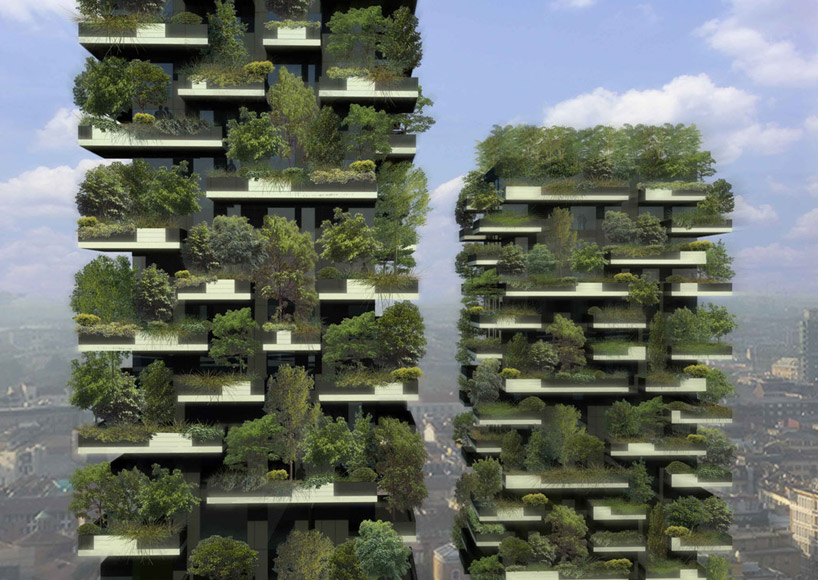
Now travel to out cities and towns where planning rules make denser development inevitable. Look at the brand new blocks of flats and ask whether they provide that essential outdoor space? I sit at Leeds station sometimes and look around at all the fancy flats built with a fine view of the locomotives. If they've got a balcony it's just about big enough to put out one chair (or more commonly a bike and a few boxes of stuff) - you couldn't have friends round for a sunny meal or a glass of wine, using the terrace would be a solo act.

I'm not picking on Leeds here, London's world of high rise living is still more devoid of outdoor space and all the worse for it. Everywhere you go flats - apartments if you're feeling grand - are built with at best a minimal nod to the need for private outdoors and, more usually, little or none of this space. Yet it's perfectly possible to build high an densely and have gardens - here's the most extreme example, Milan's 'bosco verticale':
https://www.designboom.com/weblog/images/images_2/lauren/bosco%20verticale/bv01.jpg


....

Monday, 13 May 2019

NIMBYs gonna NIMBY (and why the planning reform we need will be so hard)


To understand why (however much doing so is the right thing) it'll be tricky getting major reform of planning policies to allow better land supply and ultimately more affordable housing, here's the new leader of Uttlesford Council (Uttlesford is the bit of Essex round Saffron Walden) explaining his plans:
R4U will also revisit where the new towns will go and how many new homes are needed. After Brexit he says an economic downturn may mean fewer people moving here.
While the Great Brexit Train Crash is largely to blame for Conservative collapse here, it's worth noting that this new leader points at a growth-oriented local plan as the thing that matters. Along with his pals, John Lodge wants to re-apply the tourniquet to the local area - limiting new housing and stifling the potential economic growth that should accompany the expansion to Stanstead Airport.

Across the south of England groups got elected committed to preventing new housing, limiting growth and riding the narrow self-interest of existing home-owners. These groups have a variety of names - most commonly (name of place) Residents or (name of place) Independents but sometimes just plain old-fashion Liberal Democrats - but the unifying feature to them all is that 'residents voice' always means 'not in my back yard', these are NIMBY parties and they're going to NIMBY good and hard.

The current local plan process isn't fit for purpose - it takes an age to produce, is compromised by endless central government tinkering, and produces a system that doesn't meet housing need while, at the same time, promoting NIMBY attitudes. It's not just Green Belts (only 6% of Uttlesford is in the Green Belt) but the view that, as Cllr. Lodge puts it, "we will decide..." when outside Green Belt, UK law tells us that there's a presumption in favour of development and it rests with the planning authority to give reasons for any refusal that are compliant with local plans and national guidance.

Up here in Bradford, we are now in our 12th year of preparing our local plan - we've agreed a core strategy but, as a result of the latest bit of central government tinkering, we're in the process of reviewing the central part of that strategy - how many houses we need. The number right now is 43,500 and, under the (not yet introduced but, you know, we'll use it won't we) standardised method, this might drop a little. And, at some point in the next two years, we might get around to considering the actual land allocations to build those houses, a process that will take at least two years.

The whole strategic planning system is a joke but it will stay so long as it can be used to secure anti-growth, anti-housing policies at a local level. And we'll continue to see the likes of Cllr. Lodge elected with a mission to deliver NIMBY policies - mostly by booting the growth into long grass labelled 'infrastructure'.

....

Thursday, 28 February 2019

David Lammy is right about Africa (but wrong to make it about skin colour)


David Lammy is the worst sort of politician - lots of sound and fury, avalanches of slogans pretending to be wisdom, and a complete absense of any considered or measured assessment. You only have to watch how he attacked, without any evidence, the police over the Grenfell tower tragedy to understand the basis of Lammy's politics. And at the heart of everything from him is race - it is always (sometimes hilariously) about black or white.

The problem with this is that, when there's an underlying truth in something Lammy says, his painting it black and white means we lose sight of that truth - here's an example in a Tweet:
The world does not need any more white saviours. As I've said before, this just perpetuates tired and unhelpful stereotypes. Let's instead promote voices from across the continent of Africa and have serious debate.
I pretty much agree with what Lammy is saying here - our portrayal of Africa is trapped in images of semi-naked black children, in the memory of Live Aid, and in the pictures drawn by aid charities touting for cash. Through agencies like Oxfam, and our faux-virtuous obsession with international aid we perpetuate the idea that, without our help, Africa will not 'develop'. But it is not about the colour of anyone's skin, its about how we in the developed world perceive Africa.

The problem is that the 'help' we've given Africa has, in large measure, led to the problems people there face. After 100 years of exploitative colonialism we left and gave Africans socialism which when applied in Ghana, Tanzania and Ethiopia resulted in more poverty, starvation and death. In other places it led to hyperinflation and economic collapse. As noble ex-colonialists we then galloped in to the rescue with aid programmes designed to allow subsistence agriculture - the hard, brutish and short life too many Africans endure - to continue. What we didn't do was point Africans at what it was that made us rich (and is making the Koreans, Chinese and Indonesians rich too) - open markets, enterprise, free trade and the idea of business.

Today, despite the best efforts of us in the west, African countries - some of them at least - are turning themselves round in that proven capitalist manner - six of the ten fastest growing economies in the world are in Africa with Ghana and Ethiopia topping the pile. It's true that Africa still faces problems - the persistence of insect-carried disease, the scourge of AIDS - but it's biggest problem is still the stupidity of government:
The number of people paying the tax for sites listed as “Over the Top ” (OTT) – chosen by the government because they offer voice and messaging services – fell by 1.2 million.

The value of mobile money transactions also fell by almost a quarter, to 14.8tn Ugandan shillings (£3.4bn) between June and September.
So I agree with Lammy that, instead of British celebrities (even celebrity investigative journalists) indulging in poverty tourism we should perhaps use the occasion of a national telethon to get Africans to tell their success stories. Step through the marketing-speak here to see that, given a chance, business is thriving - and African business sounds just like business everywhere, driven, exictable, enthusiastic:
3 Wise Pixels (3WP) is a creative technology company dedicated to reimagining Nigeria’s digital landscape through curated technology and bespoke design. Based in Lagos, the company mirrors the ever-evolving landscape of the continent’s largest city – rapid growth, innovation, targeted problem-solving and distinct overtones of a rich cultural identity. 3WP champions innovation and authenticity at its core, resulting in a creative yet highly functional hybrid approach that cuts through the noise and congestion of the modern world.
This is where Africa's future lies and what we should be saying isn't "have some aid money" but rather "how can we help your businesses". Plus, I hope, helping resolve Africa's biggest challenges - set out clearly by the guys from 3WP:
Most of the risks we face come from the unstable political landscape in Nigeria. A lack of proper basic utilities like clean water, steady electricity, and waste management (to name a few) all contribute to a very tough living situation, which affects the physical and mental health of employer and employee alike. Not to mention the lacklustre education system, poor public transport solutions and even poorer roads, and the corruptible government agencies that oversee these things.

....


Sunday, 17 February 2019

Rewilding the city - greening Bradford's dereliction


Today they blew up Jacob's Well. Another ugly concrete lump is removed from the skyline of Bradford following in the unmissed footsteps of the National & Provincial Building and soon to be joined by some equally foul tower blocks running up Manchester Road out from the city centre. Elsewhere in the city centre there are plans to demolish the Oastler Centre and the now empty Morrisons Supermarket attached to this market. After a tragic fire, Drummond Mills a short walk from here has been cleared leaving behind another few acres of open land. Add in land at Leeds Road, at Barkerend roundabout and alongside the former Forster Square station yard (now featuring a bunch of retail sheds). What we have is a huge amount of land, supposedly for development. The problem is that everyone knows that this development isn't going to happen because most of the land has no - or even negative - value. Even a site at Fairweather Green, halfway to popular Thornton village remains derelict because the cost of remediation, highways and related infrastructure makes building houses there impossible without subsidy.

Meanwhile developers are frustrated at the lack of development sites in places where building houses on a speculative basis is possible. Vast swathes of unproductive and not especially attractive open land sit languishing within the 'green belt' safe from the hands of those developers. And this is despite the fact that other protections ranging from special landscape area designations through conservation areas to habitat protection zones and areas of outstanding beauty (to mention just a few) provide strong planning protections for the attractive, the ecologically-important and the historically significant.

So what to do? What we're doing now doesn't seem to be working. The council is stuck in the mentality that if you bung in some up-front subsidy it will somehow transform how the market behaves - despite the evidence from just about everywhere that this doesn't work. We can add that the council is also lumping most of its eggs in the basket of a high speed rail line that, right now, is unlikely to be built and, even if it is, may not have a stop in Bradford. I'm being slightly unkind here as the Council has some strong ideas around skills and education that are beginning to bear fruit. But the development point is still important - that anti-development masterplan of Will Alsop's still presents the best hope for a transformative approach to Bradford's inner city.

Which means we should green the city - rewild it even. Instead of trying to find a developer to build another ugly square box on the Jacob's Well site (that we'll have to knock down in 25 years), lets turn it into an orchard, get some beehives, plants some trees - rewild the centre. And let's do the same for all those other empty, derelict and unattractive sites that litter the centre of our city - instead of growing houses that we don't really need (at least if the house prices are a guide to demand - which they usually are) lets grow trees, have allotments, perhaps a duck pond, maybe a maze for kids to get lost in.

Instead of building houses on that Drummond Mills site and the other big clear sites in Manningham, let's cut and cover - putting car parking underneath parks, recreation and open space. And then let's gate off all those narrow terraced streets nearby to provide safe outside space for the families in those homes. Let's set a target of pedestrianising half of our inner city terraced streets - we'll see the great benefit of fewer kids run over and lots fewer young folk with asthma. I know there'll be people - mostly men - who'll moan about not being able to park their car in the living room but the world is changing and Bradford can be ready for a society where car ownership isn't an assumed status and where driverless cars, buses and taxis provide safer transport for all.

Imagine the difference if, in twenty years time, flying over the city means looking down onto woodland, park, orchard and meadow rather than urban decay and crammed, amenity-free housing developments rejected by the better off and dominated by social housing and the private landlord.

Let's say this will cost £100 million to do (that's not a quotation just a convenient round figure). Where does the money come from? If I told you that Bradford Council already has plans to borrow £80 million for regeneration - only part of this on a spend-to-save or income generating basis - you'll see that this is possible. A one-off 5% increase in Council Tax would provide enough revenue to fund the programme and this is without looking to other possible funding sources from the Environment Agency's flood mitigation funding through funds for air quality improvement to a vast range of private and charitable sources. And then there's income - maybe from that car parking, perhaps from users of the new open spaces. We can do it - and make Bradford a better, healthier and, above all, different place. Wouldn't that be worth the risk?

....

Wednesday, 31 October 2018

Can we build family homes not factory farms for hipsters?


You'll hear it from time to time - "London is the least densely populated mega-city", "we could build higher and more denses to solve the housing crisis". I've a problem with this argument and it doesn't matter whether it comes from the anti-development CPRE or the trendily pro-development London YIMBYs, because it doesn't reflect what people want. And, while we can all have a laugh about the things local councillors say at planning meetings (certainly the twitterati had a field day here) but these guys in Leeds have a point:
“This is a very dense development.

“I look at that and think there is no public or amenity site on the development.

“There are odd days in the year where it’s nice, warm and sunny, and there is nowhere in this development for people to go outside and sit.

“It seems like you are trying to cram a lot onto this site with very little amenity space. If you had children you wouldn’t want to live here, because there is no space for them at all.

“I really don’t like this (application), and the more I think about it, the less I like it."
This is a proposal for 242 tiny flats that are said to have "co-living space" making it all fine, I guess. The problem is that Cllr Colin Campbell, who words are above, is spot on. Providing a laundry room and free (or 'included in the service charge' sort of free) wi-fi doesn't fit the bill. There are a lot of reasons why dense, high-rise developments of this sort are anti-family but they are also sub-optimal for any long-residency.

Spain famously has some of the most population dense cities in Europe - living in flats and apartments is normal for much of the population and generations of Spaniards were brought up in these sorts of places. But there's something important Spain gets right that we are failing to do - people need an outside. Not a tiny little balcony you can squeeze two tiny chairs onto if you jiggle them nor just access to some sort of communal garden or open space but a decent-sized outside where you can do something - from sitting and lounging to having a long lesurely dinner with the family.

"What about the weather" will come the obvious reply and, it's true, Spain does enjoy more sunshine and less rain than Leeds. But is it really beyond the wit of architects and designers to create places that have an outside - a roof garden, a terrace, an atrium - while providing for everything the British weather can throw at them? Whether it's the glass curtains that so many Spanish flats acquire or awnings, or part-covered spaces there is a way to give people the outside they want, a personal space where there's fresh air (or not so fresh in the case of some city centres), a view and the chance on a good day of some sunshine.

For densification to work in our cities it has to provide the things that people want from a family home. And a private outdoor space is one of those things (as are dining space, living space, good storage and car parking) yet we're building thousands of flats that fail to meet this requirement simply because the designers think outdoors is a luxury not an essential part of a home. So, for all that I'll grant developers the right to build soul-less and depressing bunny-hutches, it's time we recognised that this simply isn't meeting demand at any level beyond "have I got a roof over my head". At their best these high rise developments are factory farms for hipsters while their worst is as a sort of holding pen for society's flotsum and jetsum. It's family homes we need and what people want, perhaps we should build them instead?

.....

Monday, 21 May 2018

Paint, tiles, flower pots and park benches - lessons from Estepona's regeneration


I've always been a little doubtful about the "let's be like Barcelona" school of urban regeneration. This leads to enthusiastic proclamations about how Bradford will be the "Shoreditch of the North", as if this is somehow either achievable (Bradford's not two stops on the tube from the City of London, for a start) or desirable (why would we want a child free and expensive city filled with achingly trendy beards). I do think, however, that we can look at what other places have done successfully - even Shoreditch - and ask if some of what they've done can help make our place a better place.

We've been visiting Estepona on Spain's Costa del Sol off and on for over a decade. And during that time, we watched the building explosion of the 2000s, fevered speculation about high speed railways and more recent twitchiness about Brexit, at least among ex-pat residents. Oh, and most of the local council went to jail:
The socialist mayor of Estepona, Antonio Barrientes, and ten other council officials have been arrested on corruption charges related to property development fraud.
It has dragged on a little too:
Since 2006 a judge has been diligently carrying out an investigation before bringing the case to trial. Some 113 witnesses have been interviewed, 26 police reports written, 800 volumes of documents have been collated and the final report ahead of the trial is 226 pages long. Of those questioned, 94 are still formally under investigation. The inquiry has taken so long that three people being investigated have died.
In and amongst all of this Estepona has slowly transformed as a place, mostly through old-fashioned place-making - public and private - and a realisation that today's Costa visitor is less interested in the flash night life of Puerto Banus (now a decidedly Russian affair albeit with the same number of Ferraris, Aston Martins and Lambos as ever) and wants a quieter, more-measured place to enjoy. We are, after all, ten years older, a little greyer and just a tad slower than we were when we first visited.

The result is a really lovely town where residents, businesses and the council (helped by a few dollops of EU cash) work together to keep it looking good:


The streets of the old town - like the one above feature coloured pots filled with geraniums. Every night in summer council workers water these pots - a pretty big commitment but it makes for a fantastic display:


What this investment - over about ten years - has done is encourage residents to add their own pots and plants to the show:


Each street has it's own colour schemes - red in one, yellow the next, one street has yellow with pink polka dots - and it melds into some brilliant public squares:


This square not only features a lovely stone elephant (alongside a lovely restaurant Casa Dona Jeronima) but some brilliant features and details:


The most recent public space - once a tatty square where the buses used to stop - not only has an underground car park (what a good use of the space) but more great planing as some lovely murals:


Most of the town is pedestrianised (or with access limited to residents) and has been gradually improved with the same palette of colours and materials mixing with creative tiling and mosaics to make a pleasant place for an evening stroll. The whole town centre has the feeling of a park albeit one where people live, where businesses are run and where visitors enjoy beer or tapas (often both). And on the back of this better public space, you get the refurbishment of great old buildings:


The result of this (and I've no doubt that thousands of Northern European visitors - semi-resident in many cases - is a factor in the town's success) is that the old chiringuitos are sharpening up their act to serve this affluent audience and not lose them all to traditional street cafes and restaurants in the town:


There's also investment in the beachfront (Estepona has an artificial beach but beyond the town itself the beaches are smaller and rockier) like this boardwalk:


To return to where I started, this isn't an argument for other places to do the same - that doesn't work. Rather it's for us to think how these relatively simple investments in the street scene, in features and details, and in soft elements such as plants or flowers make a place so much more effective. When I argue for us to treat city and town centres like parks rather than as CBDs or "economic drivers", it's this sort of work I'm talking about. Andalucia isn't a rich place (per capita income is lower than for Bradford) but this town has, having escaped from the mania and corruption of Spain's housing boom, focused its efforts on making what it has work well.

Of course, Bradford isn't the Costa del Sol any more than it's Shoreditch but I do think the lesson here is to step back from those voices telling us it's all about some sort of competitive race between different cities for investment, business attention and development. Perhaps we should think more about paint, flower pots and park benches than about whether one or other bunch of sharp-suited developers are going to arrive in town to build.

.....

Wednesday, 2 May 2018

Build homes people want to live in (it is that simple)

Hardly a day passes without another seemingly creative solution to the UK's (well mostly London's) housing problems being presented. And, since nearly all these creative solutions don't involve increasing the supply of land for housing where people want to live, nearly all of the solutions are wrong. It really is that simple - more land, more homes, more affordable housing:
A 2016 academic analysis by David Albouy, Gabriel Ehrlich and Yingyi Liu estimated that, in general, rents decrease by 3 percent for each 2 percent increase in the housing stock
As the author, Patrick Wolff, here points out (talking about San Francisco and Silicon Valley):
The Bay Area must increase its total housing stock by 50 percent over the next 20 years to bring affordability down to a reasonable level.
Wolff also reminds us that this degree of growth is perfectly possible:
Detroit and Texas grew far faster during their booms, as did our own Bay Area in the 20 years following World War II.
As, of course, did London in the 1930s. I don't have the detailed figures to hand for London, it's not growing as fast as the Bay Area and growth may be slowed a little by Brexit, but there's already an undersupply (high rents tell us this). So let's go with Wolff's 50% and reduce a bit to, say, 40%. There are currently about 3.27m households in London and I'll assume they're all housed. Using Wolff's model London will need 1.3m new homes over 20 years to meet demand and address the problem of affordability (which is 65,000 per year). The current London plan proposes fewer than 50,000 per year resulting in a shortfall on demand of 320,000. The absolute effect of this will be higher rents and house prices. And remember that all this assumes London's growth is lower than San Francisco's - if the city matches that growth it will need a further 300,000 homes just to keep pace.

I'm not going to set out what should be done - everybody knows. We just need to ask why we're not doing it.

....

Saturday, 21 April 2018

Is building new retail capacity in suburban Bradford such a good idea?


"We'll get that away," says the council officer about a proposed out-of-town retail centre on the site of a closing leisure centre in South Bradford. So the Odsal District Centre is the future of that part of town? For how long? And is this really the future?

I wonder if this is a false hope brought on by the prospect of a capital receipt (and a pig-headed refusal to consider the site for housing) rather than a genuine engagement with economic reality. And Bradford isn't alone in all this - up and down the country local councils are buying up retail centres, either in the name of regeneration or, more commonly, investment income.

Here's some reality from the US courtesy of the always excellent John Sanphillippo:
This new retail plaza on the side of a Northern California freeway isn’t adding needed capacity. It’s cannibalizing existing retail sales from older shopping centers. There’s a limit to how many shoe stores and kitchenware shops the area population can support. Online sales are cutting in to already slim margins. It won’t be long before this place is hollowed out and half vacant, not least because the chain stores will be offered special incentives to relocate to a new place a few miles away. That’s when city officials and developers will hatch a public private partnership to turn the venue into a “technology park” to lure in some other heavily subsidized scheme that will also prove economically wobbly.

Just down the road in the same town is a premium outlet mall that, not too long ago, was the guarantied-to-succeed cash cow favored by municipal planners. But these things just don’t perform well beyond the first tenant lifecycle, particularly when there’s a parade of similar establishments for a hundred miles in every direction. Meanwhile, this failing mall is in a location with a critical housing shortage. The median home price here is $700,000 and very few homes are on the market. Median rent is $2,900 if you can find a vacancy. Most people can’t.
Right now, investment in new retail capacity, other than for discount supermarkets, is a monumentally stupid idea - even if you've an end user lined up. Just look at what's happening in UK retail - not because of slow economic growth but because the market is changing fast. So far in 2018, 14 listed retailers have failed, 1,236 stores have closed their doors, and 13,176 employees have lost their jobs - in four months. And there's more to come if House of Fraser, New Look and Debenhams performance is anything to go by.

Out in the real world the change appears to be accelerating - "go to Amazon," my wife's friend tells her on a chance encounter at the garden centre searching for outdoor furniture, "they're much cheaper and they've got more choice." The triumph of mail order is almost complete, every day a stream of delivery vans comes through our little estate of thirty-odd houses and flats - clothes, food, furniture, everything a home could want delivered conveniently to the door. And all this is without counting the folk who, for their convenience, collect from Cullingworth's chemist or post office.

It's not that shopping is dead - we're shopping more than ever - but that we can shop with a glass of wine in hand from our sofa while muting the adverts on the telly or pausing the Netflix series we're watching. Why - given all this - would people want to drag themselves to a load of cheap sheds thrown up in suburban Bradford? The retail the will work is that which offers something we can't get from our sitting room - events, socialising, entertainment, reward - and that which is additional to a destination - the shop at the museum, the little boutique of handmade clothes by public square, the cheese stall or deli in some space near the popular restaurant.

What matters, given convenience is now an app on our phone, is leisure and pleasure, place and space. And, in no known universe are out-of-town retail sheds any kind of pleasure-led place, a destination for a trip out. People aren't going to say, "let's go to Odsal Distrct Centre it's so much fun there", yet because of an obsession with short-term value that is what we get. And sadly, in a decade or so, Bradford (and lots of other places) will be asking what to do with a half empty and increasingly redundant retail centre - just as we are with the crumbling district centres build in the 1970s, 1980s and 1990s.

....


Saturday, 14 April 2018

Why houses are expensive.


I like Peter Hitchens, he offers the same iconoclastic hammer to the centre-right's certainties as his brother did for the centre-left. Among Hitchens' common themes is a harking back to a time when we had full and steady employment, low levels of crime, stable communities and trust in institutions. Quite rightly, Hitchens tells us that these things are good things and that conservatives - whether of that party or not - should be concerned to get them back.

Sometimes, however, this enthusiasm for the essential elements of conservatism leads Hitchens to the realm of fantasy:
The homeowners of Britain are being lied to, and unfairly smeared to try to get us to accept a hideous and irreparable destruction of green space in suburbs and the countryside. They are also being blamed personally for a problem they did not cause, in a nasty war on the middle-aged. They should resist this.
This opening gambit is familiar, a justified reaction to the now too common trend of blaming 'baby boomers' for all the ills of modern society and especially for houses being so expensive. Hitchens tells us that this ain't so and the fault lies with "grabby developers", mass immigration, the "epidemic of divorce", the success of London, right-to-buy, and what he calls "targeted inflation".

Now, leaving aside the 'positive money' argument that Hitchens uses in his "targeted inflation" argument, it's hard not to see some truth, at least in the creating of demand for housing, in this list. And, as the rules of supply and demand tell us, increasing demand will raise prices if new supply isn't readily available. The problem with Hitchens argument is that he lays all the blame for house price increases on increasing demand for housing (whether as a home or as an investment) and none of the blame on the lack of housing supply.

Or more importantly, land supply. Because it is how much land we have on which to build (taking as read the increased demand Hitchens describes) that determines how much the homes built on that land will cost. After all it costs pretty much the same to build a house in Kensington as it does in Burnley but the former will sell for a few million while you'll be lucky to get a hundred grand for the house in East Lancashire.

And the supply of land for housing, across most of England, is something determined by government. Moreover, for nearly 70 years, the government - national and local - has determined that most of the land in places where people want to live will have a 'presumption against development'. Not to protect special beauty, heritage or environment but simply to prevent 'sprawl' and encourage denser development in the existing towns and cities. The name for this policy - and it's popular right across the English-speaking world - is urban containment. I saw this described in a school debating competition on this subject as a 'tourniquet for the city'.

Urban containment- even when we're laissez faire on densities - doesn't work. Indeed, it's one of the primary reasons for the housing crises in London, San Francisco, Sydney, Auckland, and Madrid. Here's work from Australia's reserve bank on the subject:
According to the research, and assuming typical mortgage provisions, (Note) the urban containment effect (our term) adds from $150,000 to nearly $500,000 to house prices in major Australian metropolitan areas --- this is not the house price, but the additional impact of urban containment ... The urban containment adds up to $29,000 to annual payments on the average house in Australia’s major metropolitan areas
In the UK this uplift would be between £80,000 and £275,000 - this is the cost of that tourniquet and represents, when multiplied by the hundreds of thousands or properties involved, billions in lost opportunity for the UK (and those other places caught in urban containment's web). And remember, simply making development more dense doesn't solve the problem (partly because building upwards is expensive but most because densification simply increases land values which are the source of our problem in the first place).

If we are to have a debate about urban containment it needs to be on an informed basis - one that recognises the social and economic costs of these policies. It isn't good enough simply to list the reasons why there's more demand for housing and then shout:
...the rape of the Green Belt and the overdevelopment of the countryside will mean our children inherit a blighted country, almost unrecognisable as the beautiful, civilised place my generation inherited from our forebears.
This is splendid polemic but doesn't answer the question as to how we offer the same deal to the next generation - how do they get that stake, a real tangible stake, in their land and culture? I agree entirely that some of the development we get today is pinched, crammed, and dominated by brick and concrete with little space for garden, greenery or the margins when kids can build a den or play out the make-believe that ten-years-olds invent. But this overdevelopment is caused by the lack of land, by the containment. London's 1890s and 1930s suburbs - the places Hitchens' waxes lyrical about - were built with space and openness because the land was cheap, there weren't planners with clipboards and rulers to tells them what they could or couldn't do. Why would future developers not do the same given space and a free rein?

The social cost of urban containment isn't a joke either - this is America, which is worse than Britain, but anyone visiting our cities will see this happening:
Homelessness has long been a San Francisco problem, and with home prices rising, it’s arguably worse now than ever. A January report on SFgate.com claimed that the city’s homeless count is close to 6,700, and a local advocacy group estimates the count at 12,000. The problem is all very visible throughout the city, and increasingly, in Oakland and Berkeley, with open drug use and fights blaring out from the encampments that rest along sidewalks and below underpasses. A recent U.N. official, after visiting the Bay Area, said that in some ways, the city’s treatment of the homeless is worse than what she saw in the slums of India.
For sure, there's other reasons for homelessness than just high rents but getting a roof over peoples' heads should be a start. And, right now, someone losing their rented place in London, is going to find it really hard to get another place, for the first time in my lifetime people are on the streets solely because there isn't a home available for them to live in.

It seems likely that we will keep these policies - the rage in Hitchens' polemic really does reflect how people feel - but I hope, in doing so, that we won't carry on pretending that there isn't a social cost to having urban containment. We'll keep large swathes of countryside - much of it not especially special - while cramming more folk into unsustainable city living, having more homelessness and a generation embittered by their inability to do what their parents did, buy a house.

....

Tuesday, 13 March 2018

Densification policies won't solve London's housing crisis


Here's Joel Kotkin and Wendell Cox:
Nowhere, here or abroad, has densification materially improved housing affordability, whether for low income households or the larger number of middle-income households. Density-oriented policies have helped drive prices up so high that Bay Area, $200,000 salary engineers cannot afford a home near their headquarters. In the meantime, many young families are increasingly leaving the state for less heavily regulated and less expensive states like Texas, Nevada and Arizona. Among those under 35, 80 percent of all homes purchased nationwide are single family houses and virtually all surveys of millennials express an overwhelming desire for this kind of residence.
This reality is lost on our planners as they seek to square the circle of providing family housing in an ever denser planning environment. So what do those pesky millenials want in a house?
“This is very likely because a huge majority are now married (66%) or in permanent relationships (13%, and almost half (49%) have children under the age of 18 living with them. In other words, it appears that they are seeking to raise their families in suburban rather than mid-city environments. And the NAR figures confirm this, showing that in the past year 57% of buyers under the age of 36 opted for suburban homes – and that the most popular type of home purchased (83%) was the single-family suburban home with three bedrooms and two bathrooms.”
So in response to demand for the sort of suburban environment my generation enjoyed, the planners tell us they want denser development, flats above shops, tower blocks, garden-free apartments or town houses. This makes no sense yet it's precisely what the latest iteration of the UK's National Planning Policy Framework (NPPF) expects.

At some point we have to start asking people living on the fringes of London's suburbia (and other cities too) just why they have such an issue with some of the land near them being used for new suburban homes. Is it simply a matter of 'build 'em somewhere else'? Or are the common concerns - school places, traffic, medical centres, drains, floods - genuine? Maybe it's more visceral - some people in Cullingworth feel it isn't a village any more because of the new development.

There are lots of options and alternatives - new towns, garden communities, new villages, urban extensions - but none of these involve densification, piling people up on top of each other, cramming them into "walkable", "sustainable" tenement communities, a 21st century version of the crowded housing we cleared in the '50s, '60s and '70s. Build more suburbia, dammit!

....

Monday, 19 February 2018

Momentum and Millionaires: A point about London's gentrification


The Market Urbanists observe a 'Bootleggers and Baptists phonomenum in housing:
We see the same thing today in the housing supply debate: many community activists with valid concerns over gentrification’s impacts have come to oppose upzoning. They point to cases where new housing has appeared to result in or not solve displacement as arguments against allowing more housing to be built. However, typically this is a result of projects being limited by regulations in the first place, making luxury development the most profitable new housing possible. In taking this stance, these advocates wind up boosting the cause of NIMBYs who either wish to preserve their property values or protect their views against even the slightest infringement.
I guess we'll call it Momentum and Millionaires (after all Jon Lansman famously lives in a posh flat and his son's a developer).

...