Showing posts with label diet. Show all posts

Friday, 8 March 2019

Government should try to fix poor people's economic circumstances not fix their diet


A fascinating interview on Vox with three US sociologists who look at (and have a book about) the mythology and misunderstanding around home cooking - not least that for the first half of the 20th century most American upper middle class families employed a cook. At the heart of their observation, based on a close study of nine families is that Michael Pollan's contention - “We’re going to have to fix our diet before we fix the whole economy.” - doesn't reflect the actual lives of less well off Americans:
But in a lot of cases, there are other, non-food problems that are making it really hard for them to feed their families the way they’d want to. In one of the more extreme examples, there’s Patricia, who is living with her daughter and two grandchildren in a hotel room. She doesn’t have a kitchen. So yeah, she’s heating up frozen pizza — she doesn’t have a stove. And it seems like, no, “fixing our diet” is not going to fix this.
This is an extreme case but one of the researchers explained:
A lot of people in the study had their own houses. But a lot of people in the study didn’t have basic kitchen tools. Their stoves wouldn’t work. They’d have pest infestations. The electricity would get cut off, or the water, for a period of time. A lot of people didn’t have tables or enough chairs for everyone to sit down. So really basic things of this kind of image of what dinner can look like and how you should do it didn’t map up with a lot of the experiences of the poor families in our study.
So when we talk about bad diet, reliance on instant food, not sitting down together as a family - not, so to speak, meeting that middle class ideal - we forget that this lifestyle requires more than just the ability to cook, it needs also the resources to do that cooking and enjoy that dinner. Shouting at poor people about "junk food" is bad enough but when the government plans to deliberately make that food more expense we are actively making the lives of the poorest less tolerable.

Right now the UK government is consulting on a set of restrictions for HFSS food promotions (usually and lazily tagged "junk food" by the media) that includes bans on 'buy-one-get-one-free' offers and limits to advertising. The effect of this approach is likely (along with things like the sugar tax) to just make it harder for the less well off to feed their family. This research reminds us that we need to fix the economic circumstances not fix their diet.

....

Sunday, 24 June 2018

"Aren't all these kids supposed to be fat?" Why the Government's child obesity strategy is wrong


Every lunchtime Parkside school opens its gates and disgorges starving pupils onto the streets of our village. Long queues form outside the chip shop and the butcher - wise locals hunker down until these hungry young people are gone. A day or two ago, someone commented to me about these queues - "you know," she said, "aren't these kids all supposed to be fat?"

Indeed, to listen to the fussbuckets we put in charge of our health services and the media who, without even a glance at any actual evidence, publish those folks' nannying proposals, you'd think that near every child was a barely mobile lard-bucket unable to do anything but plonk before a screen. The truth - at least from watching those queues is that you've got to work pretty hard to find a fat child. I'm sure they're there, just as they were there when I was at school. I'm even prepared to believe that, like the population in general, there are more chubby kids than back in the 1970s (when, incidentally, we consumed more sugar than we do today). But it doesn't look like a crisis to me.

All this hasn't stop a host of fussbuckets, urged on by a couple of celebrity chefs with brands to promote and books to sell, from deciding that they know better - either by targeting so-called "junk" food or else by creating a moral panic about the food industry. At the heart of all this is the idea that parents - especially working-class parents - are unable to resist promotions:
"It is near impossible to shield children from exposure to unhealthy foods"
So says Jeremy Hunt, the Secretary of State for Health. Let's examine this little sentence and extract its meaning. Firstly is creates the idea of an 'unhealthy food' when this is an entirely evidence-free assertion - there are no unhealthy foods, only unhealthy diets. Secondly, the statement exploits our innate desire to protect children - "shield" suggests that the child will be damaged by the very act of seeing a chocolate bar, a fizzy drink or a burger. Yet all these things are both pleasurable and healthy, consumed without risk by children and adults most of whom are not obese.

I try to understand why it is that we've created this moralistic stampede about eating? Part of me suspects that it's influenced by upper middle class snobbery about food, typified by David Cameron's old advisors Camilla Cavendish and Claire Foges. But there has to be more - as consumers we look for excuses to explain away what we think are poor choices. The result is the overuse of words like 'addiction' to describe a lack of willpower rather than a pathological condition. Plus, of course, the belief that we wouldn't have bought all that chocolate, eaten all that pizza, stuffed our faces with cake if it hadn't have been for capitalism and its evil minion advertising.

When we see the countline bars lined up by the checkout, we know exactly what the retailer is doing. That shops wants to upsell us, add a little more value to the purchase we're making - essentially free margin. If we succumb, it is not because the retailer has made us buy but because we've made a choice to add that Snickers to our shopping basket. Thousands of other customers successfully ignore the line up of sweet goodies and negotiate their purchase without adding a bag of doughnuts.

This doesn't stop the fussbuckets - "...parents find offers for sugary sweets and snacks at checkouts annoying" says Jeremy Hunt. I beg to differ. If parents really were annoyed then there'd be enough consumer pressure on the retailers to change the practice - that they haven't tells me that parents are only 'annoyed' when some poll asks whether they are annoyed.

The same goes for advertising. It's an easy target. You've heard it said - "if advertising didn't work, they wouldn't spend so much money on it. It's common sense that advertising bans will work." Not only is this a complete misunderstanding of what "works" means for the advertiser but it also raises some profound questions about whether we should ever be justified in banning commercial speech for entirely healthy products. It bears repeating that advertising doesn't act to raise aggregate demand either across the economy as a whole or for individual categories of good (even "addictive" ones like tobacco, beer and sugar).

Advertising works by maintaining or increasing levels of market share - we don't buy bread because of an advert featuring Haworth Main Street to the strains of Dvorak, we might buy Hovis because of that advert. When you see the Rolex advert on the Wimbledon scoreboard, you are reminded of the brand and, when you next buy a wristwatch, might consider that brand. And when Tony the Tiger roars "they're grrreat" in a Frosties advert, he's increasing the chances of you buying Frosties rather than competing products promoted by cartoon monkeys or large yellow monsters. Banning advertising serves no purpose other than to say "look we've done something" and, the more of it we ban, the more we undermine the media that require the advertising to keep afloat.

If there's a child obesity crisis (and I'm completely unconvinced) then we should look at why this is happening rather than lollop about bashing things to make us look popular - sales promotions, advertising, calorie information, cartoon characters. Let's ask some sensible questions instead like:

Why, when average calorie intake in the UK has fallen, are we on average heavier?

What has changed in every day environments that may contribute to this increase in average weight (hint - it's not advertising, checkout promotions, two-for-one offers or cartoon characters as these were all around when we were skinnier)?

What aspects of consumer behaviour have changed over this time - more eating out, grazing not set meals, time-pressured working women?

When we look at the reduction in smoking - in health terms a far more serious issue than a modest increase in obesity - the two factors that seem to be most important are good quality health information (today everybody knows smoking is bad for your health) and price. It seems to me that making food more expensive wouldn't be popular - VAT on food anyone - which is why we have this idea of 'good' and 'bad' foods. The problem is that taxing foods high in fat, sugar and salt either runs the risk of clobbering everything but leaf vegetables and chicken or else leads to substitution (if you can't get your calories from Mr Kipling's cakes, you get them from Mr Warburton's bread).

This leaves us with public information - telling people what a healthy, balanced lifestyle means and allowing them to make choices armed with this knowledge. This worked for smoking, has largely worked for alcohol and could have the same impact on diet. The problem is that a great deal of the anti-obesity campaigns are driven by low carb cranks rather than by seeking a consensus view from dietitians. I suspect, however, that this advice should boil down to: eat regular meals, avoid snacking, have a balanced diet including meat, veg and stodge, don't eat too many sweets. Essentially what our mums told us back in the 1970s.

....


Tuesday, 13 February 2018

Obesity policy - snobbery dressed up as healthcare


So, yet again, the Guardian lays into the choices of normal people:
A ban on junk food advertising before the 9pm watershed is long overdue. It should be supplemented by a ban on promotions and price cuts for “sharing” bags of chocolates, as Action on Sugar urged last month. And the sugar tax on drinks could be extended to food products, with the revenue channelled into initiatives making fruit and vegetables more affordable and attractive to consumers. The government’s failure to force change means that the rest of us will pay the price – in ill health and higher taxes – as big food rakes in the profits.
I've given up pointing out that obesity hasn't risen for over a decade, that how we define obesity (BMI of 30+) has no scientific basis, or that individual ingredients - sugar, fat, salt - are not the reason why folk today are fatter than they were in the 1970s (when they ate a lot more sugar, fat and salt).

Now I'm just cross and irritated by the snobby, self-righteous people who write editorials in the Guardian, pontificate on daytime telly, and fill the minds of young doctors with utter tripe about diet and health. It really is the case that what these fussbuckets believe is that your choices - especially if you're one of McDonalds' 3.5 million daily customers in Britain - are wrong. Worse these snobby judgemental nannies want to slap on taxes, bans and enforced 'reformulation' - to take away your pleasure in food - simply because what you like doesn't match what they like (assuming they get any pleasure at all from their sad diets of spiralised vegetables, quinoa and bean sprouts).

It really is time that the vast majority of people who eat a decent diet - including sugary snacks, fizzy drinks, pizza and burgers - tell snobby Guardian writers and public health officialdom to take a hike. Obesity really isn't the number one health problem facing the UK and slapping on controls, bans and taxes that might (but probably won't) result in all of us losing a handful of pounds will not improve the overall health of the nation one iota. Most people - 95 to 97 out of 100 - are not unhealthily overweight and, if we want to do something about obesity, we need to direct the resources towards the relatively few for whom it is a serious issue. Right now we're squandering millions on a fool's errand of reducing the whole population's weight when, quite frankly, the whole population doesn't have a weight problem.

The truth, of course, is that grand public health fussbuckets have decided that, because they disapprove of the eating habits (and drinking habits for that matter) of less well off people, those people should be forced to pay more for their food. It's just snobbery dressed up as health care.

....

Thursday, 11 January 2018

"You're fat and your food's a joke" - elite attitudes to out-of-town dinners


So you head off to the big city from rural America. Anything is better than the dull world of backwoods Indiana - you even write a screed saying how dreadful the old place was. And then you find out what people in the shiny city think of folk from your backwood:
Friends at work one day called her over to ask about Cracker Barrel. “It’s just like a chain restaurant we go to treat ourselves,” Ms. Cronkhite said.

A co-worker jumped in: “It’s this really white-trash restaurant that overweight Midwesterners go to.”

Then came the invitation to join some friends at Butter. The San Francisco bar is decorated as a sendup of rural white America, complete with the front end of a Winnebago RV. The menu included such cocktails as the Whitetrash Driver, vodka and SunnyD; Bitchin’ Camaro, spiced rum and Dr Pepper; and After School Special, vodka and grape soda.

“It was, all of the sudden, in my face,” Ms. Cronkhite said. “Things at home we thought were nice or parts of our culture were treated with open scorn and disdain and like a joke.”
This attitude is commonplace (and not new either) - here's Aesop from about 600BC:
A country mouse invited his cousin who lived in the city to come visit him. The city mouse was so disappointed with the sparse meal which was nothing more than a few kernels of corn and a couple of dried berries.
The disdain of city dwellers for the culinary choices of folk from the sticks is reciprocated but there's still a tendency to see those upcountry, working class dishes as an ironic joke, something a bit naff or, worst of all, unhealthy, unpleasant muck. There is a snooty distaste from our metropolitan elite for Wetherspoons, Harvester and other pub eateries selling Sunday lunches, cheap steaks and jumbo fish all washed down with beer, cheap white wine and Coca-Cola. We're better than that is the tone and you're fat is the message.

To some in that metropolitan elite all this is just a bit "Brexit-y" - scotch eggs, corned beef, cheap lager, sandwich spread, spam, value baked beans and, of course, salad cream:


It's not, however, about Brexit just that leaving the EU acts as a sort of conduit for some of that snobbish disdain - typified by Yasmin Alibhai-Brown using 'shops filled with pie and chips' as a sort of anti-Brexit dog whistle, a position so snobbish that Iain Martin's conclusion is the best antidote:
This shows that Vote Leave missed a trick in June 2016. If they had promised on the side of their bus that Britain post-Brexit would have “shops full of pies” I suspect that Leave would have won the EU referendum by a bigger margin. If chips were also provided, it would have been a landslide among British men.

....


Saturday, 9 April 2016

So you're fat? It's not your fault you know.

****

Or so says the Government's obesity 'tzar', Susan Jebb, professor of diet and population health at the University of Oxford:

"Obesity has increased so greatly over the last few decades. That's not a national collapse in willpower. It's something about our environment that has changed," she said.

"You need in some cases a superhuman effort to reduce your food intake. Is that their fault? I don't think it is."

Let's get one thing out of the way. This isn't complete bollocks but the environmental change that Professor Jebb thinks is the problem, isn't the cause. No-one is disputing that there are genetic differences in propensity for weight gain, we've known that for decades. Nor is anyone disputing that some people have less (or more) willpower than others, that socialisation - typically parental attitudes and diet - is important and that there is a mountain of misinformation about health and diet.

The problem is that our increased rates of obesity didn't take place in an environment of rising calorie consumption. And whatever fad or fancy you subscribe to in this debate, it is indisputable that the reason for weight gain is consuming more calories than you use. Any sort of calorie, your body doesn't make any distinction between sources. There isn't such a thing as an unhealthy food, just unhealthy diets.

Two things have changed. Firstly (and we'll get this one out of the the way) we are, on average, older and older people are, again on average, fatter than younger people. This isn't a problem (unless you see sub-optimal birth rates as a problem).

The other change is that we live a vastly more sedentary life than we did three or more decades ago. Coca-cola even ran an ad featuring these differences (and, as ever, ad men were spot on). And the environmental change is striking:

In 1970, 2 in 10 working Americans were in jobs requiring only light activity (predominantly sitting at a desk), whereas 3 in 10 were in jobs requiring high-energy output (eg, construction, manufacturing, farming). By 2000, more than 4 in 10 adults were in light-activity jobs, whereas 2 in 10 were in high-activity jobs. Moreover, during the past 20 years, total screen time (ie, using computers, watching television, playing video games) has increased dramatically. In 2003, nearly 6 in 10 working adults used a computer on the job and more than 9 in 10 children used computers in school (kindergarten through grade 12). Between 1989 and 2009, the number of households with a computer and Internet access increased from 15% to 69%. Other significant contributors to daily sitting time—watching television and driving personal vehicles—are at all-time highs, with estimates of nearly 4 hours and 1 hour, respectively

This isn't about whether we do that half hour of 'physical activity' we're encouraged to partake of - that's a red herring. This is about the totality of our lives, about the elimination of activity from more and more tasks. Think about putting a screw in - we've now replaced the screwdriver requiring a vigorous physical act with a power tool. Multiply that across everything from beating eggs through to buying a weeks groceries and we've a striking picture of decreased activity.

We can't deal with this problem (although it isn't really a problem, is it) by taking up jogging. Nor can we wind back from the efficiency and productivity gain - in every aspect of life - that technology brings. And we can't force people to take up a sport, go for bracing country walks or sign up to a gym - not when there's a great Netflix box set just out. We can begin to design environments that promote movement - not just at work bearing in mind that this takes up less than a fifth of a typical week. Plus we can (since we're talking about weight here) reduce our total calorie intake.

Indeed we have reduced how much we eat:


So, if we want to do something about the 'obesogenic' environment, we don't do it by banning fast food shops, taxing sugar or forcing children to eat almost completely nutrition-free salads for dinner. No, we do it by designing in physical movement - stairs instead of escalators, public transport instead of cars, proper going-out-of-the-office lunchtimes. A thousand and one little bits of change that mean people move a bit more.

It might just work. What I know for sure is that Professor Jubb's anti-food, anti-pleasure agenda won't make a jot of difference (except to raise the ire - and blood pressure - a people who want a little pleasure in their lives). And, remember, you all have agency - you can choose. You don't have to be fat. If you are, it really is mostly down to your choice.


....

Sunday, 12 July 2015

Government diet fascists, why not just give us a ration book and be done with it?


The government doesn't want you to eat this - you know what they can do!

The government is about to issue new guidelines on a healthy diet. And it will come as no surprise to discover that the big target in this latest round of fussbucketry is sugar:

Adults and children should be instructed by the Government to halve the amount of sugar they consume and eat almost twice as much pasta, potato and other fibrous foods, an official report is expected to say this week.

This continues the almost daily assault on sugar as a source of energy in our diet - myths about how in some way refined sugars behave differently from naturally occurring sugars when we eat them to lies about direct links between obesity and sugar. Accompanying this, we're told there will be guidance on salt, fat and much else besides. Unsurprisingly alcohol gets a swipe from these diet fascists:

Healthy snacks included a handful of unsalted nuts and raisins one day and a plain scone with low-fat spread on another. Two glasses of wine were allowed during the week and deserts consisted of fruit most days. There was space for a small chocolate mousse one day, and a spiced rice pudding on Sunday.

And it's recognised that urging people to increase dietary fibre "would push most people above the Government's targets for salt, sugar and overall energy intake" - meaning that we end up with a diet stuffed full of vegetables.

Let's predict what will happen here. Firstly all the headlines will be about sugar with the myths and lies reinforced across the media. Stories (as with this story) will be illustrated with pictures of the evil white stuff further stressing the emphasis on sugar. Nice middle-class families will cut out the sugar replacing it with other sources of energy - fruit, bread, pasta and so forth. And then get surprised when they are neither slimmer nor healthier as a result.

At the same time government agencies from local council public health departments and GPs through to schools, hospitals and prisons will start enforcing the 'guidelines' as if they are hard and fast rules. Perfectly slim and healthy children will have chocolate bars snatched from their hands by teachers, hospital food will sink to new levels of utter uselessness, and hordes of clipboard-wielding nannies will fan out across the nation trying to force every establishment serving food to 'offer healthy options', remove salt and serve less sugar. Those cafe sugar dispensers will be banned as rufty-tufty builders have to fight with a rationed dollop of sugar in an inconvenient and wasteful paper sachet.

Meanwhile the triumphant fussbuckets will - even more shrilly than now - begin to shout about the need for a sugar tax or a soda tax. MPs will be inundated with deliberate misinformation from Action on Sugar while behinds the scenes that shocking liar Simon Stevens (who runs the NHS) will agitate a ministers for "something to be done" about obesity. And that something will be a sugar tax - despite there being no link between overall sugar consumption (which has fallen) and obesity.

This 'model diet' might be presented as guidance but it will quickly (as is always the case with government guidance) become a prescription adhered to, enforced and nudged into place by the army of nannying fussbuckets in government agencies and the charities those agencies fund. They might as well be done with it, issue us ration books so we comply with their approved diet and take any vestiges of please in food and eating away from ordinary people.

....

Monday, 1 June 2015

Simon Stevens should be sacked as head of the NHS.

****

Simon Stevens is the man in charge of the NHS and, as such he has a duty to present information to the public in a dispassionate and honest way. He has failed in this responsibility:

Parents are "poisoning" their children by giving them too much sugary food and drink and must give them water, milk and fruit instead, the head of the NHS has warned.

Simon Stevens, the chief executive of NHS England, said that parents must take "responsibility" or put their children at risk of diabetes, heart disease and cancer.

He said that obesity is the "new smoking" and urged food manufacturers and supermarkets to do more to take sugar out of the food and drink they sell.

This particular polemic contains a whole set of factual errors, exaggerations and misleading statements. These include:

  • Implying that sugar is a poison. This is simply untrue (except in so far as a large enough quantity of anything is poisonous), sugars are essential to life because they are the simple compounds our cells use to provide energy.
  • Suggesting that there is a difference between different sugars - milk and fruit contain plenty of sugars (lactose and fructose) that serve exactly the same function as the sucrose in a fizzy drink
  • Saying that there is some connection between the consumption of sugar and increased risk of diabetes, heart disease and cancer. There's a connnection between morbid obesity and these conditions but that isn't caused by sugar but by us consuming too many calories for our needs - this could be sugar but is as likely to be complex carbohydrates from bread, pizza and cake.
  • Indicating that there is a link between sugar and increased rates of obesity when total sugar consumption (that is consumption of all 'non-milk extrinsic sugars') has fallen in the UK not risen
  • Repeating the line that rates of obesity are rising when they are, at worst, stable and may be falling. And failing to make clear that it is our increasingly sedentary lifestyle that is mostly responsible for the obesity problem.

So not only does Simon Stevens give bad advice (suggesting slices of apple are sugar-free) but he compounds this by repeating a series of incorrect, unevidenced and dangerous statements about diet. Plus of course scaring the wits out of perfectly good parents who just want to give their children a sweet treat now and then.

Stevens should be sacked.

...

Thursday, 26 March 2015

More media lies about sugar and processed food...


Some healthily presented sugar and fat


Writing in Spectator Health, Janna Lawrence continues the war on cheap, accessible and nutritious mass-produced food by claiming - entirely without evidence - that it is this stuff that is responsible for a range of health problems (you know the list - cancers, diabetes, obesity and so forth):

Regardless of whether you buy into the concept of food addiction, the results of eating unhealthy, high-energy foods are self-evident. A quarter of adults in England are obese. Admissions to hospital with a primary diagnosis of obesity increased nine-fold between 2003 and 2013. That’s an astonishing statistic. Obesity is reckoned to cost our economy £47 billion a year. But while selling cocaine is illegal, selling sugar and fat is fine, apparently.

Janna Lawrence has simply absorbed the latest example of egregious pseudo-science and wrapped it up in some scary statistics to suggest that somehow we are eating loads more sugar and fat but don't know it because it's secretly loaded into 'processed food'.

Let's deal with some of the facts. Firstly total calorie consumption per capita has fallen in the UK. And, alongside this, consumption of fats and especially saturated fats has fallen significantly. Plus, of course, our consumption of sugars - that's all sugars not just the white stuff in bags - has fallen too. This includes all Ms Lawrence's evil processed foods.

The DEFRA survey (conducted annually since the 1970s) also contains data on per capita consumption of different sources of calories...(and) shows a decline in the consumption of ‘total sugars’ of sixteen per cent since 1992 (and) a decline in saturated fat consumption of 41 per cent since 1974. Consumption of protein, cholesterol, sodium and carbohydrates (of which sugar is one) have all declined since 1974. 

So while we've been piling on the pounds and making new notches in our belts, our consumption of the things Janna thinks are responsible has been falling. It is quite simply a lie to say that the obesity problem and its associated health consequences is a result of increased consumption of sugars and fats.

Yet people persist in promoting the idea that our obesity problem is a consequence solely of diet when the evidence says strongly that it isn't - our ever more sedantary lifestyle is the real culprit. Moreover rates of obesity stopped rising sometime around 2004 - they've not fallen much but this is not, as some suggest, an accelerating problem but rather a stable one. Because so much has been invested by the public health industry in problematising overweight there's a reluctance to admit to this stabilising of obesity rates.  It's also true that the increase in obesity is overstated:

Overall, the research shows gradual increases in the average BMI over time, from 25.6kg/m2 to 27.5kg/m2 in men; and from 24.5kg/m2 to 26.5kg/m2 for women. Most of this increase occurred before 2001, after this there has been a much slower rate of increase.

This - over a thirty year period - represents a seven per cent increase in average male BMI and an eight per cent increase in average female BMI. As ever the problem isn't really a 'whole population' issue but rather that we have a segment of that total population who, for whatever reason, are unhealthily obese. This means that the ghastly health fascist solution proposed by Janna Lawrence is not only illiberal (she admits to that) but also completely unnecessary. Rather than introducing sugar taxes, banning advertising and paying benefits in food stamps only redeemable against produce approved by the likes of Ms Lawrence, we should instead target our resources towards the million or so people with a real weight-related health problem.

....

Tuesday, 18 November 2014

Health fascists - unelected, unaccountable, interfering and after the food on your plate

****

A great long list of 'experts' has written to the World Health Organisation (you know the folk who hold their meetings in secret in Moscow and talk more about e-cigs than epidemics) urging them to adopt the tobacco template for food:

The governance of food production and distribution cannot be left to economic interests alone. To achieve the necessary dietary improvements and to secure good population health, a set of policy options for healthy diets are required. This includes governments taking regulatory approaches to the operation of the market through, for example, restrictions on marketing to children, health claims, compositional limits on the saturated fat, added sugar and sodium content of food, removal of artificial trans fats, interpretative front-of-pack labelling, restaurant calorie labelling, fiscal measures and financial incentives, and public health impact assessments in trade and investment policies.


The authors of this letter - adherents to the church of public health in its fundamentalist form - believe that you and I cannot make the right choice. Or rather that the world is filled with gormless sheep who respond thoughtlessly to advertising - you dear reader are one of these, a victim of Big Food.

We'll leave aside that there is little or no evidence showing these actions will actually make a difference or indeed the fact that levels of obesity (in the UK at least) are falling not rising. Instead we'll are about the moral justification for such control. The argument is that better health requires those "necessary dietary improvements" and that people will not eat a good diet unless the government forces such a diet on them by force. And don't think that just because you're some sort of trendy foodie grazing on organic beefburgers and awesome street food - those things are just a loaded with fats, salt and sugar as McDonalds, Dominos and Mr Kipling's cakes.

Wrapped up as protecting our health, these people are proposing a controlled, licensed diet for us to eat. This would be regulated by government and dictated by the priests of the Church of Public Health. Restaurants will be closed, businesses will be broken, web sites will be blocked and children will be brainwashed with half-truths about nutrition. Self-righteous folk will imply that being slightly overweight is a waste of food and campaigners will start to define giving your child a chocolate bar or crisps as a treat as some sort of abuse.

And you know there's a much bigger problem.  There are still some 400 million or more people in the world who don't have enough to eat. It's that problem the WHO should be concerned with rather than the fast less significant issue of people in the UK, Europe and North America being a bit chubbier than they used to be. But the Church of Public Health isn't interested in third world starvation, malnutrition and disease but in controlling the lives of people in the developed world, in attacking 'consumerism' and in pretending that marketing is the problem when it isn't.

This health fascism has to end. Not because there aren't problems with obesity, diabetes and such but because it really is a matter of personal choice. Inform and educate by all means but stop with this idea that Big Food is somehow manipulating us into a diet that makes us fat. It isn't - we choose to eat that stuff because we like it. And the food industry makes that stuff because we like to eat it. We are consumers with real choice not hapless victims of Big Food's evil marketing wiles.

....

Saturday, 9 August 2014

"Ooh, I've etten some stuff!" - eating out should be fun not part of a calorie-controlled diet!

We eat out more than we used to and this is reflected in the proliferation of eateries, restaurants, takeaways and other businesses serving our desire for social eating. And the nannying fussbuckets have had eating out in their sights for some while.

So far the main target has been the fast food takeaway - the chip shop and all its ethnic and creative variations. In particular the nannies hated the big US chains - McDonalds, Burger King, KFC - with their shiny outlets and smart marketing. So when righteous criticism was levelled at the takeaway the references were to these celebrations of greasy American food.

Today the average person (in the UK at least) eats out between one and two times per week and this demand is met mostly by places that offer relatively cheaper food - pubs, curry restaurants, fish and chips, pizza and so forth. It's hard to find how often people go to more fancy restaurants - for many people the answer is never but for others its a special treat. We used to go to (the now sadly closed) Weavers restaurant in Haworth for birthdays, anniversary and as a pre-Christmas treat.

So when we go to these restaurants - for a special occasion, a treat - we're not going to do this:

"Go for wholegrain or wholemeal breads, protein rich foods like lean meats, chicken, eggs and pulses and plenty of fruit and vegetables.

"Be careful with high fat extras like cheese, bacon, sour cream and mayonnaise on burgers, wraps and salads and avoid larger portion sizes.

"Avoid ordering fried sides and sugar sweetened drinks, as this will quickly increase the calorie content of your meal. If you do fancy a fizzy drink then select a diet version. If your meal does not come with vegetables or salad, order some on the side, or ask to swap a higher fat side such as chips for an undressed side salad or fruit bag instead." 

Instead we've going to pig ourselves a little big, drink a little more than normal - have something that is good for us, something the fussbuckets have forgotten about. It's called a 'good time'.

Our rediscovery of eating as a social activity is fantastic as is the fact that so many more of us can afford to do what my parents couldn't do - take their families out for a meal. But, as with all the ways in which our modern consumer society is so much better than the society of our youth, the nannying fussbuckets want to tell us that somehow it'll all end in tears. For these sad folk - who want us to have a 'fruit bag' (whatever that may be) instead of a bowl of lovely chips - everything is a problem. When we're not destroying our health with our enjoyment of life, we're threatening the planet by emitting carbon or some such scientific mumbo jumbo.

The world's po-faced puritans believe that all this pleasure and enjoyment represents a cost to society. They do not care one jot for the benefit we get from eating out, they simply want to nag us about how we're eating too much when we visit the restaurant:

"The message is that eating fast food or out in restaurants should be the exception not the norm as it can be very bad for you. In addition to the extra calories consumed people also ate more sugar, salt and saturated fats than when they are home-made food."

What this ghastly nanny fails to realise is that this is entirely the point - eating out is an indulgence, a joy and a pleasure. At the end of the meal we want to push back the chair, a big grin on our face, and say; "ooh, I've etten some stuff!" And quite frankly nibbling on a few salad leaves while feeling virtuous simply doesn't cut the mustard.

....

Monday, 2 June 2014

Some things the world needs to remember about obesity

****

I take the view that obesity is the fat person's problem and not a consequence of some wider problem with society. But this aside, the end of our great binge means that rates of obesity (and drunkenness and drug-taking) are falling. Not surprisingly the first evidence of this change is coming from the current cohort of young people.

So I thought I'd share a little evidence about obesity and a few of the myths (and downright lies) that the advocates of more control put about.

1. There aren't good calories and bad calories (although a balanced diet is about a lot more than just total calorie intake). Getting fat means, very straightforwardly, that you are consuming more calories that you need in your daily life. So if you want to lose weight you need to consume fewer calories and expend more energy.

2. Obesity, certainly in the developed world, is inversely related to income and 'social class' - in essence the poorer people are the more likely it is that they will be obese. Referring to the point above, this isn't because they are more exposed to an 'obesogenic' environment (or any other pseudo-scientific sociological claptrap) but because they are consuming more calories than they are using. As developing countries get richer this pattern is being repeated.

3. Carbohydrates are the dominant source of our calorific intake. People from lower socio-economic and income groups consume (on average per capita) significantly more carbohydrates than the rest of the population. This is because the evolution of our food business has emphasised the production of carbohydrates because they are by far the cheapest reliable source of food energy.

4. Sugar is not the main guilty party in obesity (although obese people do consume more sugar than non-obese people). World sugar consumption has doubled but this is almost entirely explained by two factors - population increase and reduced poverty in the developed world. In the UK per capita sugar (non-dairy extrinsic sugars - that's all the sugar we add plus honey) consumption has fallen.

5. Definitions of obesity (typically 'body mass index' or BMI in excess of 30) do not relate well to the actual health risks associated with weight. There is little evidence to support the contention that a BMIof 30-35 is an indicator of future health problems.

It seems reasonable to assert that being very overweight - 'morbidly obese' - is pretty unhealthy and contributes to a host of health problems including diabetes, liver disease, coronary heart disease and chronic joint problems. And the best advice to the one-in-twenty women and one-in-fourty men who fall into this category is to lose weight (and we should provide support to that weight loss through our health system). But, by problematising weight levels that are not a significant (or indeed identifiable) health risk, we are encouraging those who see weight as an all population problem rather than a problem for a minority. This is a disservice to that minority (as it detracts from our response to their problem) and results in ineffective policy initiatives such as fat taxes, advertising restrictions and limits on fast food businesses.

...

Friday, 31 January 2014

'They don't have right to tells us what we can feed our son' - more school-based health fascism

****

Schools are getting ever more assertive about the contents of lunchboxes but this particular piece of health fascism from Colnbrook C of E Primary School near Slough rather takes the biscuit:

A six-year-old boy who went to school with a bag of Mini Cheddars in his packed lunch has been suspended for four days after teachers said it contravened its healthy eating policy.

That's right folks, this school deprived a six-year-old of four days education because his mum put some snack biscuits in his lunchbox.

And the school's excuse, you wonder?

'We cannot talk about individual circumstances, but there is one family who are not prepared to support the policy.

'We are in discussions with them about how we move it forward. We have excluded [the pupil] for four days due to lack of support for the policy.

'It is to avoid putting the children in a difficult situation. If the policy is not being abided by, then that potentially harms that pupil.'

We get the classic line of refusing to comment 'on individual cases' and a reiteration of the ghastly fascism of this food policy. The scale of ignorance about nutrition and belief that the school can railroad over parental choice in such a cavalier manner makes this an exceptional piece of crass nannying fussbucketry.

....

Saturday, 23 November 2013

More misrepresentation of science in the cause of so-called "public health"

****

One of the New Puritans' favourite approaches to the presentation of science is to take an extreme example - high doses of the chosen "evil substances" - and use this to run a scary story about consumption at more normal levels.

Here's an example from the Daily Mail:

Soft drinks laden with sugar could raise a woman’s risk of developing womb cancer, claim researchers.


Pretty straightforward and further evidence of how those "sugar-laden fizzy drinks" are so evil.

But hang on a minute, let's take a closer look:

Researchers discovered that postmenopausal women who reported the greatest consumption of sugary drinks had a 78 percent increased risk for estrogen-dependent type I endometrial cancer.

And that greatest consumption of fizzy drinks? It's consuming 60 plus 'units' (essentially, one can), which is about 20 litres a week. That's an awful lot of coke!

If you're drinking that much sugary drink, you've a problem. And:

The University of Minnesota researchers said that they couldn’t rule out that women who had lots of sugar-laden drinks had lots of unhealthy habits.


Looks to me like we're extrapolating from extreme levels of consumption here by women who are very likely to be seriously obese - this doesn't mean that your mum having a glass of coke while sitting in the garden is going to give her cancer of the womb.

It's just a scare story. And just to give you a little hope and cheer - if you're under 70 then, in the unlikely event that your can of 7Up gives you uterine cancer, you've a 90% chance of surviving.

....

Monday, 12 August 2013

"Your children will die!" More obesity scaremongering.

****

There is a problem with obesity but dealing with it is not helped by either conflating obesity with overweight or with nonsensical speculations about longevity:

Parents could soon begin to outlive their children because of an epidemic of obesity afflicting the younger generation. Many youngsters are now so grossly overweight they face premature death caused by a heart attack or stroke.

Apparently all this comes from Professor Andrew Prentice, a leading nutritionist, who suggests that:

'Fast foods are likely to be implicated because they contain a lot of fat. The response to the abundance of high-energy, aggressively marketed foods and the sedentariness induced by TV is a pandemic of obesity.'

The classic New Puritan mix - blame something popular with lower socio-economic classes, blame advertising and blame TV (or the Internet). And all just hokum.

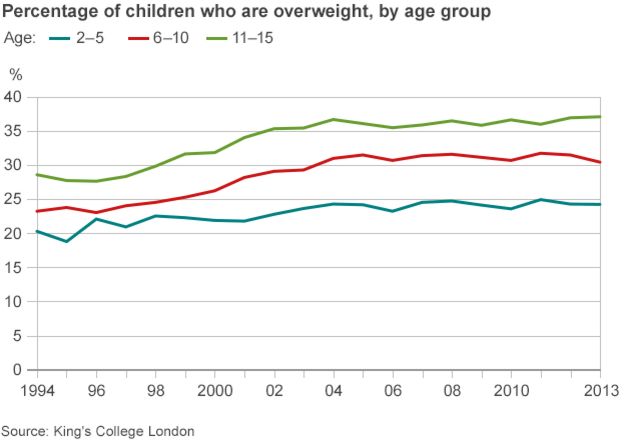
There is no 'pandemic of obesity', this generation of children are not fatter than the last generation of children (although they are fatter than the generation before) :


As this graph (from ONS) shows the peak for teenage obesity was back in 2004. It also shows that obesity is much more of a problem for girls than for boys.

Since there is no demonstrated link between overweight and shortened mortality, we should concern ourselves with the actual obesity rather than ridiculous (and unscientific) estimates of life expectancy. Here's the evidence that shows this 'nutritionist' to be wrong:

This systematic review provides high-quality evidence that obesity grades 2 and 3 are associated with higher death rates from any cause compared to normal weight individuals (around 30% increased risk). However, it also shows that lower grades of obesity (grade 1) do not increase the risk of death relative to normal-weight individuals and, in fact, overweight people had a small but significant reduction in their risk of death in the region of 6%.

In English that means that only the very obese are seriously risking their lives by being fat - the rest of us would probably be happier is we could stay a little thinner but we're not going to live any less long than thin folk.

There is no 'pandemic' of obesity, it isn't caused by fizzy drinks and TV. Nor is our increase in weight anything to do with "aggressively marketed fat-laden fast food'. Our daily energy intake has fallen every year since 1958 (with the exception of a small blip in the 1990s), yet we are taller and fatter than our forebears.

We're fatter because we sit about more (or maybe because we eat too much fruit).

....


Thursday, 18 July 2013

Obesity - the 'official line' is fundamentally flawed

****

I was on the telly talking about Bradford Council and West Yorkshire Trading Standards spending £200,000 on a campaign to persuade fast food restaurants to offer smaller portions and low fat options. My point was that this is the wrong target - it isn't the fast food that's making us fat.

A day later I received an email from Verner Wheelock - that's Professor Vermer Wheelock who used to run the Food Policy Research Unit at Bradford University. Here's what he said:

I have just been watching the item on the initiative by Bradford Met about obesity. Unfortunately this appears to be following the official line which is fundamentally flawed.

And how is it flawed? Several things including:

...the dangers associated with obesity/overweight have been grossly exaggerated. The real problem is not excess weight per se but lack of fitness which affects everyone irrespective of weight

...saturated fats are important nutrients and that the campaign to reduce them is actually damaging to health. In fact there has been a very substantial reduction in the amount of saturated fat consumed over exactly the same period that the so-called “obesity crisis” has been developing.


Verner goes on to say that fat and salt are the wrong target. Instead we should reduce carbohydrate consumption and exercise more (he suggests walking for an hour a day). If you want a little more detail Verner's blog is a very interesting source.  Here's a sample:

With respect to implementation, the emphasis has been on the advice to reduce the total fat and especially the saturated fat (SFA). Here in the UK between 1969 and 2000 the National Food Survey (NFS) shows that total fat consumption had fallen from 120 to 74 g/day. Over the same period the consumption of saturated fat (SFA) decreased from 56.7 to 29.2 g/day. (The NFS was discontinued in 2000). My own interest in exploring the scientific basis of these dietary guidelines has been stimulated by the fact the expected benefits in public health have certainly not materialised. While it is true that life expectancy has been extended, there is no convincing evidence that health generally has improved. We have the “obesity crisis” which has probably been over-hyped (See Blog 10) as far as most people are concerned


...

Wednesday, 3 July 2013

Obesity. It seems Philip Larkin was right...

****

I hope this is true - it may be a false dawn - but there is evidence of some more sensible thinking around public health, thinking that is moving away from the kneejerk New Puritan and prohibitionist rhetoric. Rather than talk of all-population solutions, we get work looking at targeting. It seems that the lessons of AIDS and HIV - blanket advertising doesn't work nearly as well as a focus on the high risk groups - is beginning to creep into thinking around other public health topics.

Here, for example, is Nick Pearce, Director of left-wing think tank IPPR talking about Early Bird a study looking at the precursors of diabetes in children:

All children gain weight during growth, but EarlyBird is interested in the excess gained. It finds that over 90% of the excess weight in girls, and over 70% in boys, is gained before the child ever gets to school age. These findings support a need to re-direct public health initiatives towards an earlier period in childhood.

And the report goes on to show that:

Daughters of obese mothers are 10 times more likely to be obese than the daughters of normal weight mothers, and the sons of obese fathers six times

So rather than use nannying, all-population bans, taxes and controls, we should begin to target the main at risk group - the children of the obese. And there's more - it seems that exercise isn't the answer either:

Using time-lagged correlation to imply direction of causality, weight gain appears to precede inactivity, rather than inactivity to weight gain.

People don't exercise because they're fat, they're not fat because they don't exercise.

Pearce's piece still talks about 'obesogenic' environments (despite the evidence from the study he cites where the critical environment is the home environment prior to school) and suggests population-wide interventions, so we're not out of the woods yet. But the findings throw up some different - perhaps more effective than the environmental interventions preferred at the moment - possibilities. These could include:

  • Better pre- and post-natal information and support especially for obese mothers. We have existing engagement from health authorities through pregnancy and the first year of a child's life - this present an opportunity to target public health interventions
  • Understanding of diet and it's relationship to weight is poor (not least among public health professionals) - there is the chance to improve information, again targeted at the parents of young children

What isn't needed is policies that target the pleasures of those who are not overweight and not at risk because some people enjoying those pleasures are obese and at risk. Yet this is still the preferred approach - that and gimmicks like daft awards schemes for takeaways serving smaller portions!

In the end, it seems that Philip Larkin was right after all!

...


Wednesday, 19 June 2013

Getting heavier? It's not the calories it's the sitting around....

****

As I listened to some professor of public health this morning, I was grateful that the radio is firmly attached to the car. Had it been loose, it would have been out the window - as ever we got fictitious 'deaths saved' that would come from a tax on sugar, a ban on trans fats and the compulsory reduction of salt (to dangerously low levels). And, as we've come to expect, the BBC interviewer simply allowed these lies to be told.

However, there was a little redemption in the news - unreported next to the latest collection of ban this or tax that campaigns from the public health mafia. It said this:

The full study is to be published later this summer, but details disclosed on Monday show that the average adult has cut calorie intake by around 600 a day. 

Yes that's true - we're eating less, indeed considerably less than we were in the 1980s. The problem is that we're getting fatter. Now we don't know the full details of the study but the suggestion is that the extra weight is a consequence of a more sedentary lifestyle, an older population and (I'm guessing) an increase in average height.

These findigns remind us that the mounting - and poorly evidenced - attack on sugar, fat and salt is misplaced. Our extra weight is much more to do with sitting a desks, on sofas and in car seats all day than it is to do with scoffing too much nosh.

Which probably explains why the BBC didn't give it a big splash.

....

Thursday, 25 April 2013

Jamie, Nigella, Delia...you're making us fat!


Or so says Dr Ricardo Costa, senior lecturer in nannying fussbucketry at the University of Coventry (do these places spring up overnight - until today I didn't know Coventry had a University).

The study, published in the Food and Public Health journal, found that many celebrity chef recipes in cookbooks contained “undesirable levels” of saturated fatty acids (SFA), sugars and salt which are linked to obesity, diabetes and heart disease.

Note the detail here and the words - "undesirable", "linked to" aren't really any justification for the headline: TV Chefs are "adding to obesity" and are typical New Puritan weasel words. After all I don't need any evidence at all to "link" something to something else and this is precisely what Dr Costa has done. The research simply runs a load of recipes from celebrity chefs through a computer model and publishes the results:

Food preparation recipes (n=904), covering a wide range of meal types, from 26 dominant British based Celebrity Chefs were randomly sampled from literature and web sources. Recipes were blindly analysed through dietary analysis software by three trained dietetic researchers (CV 6.9%). The nutritional value of each recipe was compared against national healthy eating benchmark guidelines using a healthy eating index (HEI).

Nothing in the research suggests that Jamie, Nigella and Delia are making us all obese with their glorious culinary temptations. The authors however make a huge leap from these temptations to suggest that these wicked TV chefs are affecting our food preparation habits (again without any evidence) and that they are, as a result:

...a likely hidden contributing factor to Britain’s obesity epidemic and its associated public health issues. 

Again we see the loaded words of public health - using epidemic to describe rising rates of obesity is bad in a newspaper article but, in a scientific paper such misuse is inexcusable. Even if obesity rates are rising (and they aren't) it will never be an epidemic because getting fat isn't contagious - I won't catch obesity off you, not even a little bit. And "hidden contributing factor", which I assume means "we haven't got any evidence to support this statement so we'll say it's hidden".

The profile of obesity suggests that Dr Costa and his colleagues are talking nonsense. Obesity is disproportionately an issue for women from lower social classes and middle-aged men. At a guess these aren't the front of the house when Jamie scooters round Italy or the Hairy Bikers talk about vegetables. I may be wrong, of course, but my contention has precisely the same amount of scientific value as Dr Costa's - essentially none.

All this is a reminder that much of 'dietetics' is simply fancy calorie counting based on a set of willfully misrepresented half-truths about salt, sugar and fat. Obesity is a consequence of eating too much and exercising too little and has precisely nothing at all to do with the recipes presented by Lorraine or Antonio on our tellies.

....

Tuesday, 16 April 2013

Salt is good for you - season those chips!

****

We've known for ages that salt - the wicked and evil thing we must remove from our diet - is, in truth, a pretty benign substance at the levels most of us consume. And we also need it in our diet.

Slowly people are beginning to realise this - here's the New York Times:

With nearly everyone focused on the supposed benefits of salt restriction, little research was done to look at the potential dangers. But four years ago, Italian researchers began publishing the results from a series of clinical trials, all of which reported that, among patients with heart failure, reducing salt consumption increased the risk of death.

Those trials have been followed by a slew of studies suggesting that reducing sodium to anything like what government policy refers to as a “safe upper limit” is likely to do more harm than good. These covered some 100,000 people in more than 30 countries and showed that salt consumption is remarkably stable among populations over time.

Got that folks - cutting down salt consumption isn't healthy at all and may even be dangerous! But - as that same NY Times article reports - the food fascists still resist the truth:

When several agencies, including the Department of Agriculture and the Food and Drug Administration, held a hearing last November to discuss how to go about getting Americans to eat less salt (as opposed to whether or not we should eat less salt), these proponents argued that the latest reports suggesting damage from lower-salt diets should simply be ignored.

A classic public health response - we've seen it with the health benefits of moderate alcohol consumption, with e-cigarettes, with meat and with being  slightly overweight - faced with evidence that they might be wrong, the nannies simply ignore it and return to their discredited misrepresentation of the facts. Nothing can stand in the way of public health 'experts' controlling and regulating our diets - they are the ghastly successors of Douglas Jay:

‘...in the case of nutrition and health, just as in the case of education, the gentleman in Whitehall really does know better what is good for people than the people know themselves.’
....

Thursday, 4 April 2013

The wrong diet - supply or demand?


The bien pensant foodies sorts like to believe there's a thing called a 'food desert' wherein poor folk reside. And in these deserts there is no healthy food - no greens, no beans, no fruit. Just stodge and junk.

For the campaigners this is all down to the evils of the market - that fresh stuff can't be afforded by those poor folk so they pile in the pie and pile on the calories. Or maybe it's not:

...people writing about food deserts make a mistake when they assume that food deserts are all about inadequate supply, instead of inadequate demand.  I suggested that food deserts might exist because people who don’t want to eat healthy will live in neighbourhoods without healthy food, not because they choose not to move elsewhere, but because companies that sell healthy food — and this goes for all types of food stores, not just supermarkets — will not make money there.

Ah, you say, this is just some bloke holding forth, where's the evidence?

The evidence goes like this:

...there is really no relationship, according to this one recent study of nearly 100,000 Californians, between the distance between your body and a full-service supermarket (or any other kind of food store), and whether or not you are obese.  Distance, which is a proxy for access (the idea of a food desert is that the nearest supermarket, which has fresh produce, is distant), is for all practical purposes a non-factor.

Yet we have whole legions of well-meaning folk running healthy food projects in poor neighbourhoods - funded mostly by our taxes. And the people who live there would rather eat pizza and chips!

....