Showing posts with label sugar. Show all posts

Monday, 30 November 2015

Shooting the sugar plum fairy. Why advertising isn't to blame.


The headlines from the report into childhood obesity published today will be all about taxing fizzy drinks. A pretty daft idea that targets just one source of sugar on the basis that in one place, Mexico, a 'soda tax' managed to reduce consumption by about 6%. There's no evidence that this tax reduced obesity, which was the main reason for introducing the tax in the first place.

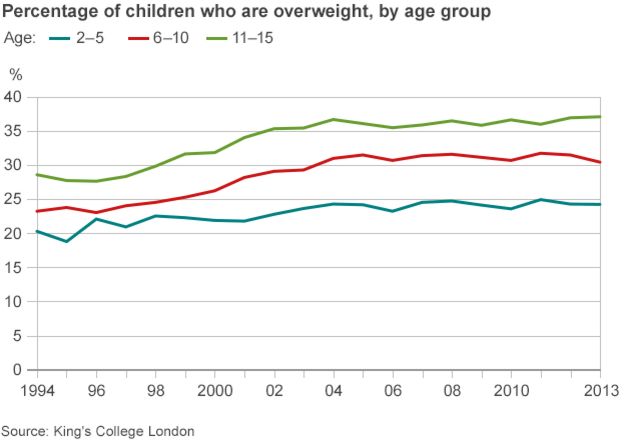
Others will explain better than I can why all this is pretty daft. Not least because childhood obesity is falling in the UK - as the Health and Social Care Information Centre (HSCIC) reported recently. More to the point, the problem with all this is that there's precious little evidence supporting a link between being overweight or mildly 'obese' and mortality:

There is now extensive and convincing evidence that the greatest life expectancy is experienced by those who are classified as “Overweight”. In addition, there is no reliable evidence that there is any reduced expectancy even in those who are mildly obese (5). It is true that those who are seriously obese do have an increased mortality but the picture changes when the effect of physical fitness is incorporated.

I suspect there's little or no chance of the current government introducing a tax on fizzy drinks - the prime minister has ruled it out more than once and the dissenters to the proposal from the health select committee report were both Conservatives - here's Andrew Percy:

Andrew Percy, the Tory MP for Brigg and Goole who sits on the health committee told the paper Oliver’s suggestion is “patronising nonsense”.

“This is a classic nanny state reaction and it won’t work.

“Slapping 10p or 20p on a can of sugary drink won’t make people change their behaviour.”

However the committee's report makes a whole load of other proposals that target advertising and marketing activity - that shoot the messenger.

Promotional and marketing techniques for specific products or brands have the aim of achieving one main goal—increases in sales. This is achieved through old (eg TV advertising, programme sponsorship, cinema, radio and billboards) and new methods (eg social media, advergames and internet pop-ups), which are designed to influence our food choices by, for example, overriding our established eating habits, and taking advantage of others such as our desire to reduce costs. The intent can be to encourage us to switch between brands or products; or there may be an additional consequence of getting us to buy and consume more.

Now this argument - from Public Health England and unsupported by evidence - flies in the face of everything that we know about advertising, choice and the way communications shape our preferences and decisions. Firstly, it just isn't true that advertising's purpose is to increase sales (I'm taking this to mean increasing the size of the market - to sell more sweets or fizzy drinks rather than more of the advertisers sweets or fizzy drinks). Here's the most well know study into the effects of advertising:

This paper is concerned with testing for causation, using the Granger definition, in a bivariate time-series context. It is argued that a sound and natural approach to such tests must rely primarily on the out-of-sample forecasting performance of models relating the original (non-prewhitened) series of interest. A specific technique of this sort is presented and employed to investigate the relation between aggregate advertising and aggregate consumption spending. The null hypothesis that advertising does not cause consumption cannot be rejected, but some evidence suggesting that consumption may cause advertising is presented.

In simple terms, advertising doesn't create new demand and there's some suggestion that the reverse is true. Indeed advertising effects on demand are persistently weak:

Advertising effects appear to be so weak as to give little, if any, support for the Galbraithian view that advertisers exert powerful, manipulative effects upon the allocation of consumers' expenditure between products.

As a marketing professional this is pretty depressing - we've all watched Mad Men and read Vince Packard's 'Hidden Persuaders' and kidded ourselves that advertising somehow created the consumerist world we live in. The prosaic truth is that, as we knew in our hearts (and those famed ad men of the '50s and '60s knew), advertising is a mirror held up to society and merely reflects the changes in our fads, fancies, preferences and choices. Don't get me wrong, advertising works but not in the way people who aren't marketers think it works.

And if you think about this for a second, it becomes clear. The advertiser has absolutely no interest in promoting his competitors' products, which is what he would be doing if what PHE says were true. And the effects - or objectives - are no different if it's cars, chicken or chocolate we're advertising. Or indeed if the audience is children or grown-ups (although there's some evidence showing children are more believing of ads this still only makes them choose one brand of breakfast cereal instead of another).

The most depressing part of all this - apart from the wholly unjustified attack on sugar as a macronutrient - is that the select committee conducted a review of and recommends regulations affecting advertising and marketing without taking evidence from any marketers. Yet again - as we saw with tobacco, with alcohol and with financial services - the messenger is machine-gunned by MPs who start off with no knowledge of marketing and finish with no knowledge of marketing.

In nearly every circumstance, brand advertising doesn't create new demand. Yet we see again the lie that banning or restricting its use will somehow reduce demand. This simply won't happen. The committee is just shooting the sugar plum fairy.

....

Monday, 14 September 2015

Quote of the Day: On sugar-free baking...

Not remotely sugar-free cake
I gather that, on the Great British Bake Off they've been indulging the politically correct idea of baking without sugar. That is without the stuff that you buy in bags not without sweetness.

Here is Miss Whiplash a cake blogger writing about this indulgence:

What is not in question, however, is that there is any difference at all, from the point of view of "health" (meaning, in this case, how it acts in and with your body) between sugar from-a-bag (as prohibited in the episode in question), sugar in honey, sugar from syrups/nectars and, indeed, sugar from fruit (or anywhere else). Substituting one of these things into your cake may make it taste better (and will almost certainly make it different), but will not make it any more or less acceptable from a physiological point of view to anyone - there is nobody for whom this cake will be a more "better" thing, unless they happen simply to like the taste (or have some kind of ethical reason for not eating sugar-from-a-bag, perhaps). It is a pointless (if not actually fruitless...) exercise. 

There's a whole lot more on her blog. The point is important - this sort of anti-sugar message is misleading, unhelpful and, as Miss Whiplash points out as a T1 diabetic, potentially harmful. For me the most important point she makes is about how cutting out the sugar really misses the point:

Anyway, the point is that this cake would still be chock full of other carbohydrates (most commonly flour) which would, on eating, be turned to glucose extremely swiftly in the body, which would raise blood sugar levels almost as much as if it had been full of sugar in the first place. 

 And Miss Whiplash's 'sugar-from-a-bag-free' cake sounds good too!

....

Sunday, 19 July 2015

There is no evidence - none at all - to justify this lastest sugar 'target'


Except, of course, that reducing the amount of sugar might be consequential on reducing total calorific intake. More to the point this selection of one 'macronutrient' as the culprit for rising levels of obesity is pretty lousy science - as if it's not possible to eschew nasty 'added sugar' and get properly fat!

"There's no medical evidence that reducing sugar consumption below 10 per cent to five per cent carries any additional health benefit - absolutely no evidence at all.

"The current average consumption of sugar is around 12-13 per cent. Getting to 10 per cent is a reasonable target and I think we should put some real effort behind achieving that first, but to come up with a new target that is miles away from what is achievable is entirely foolish - no population in the world can do that.

"Even vegetarians from India consume eight per cent of their calories from sugar and they have less heart disease and less diabetes than anyone in the world."

So says Professor Mike Lean, chair of Human Nutrition at Glasgow University's School of Medicine who I'm guessing knows a thing or two about this stuff. Now Professor Lean does say that the government has been too soft on the food industry - he may have a point but surely most of the blame (assuming that's the game we're in) rests with us as consumers.

Nevertheless, blaming sugar for obesity simply doesn't stack up for the very simple reason that we're eating a lot less of it. Here's a line from a research proposal:

Furthermore, there has been a paradoxical decline in sugars consumption in the UK and elsewhere over the past 3 or so decades and yet rates of obesity have continued to increase.

Sadly the proposers still wants to discover whether "individuals with a high consumption of dietary sugars, and in particular free sugars are more susceptible to weight gain than low consumers" rather than accepting the distinct lack of any direct causal link between sugar and obesity. In the end the truth about obesity is pretty straightforward - firstly people are obese because they consume more calories that they use over a long period of time, and secondly that most of the people labelled 'overweight or obese' are not in any way at greater risk of being ill.

Much of the debate around obesity has been a extended effort to find a demon - something or someone to blame for us being fat other than our own overeating and underexercising. The food industry, advertising, takeaways, fizzy drinks, saturated fats and sugars all get a pasting from 'public health' sorts worried about obesity. The truth is that it's a whole lot more complicated than all that but still in the end boils down to us sticking fewer calories in our gobs than we use. And we can achieve this in two ways - eating less and moving more.

....

Sunday, 12 July 2015

Government diet fascists, why not just give us a ration book and be done with it?


The government doesn't want you to eat this - you know what they can do!

The government is about to issue new guidelines on a healthy diet. And it will come as no surprise to discover that the big target in this latest round of fussbucketry is sugar:

Adults and children should be instructed by the Government to halve the amount of sugar they consume and eat almost twice as much pasta, potato and other fibrous foods, an official report is expected to say this week.

This continues the almost daily assault on sugar as a source of energy in our diet - myths about how in some way refined sugars behave differently from naturally occurring sugars when we eat them to lies about direct links between obesity and sugar. Accompanying this, we're told there will be guidance on salt, fat and much else besides. Unsurprisingly alcohol gets a swipe from these diet fascists:

Healthy snacks included a handful of unsalted nuts and raisins one day and a plain scone with low-fat spread on another. Two glasses of wine were allowed during the week and deserts consisted of fruit most days. There was space for a small chocolate mousse one day, and a spiced rice pudding on Sunday.

And it's recognised that urging people to increase dietary fibre "would push most people above the Government's targets for salt, sugar and overall energy intake" - meaning that we end up with a diet stuffed full of vegetables.

Let's predict what will happen here. Firstly all the headlines will be about sugar with the myths and lies reinforced across the media. Stories (as with this story) will be illustrated with pictures of the evil white stuff further stressing the emphasis on sugar. Nice middle-class families will cut out the sugar replacing it with other sources of energy - fruit, bread, pasta and so forth. And then get surprised when they are neither slimmer nor healthier as a result.

At the same time government agencies from local council public health departments and GPs through to schools, hospitals and prisons will start enforcing the 'guidelines' as if they are hard and fast rules. Perfectly slim and healthy children will have chocolate bars snatched from their hands by teachers, hospital food will sink to new levels of utter uselessness, and hordes of clipboard-wielding nannies will fan out across the nation trying to force every establishment serving food to 'offer healthy options', remove salt and serve less sugar. Those cafe sugar dispensers will be banned as rufty-tufty builders have to fight with a rationed dollop of sugar in an inconvenient and wasteful paper sachet.

Meanwhile the triumphant fussbuckets will - even more shrilly than now - begin to shout about the need for a sugar tax or a soda tax. MPs will be inundated with deliberate misinformation from Action on Sugar while behinds the scenes that shocking liar Simon Stevens (who runs the NHS) will agitate a ministers for "something to be done" about obesity. And that something will be a sugar tax - despite there being no link between overall sugar consumption (which has fallen) and obesity.

This 'model diet' might be presented as guidance but it will quickly (as is always the case with government guidance) become a prescription adhered to, enforced and nudged into place by the army of nannying fussbuckets in government agencies and the charities those agencies fund. They might as well be done with it, issue us ration books so we comply with their approved diet and take any vestiges of please in food and eating away from ordinary people.

....

Monday, 1 June 2015

Simon Stevens should be sacked as head of the NHS.

****

Simon Stevens is the man in charge of the NHS and, as such he has a duty to present information to the public in a dispassionate and honest way. He has failed in this responsibility:

Parents are "poisoning" their children by giving them too much sugary food and drink and must give them water, milk and fruit instead, the head of the NHS has warned.

Simon Stevens, the chief executive of NHS England, said that parents must take "responsibility" or put their children at risk of diabetes, heart disease and cancer.

He said that obesity is the "new smoking" and urged food manufacturers and supermarkets to do more to take sugar out of the food and drink they sell.

This particular polemic contains a whole set of factual errors, exaggerations and misleading statements. These include:

  • Implying that sugar is a poison. This is simply untrue (except in so far as a large enough quantity of anything is poisonous), sugars are essential to life because they are the simple compounds our cells use to provide energy.
  • Suggesting that there is a difference between different sugars - milk and fruit contain plenty of sugars (lactose and fructose) that serve exactly the same function as the sucrose in a fizzy drink
  • Saying that there is some connection between the consumption of sugar and increased risk of diabetes, heart disease and cancer. There's a connnection between morbid obesity and these conditions but that isn't caused by sugar but by us consuming too many calories for our needs - this could be sugar but is as likely to be complex carbohydrates from bread, pizza and cake.
  • Indicating that there is a link between sugar and increased rates of obesity when total sugar consumption (that is consumption of all 'non-milk extrinsic sugars') has fallen in the UK not risen
  • Repeating the line that rates of obesity are rising when they are, at worst, stable and may be falling. And failing to make clear that it is our increasingly sedentary lifestyle that is mostly responsible for the obesity problem.

So not only does Simon Stevens give bad advice (suggesting slices of apple are sugar-free) but he compounds this by repeating a series of incorrect, unevidenced and dangerous statements about diet. Plus of course scaring the wits out of perfectly good parents who just want to give their children a sweet treat now and then.

Stevens should be sacked.

...

Sunday, 24 May 2015

A sugar tax won't make anyone thinner - just poor people poorer

****

The other day a Conservative minister I'd never heard of told an audience that he supported a tax on sugar. George Freeman had this to say:

“I think that where there is a commercial product which confers costs on all of us as a society, as in sugar, and where we can clearly show that the use of that leads to huge pressures on social costs, then we could be looking at recouping some of that through taxation.

“Companies should know that if you insist on selling those products, we will tax them.”

Now there are some profoundly unconservative things in this statement - the idea that me getting fat "confers costs on all of us in society" is pretty dodgy from the Party of the individual and individual rights not to mention the idea of 'social costs'. However, my concern is that, even if you accept the validity of taxing things that are bad for society, a tax on sugar is going for the wrong bogeyman.

The first thing of course is to observe that the obesity crisis (or epidemic, if you prefer a different scaremongering line) is not a consequence of our sugar consumption. Not even a little bit. I know this because, while we've been getting fatter, our sugar consumption has been falling. And not just the consumption of the evil white stuff but 'non-milk extrinsic sugars' - that's all the sugar added to food plus honey. Even more importantly - in the UK, at least - our average total calorie intake has also fallen.
UK calorie intake. Source National Diet & Nutrition Survey
You'll notice that the amount of everything consumed (except female consumption of alcohol) has dropped in the ten years from 2000/01. So we can say with a considerable degree of confidence that any increase in obesity over that period is not down to what we eat and absolutely that it isn't down to sugar. The only health condition that is directly linked to sugar is dental caries - and we know that good oral hygiene (brushing your teeth regularly, using a mouthwash and so forth) eliminates most of that risk. Taxing everyone because some people don't look after their teeth strikes me as a largely futile exercise and deeply unconservative.

The next thing is to ask whether a sugar tax (and I can only assume that this means a tax on 'non-milk extrinsic sugars' rather than just sucrose) will be sufficient to change behaviour so suddenly pounds are shed from our waists and the obesity 'crisis' is solved. Certainly the evidence from other taxes is mixed - to work the tax has to be sufficiently high to actually make a difference to behaviour and, as the Danes discovered, won't work if it's easily avoidable.

So let's assume that George Freeman gets his ignorant way and a sugar tax is imposed. The impact will be to increase the price of products containing sugars - I'm guessing no distinction will be made between sugars naturally present in the product (like the fructose on your orange juice) and sugars added to the product (like the honey in those sugar puffs). If you wander round your supermarket idly reading product descriptions, you'll find that sugars crop up - in one form or another - is many processed foods. So the impact of a sugar tax will be to increase the price of a whole host of products - from the obvious chocolate, honey and jam through to pizza, ketchup and meat pies.

Now it might be that the impact will be for manufacturers to reduce the amount of sugar but that might present some challenges - the sugar's not there by accident. So what happens is that the tax (as taxes usually are) gets lumped on the price and is paid by us consumers as our purchases ping across the checkout scanner. And, assuming that the sugar tax is low, all this will mean is that everyone carries on much as before - buying the stuff they want and getting fatter or thinner depending on how much we stuff in our mouths. Except, that is, for the poorest folk who will discover that the £1.39 pizza is now a £1.49 pizza making it just a little harder to feed the family.

Unless you set the sugar tax at a rate that really changes behaviour - read this as poor people not being able to afford food - the result will be negligible. A sugar tax really won't make anyone thinner. It will just make the poor a little bit poorer.
....

Thursday, 26 March 2015

More media lies about sugar and processed food...


Some healthily presented sugar and fat


Writing in Spectator Health, Janna Lawrence continues the war on cheap, accessible and nutritious mass-produced food by claiming - entirely without evidence - that it is this stuff that is responsible for a range of health problems (you know the list - cancers, diabetes, obesity and so forth):

Regardless of whether you buy into the concept of food addiction, the results of eating unhealthy, high-energy foods are self-evident. A quarter of adults in England are obese. Admissions to hospital with a primary diagnosis of obesity increased nine-fold between 2003 and 2013. That’s an astonishing statistic. Obesity is reckoned to cost our economy £47 billion a year. But while selling cocaine is illegal, selling sugar and fat is fine, apparently.

Janna Lawrence has simply absorbed the latest example of egregious pseudo-science and wrapped it up in some scary statistics to suggest that somehow we are eating loads more sugar and fat but don't know it because it's secretly loaded into 'processed food'.

Let's deal with some of the facts. Firstly total calorie consumption per capita has fallen in the UK. And, alongside this, consumption of fats and especially saturated fats has fallen significantly. Plus, of course, our consumption of sugars - that's all sugars not just the white stuff in bags - has fallen too. This includes all Ms Lawrence's evil processed foods.

The DEFRA survey (conducted annually since the 1970s) also contains data on per capita consumption of different sources of calories...(and) shows a decline in the consumption of ‘total sugars’ of sixteen per cent since 1992 (and) a decline in saturated fat consumption of 41 per cent since 1974. Consumption of protein, cholesterol, sodium and carbohydrates (of which sugar is one) have all declined since 1974. 

So while we've been piling on the pounds and making new notches in our belts, our consumption of the things Janna thinks are responsible has been falling. It is quite simply a lie to say that the obesity problem and its associated health consequences is a result of increased consumption of sugars and fats.

Yet people persist in promoting the idea that our obesity problem is a consequence solely of diet when the evidence says strongly that it isn't - our ever more sedantary lifestyle is the real culprit. Moreover rates of obesity stopped rising sometime around 2004 - they've not fallen much but this is not, as some suggest, an accelerating problem but rather a stable one. Because so much has been invested by the public health industry in problematising overweight there's a reluctance to admit to this stabilising of obesity rates.  It's also true that the increase in obesity is overstated:

Overall, the research shows gradual increases in the average BMI over time, from 25.6kg/m2 to 27.5kg/m2 in men; and from 24.5kg/m2 to 26.5kg/m2 for women. Most of this increase occurred before 2001, after this there has been a much slower rate of increase.

This - over a thirty year period - represents a seven per cent increase in average male BMI and an eight per cent increase in average female BMI. As ever the problem isn't really a 'whole population' issue but rather that we have a segment of that total population who, for whatever reason, are unhealthily obese. This means that the ghastly health fascist solution proposed by Janna Lawrence is not only illiberal (she admits to that) but also completely unnecessary. Rather than introducing sugar taxes, banning advertising and paying benefits in food stamps only redeemable against produce approved by the likes of Ms Lawrence, we should instead target our resources towards the million or so people with a real weight-related health problem.

....

Thursday, 19 February 2015

NHS boss, Simon Stevens is either ignorant or lying

****

The New Puritan who we've put in charge of the NHS is off on one again:

The head of the NHS is calling for increases in the price of cheap alcohol amid warnings that heavy drinking is taking a “huge” toll on Accident & Emergency departments. 

This is a straightforward pitch for minimum unit pricing. The problem is that we already have some of the highest taxes on booze in Europe and, just as importantly, it is already evident that this tax is leading to the manufacture and distribution of illegally manufactured or smuggled spirits.

Now it's true that some A&E departments have a problem with alcohol-related patients but it isn't true that this has changed much over the past couple of decades. Indeed there's something of a myth that A&E Departments are quiet, calm places until 11pm on a Friday when they transform into a Hogarthian hell-hole of drugged and boozed up patients. In reality there are fewer people in A&E departments at these times - the peak hour according to the King's Fund is 10am on a Monday morning. And, as studies have shown, we really have little or no idea as to the real scale of alcohol-related attendance at A&E.

Given the limitations in data coverage and quality, A&E diagnosis data should be treated with caution. As the level of missing data is so high, and coding is largely not comparable between providers, this field should only be used for Trust-specific analyses (e.g. to produce profiles, possibly focusing on specific diagnoses, within single Trusts).

What we do know is that the sort of people Simon Stevens believes he is targeting represent a very small part of the A&E departments' work - just 0.4% in 2008/9 according to NHS England. But despite the lack of good information (a problem caused by the excellent news that doctors and nurses in A&E are more bothered with sorting peoples problems out than with how many sherbets they've had before arriving) this doesn't stop statements such as this:

Latest figures show that 20 per cent of A&E attendances are alcohol related, a figure which rises to 80 per cent during peak weekend periods on Friday and Saturday nights.

It may well be the case that these figures are right but it still doesn't tell us that introducing a minimum price will make a jot of difference. I'm guessing that many of that 80% on Friday and Saturday nights consumed much of their alcohol in licensed premises - meaning they're paying well above the 50p per unit that the health fascists want to introduce.

Not content with peddling fictions about drinking, Mr Stevens has a side-swipe at sugar:

Mr Stevens said heavy drinking and soaring levels of sugar consumption by the British public were now two of the most urgent health problems facing the nation, 

Soaring sugar consumption? An explosion in consumption that has seen our sugar intake fall significantly since the 1970s?  Here are the stats from Australia - they're not much different in the UK:


The AHS (Australian Health Survey) was conducted by the Australian Bureau of Statistics, which also conducted Australia’s last national dietary survey of adults and children in 1995, so now we have insights into how the diet of Australians has changed over the intervening period of approximately 16 years. Here are some of the top-line results relating to sugar.

• Intake of total sugars has fallen in men, women and children.
• The percentage of dietary energy from total sugars has also fallen.
• Carbohydrate intake has fallen, both in absolute terms and as a percentage of energy.

Total energy intake has also fallen.


Simon Stevens is simply not telling us the truth.

....

The AHS was conducted by the Australian Bureau of Statistics, which also conducted Australia’s last national dietary survey of adults and children in 1995, so now we have insights into how the diet of Australians has changed over the intervening period of approximately 16 years. Here are some of the top-line results relating to sugar.
• Intake of total sugars has fallen in men, women and children.
• The percentage of dietary energy from total sugars has also fallen.
• Carbohydrate intake has fallen, both in absolute terms and as a percentage of energy. Total energy intake has also fallen.
- See more at: http://scepticalnutritionist.com.au/?p=1438#sthash.9YpE5HzL.dpuf

Friday, 16 January 2015

The Labour Party really has it in for poor people.

****

The other day, to more or less blanket media coverage, Andy Burnham (Britain's most shameless MP) launched Labour's public health strategy - "Protecting Children, Empowering All" is its title:

Changes to diet and lifestyle mean it is all too easy to lead a less healthy life than in times gone by, and we all risk taking on more sugar, fat and salt than is good for us and failing to move about enough to burn it off. Our complex and fast-moving modern world is exposing children to ever-more sophisticated commercial pressures. We are all absorbing higher levels of stress and insecurity which can erode mental health and well-being and lead to poor diet and addiction. For too many people this is the new reality of modern living in the 21st century. Helping people deal with it will require a new approach to public health.

The authors of this 'new approach' go to great lengths to tell us that this isn't the 'nanny state' - mostly because those authors have chosen to redefine what we mean by that term. But what is most shocking - from the political party that claims to champion the interests of the working class and the poorest in society - is that the proposals are for a series of highly-regressive interventions based on a combination of poor science and a snobbish attitude to the personal choices of those people. As Dick Puddlecote puts it:

It reads like it was written in Islington by a bien pensant yogic chakra-chasing millionaire surveying life outside their window with disdain and revulsion at how the unwashed choose to enjoy themselves. This, apparently, is what the modern Labour party thinks will chime with working class people...

The core of the policy is a renewed legislative attack on booze, fags, burgers and fizzy drinks. Or, as Labour describes it - alcohol, tobacco and sugar.  The proposals are founded - as ever - on poor science and an almost complete absence of evidence. On alcohol the proposals are for a series of specific actions targeted at the lowest cost alcohol - bans and taxes that hit the poor not wealthy folk like Andy Burnham. We will see bans or a new higher duty on cider, giving public health directors the power to oppose licensing decisions and, I would expect, a renewed effort to introduce a blanket, regressive attack on the poorest in the form of minimum unit pricing.

On tobacco, we'll see the introduction of plain packaging for cigarettes - a policy that will destroy good manufacturing jobs in Bradford without making (as we now know from the policy's effect in Australia) the slightest difference to rates of smoking. And - as befits a bunch of fussbuckets - Labour leaves the door open to bans and restrictions on vaping. Yet again, this is pointless posturing that does more harm than good for the working classes Labour claims to represent.

But it's the attack on sugar that reveals Labour at its worst. Chris Snowdon reminds us that the source of Burnham's anti-sugar position (a position almost entirely without evidential support) is pretty dodgy:

Time and time again Action on Sugar make hyperbolic and downright false claims that cannot be supported by their own citations, let alone by the wider scientific literature. It is scary to think that there are people in power who take them seriously.

The sad truth is that Labour has accepted these false arguments almost entirely, telling us that we're eating more sugar, fat and salt than we used to and that this is why we are fatter. This is quite simply untrue but it doesn't stop Labour launching into yet another attack on advertising and further judgement of the pleasing and personal choices that millions of Britons make, choices to smoke, to drink and to eat salty or sugary food.

These proposals are not only ill-founded but represent a direct, regressive attack on the poorest - things like a soda tax (which Burnham is very keen on) falls heaviest and hardest on the poor and a sugar tax would be even worse. New powers on licensing mean that pubs and clubs in poorer areas will be targeted for closure - on the grounds of combating 'health inequalities' and the entirely false belief that concentrations of licensed premises lead to higher alcohol consumption.

Hardly a day passes without some posh left-winger sniffily and disdainfully dissmissing the choices and preferences of ordinary people. For all the protests of Burnham, these labour proposals represent an extension of the nannying, controlling and dictating state. What Labour's policies tell us - yet again - is that the party doesn't believe that people, especially poorer people, are capable of making their own decisions and choices. Egged on by the health fascists in the growing public health industry, what Labour is doing is planning to ban, control or limit the pleasures of ordinary folk. The pleasures that make like just a little bit more tolerable for the poorest in society.

Labour, it seems, really has it in for poor people.

....


Saturday, 3 January 2015

Jamie Oliver is both a nannying fussbucket and wrong about sugar consumption

****

It seems 2015 is going to be the year where that attack on sugar goes postal - we'll see almost daily pieces claiming it's addictive, poisonous and responsible for all the sins and evils of the world. And that the way to deal with this problem is to lump a tax on the evil stuff.

So it starts - with a famous TV chef:

Mr Oliver told the Daily Mail: “Sugar’s definitely the next evil. It’s the next tobacco, without doubt, and that industry should be scared. And it should be taxed, just like tobacco and anything else that can, frankly, destroy lives.” 

Jamie goes on to claim that "68 per cent of every case that goes through the NHS is diet-related" - you know now that he's lost it (if you've any idea where this statistic comes from do let me know).

Of course the thing about sugar is that we eat a lot less of it than we used to - really:

In 1974 the average consumption of sugar per head per week in the UK was  458g - which is a near as it gets to a pound of sugar each week. Today the figure is just 90g per head per week. Sugar consumption has fallen every single year (bar one) since 1958.

How our diet has changed since the 1970s


And this isn't just the bags of white stuff but all that 'Non-milk Extrinsic Sugar' - basically all the 'added sugars' of whatever sort that crop up in our food. For a longer term perspective, here's a graph of UK sugar consumption:

UK per capita sugar consumption is now falling

Source: Czarnikow, F O Licht, ISO, Board of Trade Journal
Now it's true that the UK has a problem with obesity. And that this contributes people getting diabetes, liver disease, coronary heart problems, bad knees and so forth. But the cause of this problem really isn't sugar.

....

Saturday, 27 September 2014

Alan Johnson - nannying fussbucket of the week

****

Alan Johnson the chirpy cockney lefty pundit who used to be a health minister under Tony Blair wants to ban Coca-Cola:

One thing: a single proclamation; a dictat that required no pandering to public opinion or consultation with a focus group. It’s simple. I’d ban Coca-Cola and all its offshoots, lookalikes and variants.

Free from the constraints of good sense, this blokiest of ex-MPs reveals himself as just another health fascist. And it helps that Coca-Cola is a faceless American corporation, one of the dark and sinister groups manipulating our gullibility and corrupting our youth. Now I think Coca-Cola is revolting stuff but millions every day enjoy the pleasure of drinking the foul muck and it's none of my business to be calling for bans or anything of that sort.

Fizzy-pop isn't especially good for us but then neither is that lovely chocolate fudge cake Alan's auntie probably used to make or those wonderful hand-made traditional sweets sold in that lovely old-fashioned shop on the high street. Sweetness - whether from sugar, fruit or honey - is wonderful, a joyful pleasure for young and old alike. Johnson, like all the rest of the health fascists, would have us live in a dull, drab world where nannying doctors dictate where, what and when we all eat.  A world where little brainwashed kids - in Johnson's words - lecture us about our sins:

The result will be an army of happy children marching forward together, eyes bright, teeth gleaming; instead of teaching the world to sing, they will teach it to stop consuming sugar.

If anything should be banned, we should start with ghastly, self-righteous health facsists like Alan Johnson.

....

Tuesday, 4 March 2014

The Chief Medical Officer misleads parliament about sugar and obesity...again

****

This is 'normal service':

She said she believes "the research will find sugar is addictive" and that "we may need to introduce a sugar tax".

I sorry but it simply is not true - not even a tiny little bit - that sugar is addictive. Except in the 'it's very nice and we like to eat it' sense of addiction.  The 'research' as the Chief Medical Officer is already there - lots of it - and it says that sugar isn't addictive. Here's Jan Ulbrecht, associate professor in biobehavioral health and medicine in the College of Health and Human Development at Penn State University arguing that sugar isn't addictive:

"Since the human body does not become physically dependent on sugar the way it does on opiates like morphine and heroin, sugar is not addictive," 

The idea - commonplace amongst the purveyors of New Puritan junk science - is that, because sugar stimulates the brain to produce dopamine in the same way as cocaine therefore it is addictive.

The central issue here, however, isn't about addiction but about obesity - firstly whether we have increasing levels of obesity and secondly whether that obesity is caused by our increasing dependence on sugar.

Both of these things are false.

On the growth in obesity - here's a chart of mean BMI (body mass index) for the UK 1993-2007:

On average we really haven't got much fatter. And we know that childhood obesity is falling something that probably reflects the other unhelpful fact for anti-sugar campaigners - children are consuming less sugar (in every form).

Indeed sugar consumption has fallen - all forms of sugar not merely the white stuff in the sugar bowl but the scary 'hidden sugar' the campaigners keep telling us about. Our consumption of 'non-milk extrinsic sugars' has fallen by more than half since the 1970s and by 10% over the past decade. Sugars now represent about 16% of our total energy intake compare to about a third three decades ago. If there's a single culprit for the increased levels of obesity it isn't sugar. Indeed nothing other than fruit and fruit juices has increased compared to 1970.


So why, given the availability of this real information - that there isn't an 'obesity epidemic' and that sugar consumption has halved - does the Chief Medical Officer make out to MPs that sugar is a problem that requires regulation or a new tax?

....


Saturday, 11 January 2014

A reminder of the effect of protectionism...

****

Amidst all the nannying fussbucketry about sugar, I stumbled on a consequence of making the evil white stuff more expensive:


In the 1980s when the US price of sugar was pushed as much as four times higher than the world price there were many smuggling schemes if not actual sugar-runners. In our textbook, Modern Principles, Tyler and I discuss one scheme where Canadian entrepreneurs shipped super-sweet iced tea to the United States where the “tea” was then sifted and the sugar resold. 


Bans, tariffs, price-fixes - all the things so beloved by the fussbuckets - are just a recipe for cheats and criminals to thrive.

....

In the 1980s when the US price of sugar was pushed as much as four times higher than the world price there were many smuggling schemes if not actual sugar-runners. In our textbook, Modern Principles, Tyler and I discuss one scheme where Canadian entrepreneurs shipped super-sweet iced tea to the United States where the “tea” was then sifted and the sugar resold. - See more at: http://marginalrevolution.com/marginalrevolution/2014/01/is-the-sugar-quota-justified.html#sthash.FHa9wuS7.dpuf

Thursday, 9 January 2014

Sugar consumption is falling...we seem to have missed this fact

****

A great deal of nonsense about sugar - topped by the atrocious nonsense in The Independent - requires a little balance. You would after all be expected to believe that we are in a sort of drug-addled feeding frenzy of sugar consumption.

So here are some facts about the consumption of "non-milk extrinsic sugars" (this is all the added sugar as well as honey) in the UK. The figures come from the National Nutrition and Diet Survey (NNDS) conducted by the Government to provide a nationally representative snapshot of the nutritional intake and status of the UK population.

In 2000/01 NMES consumption in daily grammes was:

Male: 79
Female: 51

In 2008-20011 the average is:

Male: 70
Female: 50.1

So our sugar consumption has fallen. And this includes ALL forms of added sugar - the scary hidden stuff in processed food and the spoonful of lovely honey you stir into your hot toddy. Other than for women over 65 every category of consumption has fallen - with the biggest fall being among children.

It is worth noting also that the average total energy consumption (those pesky calories) has fallen by around 10% in this period - hardly an indicator of an "obesity pandemic".

Maybe sugar is bad for us - certainly eating too much of it can contribute to poor health and we perhaps should pay a little more attention to what's actually in the food we eat. But this "sugar is a poison", "we're addicted to sugar" argument is quite simply a complete fabrication. It just isn't true.

....

Sunday, 4 August 2013

Sugar - more from the new puritans


Today's target for the New Puritans is sugar:

Though the drinks and food industry still hotly contests it, a scientific consensus is now emerging that fatal problems can be traced back to excessive sugar consumption. Sugary drinks, addiction and obesity are inextricably linked: excess sugar in the diet may be a greater cause of obesity than fat is. Obese people suffer from diabetes, cancer, fatty liver disease, dementia and heart problems to the extent that their healthcare costs are double those of people with a healthy body mass. The "metabolic syndrome" maladies associated with insulin resistance and obesity – many authorities now just use the term "diabesity" – are expected soon to overtake tobacco as the leading cause of heart disease in the world. And perhaps of cancer, too.

This 'scientific consensus' consists almost entirely of Dr Robert Lustig described as:

...the guru of an increasingly noisy international campaign pressing governments to act as aggressively on sugary drinks as they have on tobacco

To question the evil of Big Sugar is to question this received wisdom. In doing so I will present just one statistic - sugar consumption from 1974-2010.

In 1974 the average consumption of sugar per head per week in the UK was  458g - which is a near as it gets to a pound of sugar each week. Today the figure is just 90g per head per week. Sugar consumption has fallen every single year (bar one) since 1958.


The period of the graph above was the period during which levels of male obesity rose from around 13% to over 22%. Yet our consumption of sugar did not rise during that period. This makes it pretty hard to finger sugar as the main culprit for increased levels of obesity.

While sugar is a factor in obesity - and consumption isn't evenly distributed across the population - the main factor is our sedentary lifestyle:

According to rigorous research by the Institute for Fiscal Studies (IFS), the average Briton consumes 600 fewer calories every day than 30 years ago. That’s like dropping a daily burger and chips from your overall consumption.

That’s the good news and now here’s the bad. We’re ingesting 20% fewer calories than our counterparts of the early 1980s, and yet we weigh, on average, a whopping 30lb more.
This isn't about getting people to go to the gym - that helps but is no substitute for constant physical activity: walking, climbing steps, physical handling, lifting and so forth. The truth is that we eat more than we should given that our default state is sofa, chair or car seat.

Sugar is just a convenient demon especially when we can claim it's addictive, that our overconsumption is someone else's fault - Big Sugar, advertising, Coca-cola - rather than our own responsibility.

And the demon gives the New Puritans another thing to judge people on, another of life's pleasures to denormalise and another chance to screw money from the taxpayer to sustain The Church of Public Health.

....