Showing posts with label alcohol. Show all posts

Saturday, 17 March 2018

Drinking is central to civilisation...


Alcohol - wine, beer, cider - has been part of human life since before written records began. More than anything else it is the lubricant of society, the cause of conviviality and the begetter of truth. It's also the likely reason we're civilised:
For a long time, humans traveled often and foraged for food, rather than growing it. And that worked pretty well, so anthropologists have long puzzled over why people started settling in a single spot. One benefit to nesting: growing grapes and grains, and staying in a place long enough to brew beverages for weeks or months, as beer and wine require. "Some posit this as the reason that civilization began in villages surrounded by golden fields of barley and rows of grapevines on the hills," Money writes.
And that natural fermentation process, the divine blessing of yeast, made possible those other things central to the pleasures of our lives: bread, chocolate, coffee. Drinking really is central to human civilisation - taking it away, prohibiting its blessings is a terrible, terrible sin.

.....

Monday, 23 October 2017

Minimum pricing for alcohol - stupid and immoral in equal measure


The Welsh government has (having tiptoed back from banning e-cigs) decided that it's keen on introducing a minimum unit price for alcohol:
A law to set a minimum price for selling alcohol in Wales has been unveiled.

Ministers believe tackling excessive drinking could save a life a week and mean 1,400 fewer hospital admissions a year.

Pricing is seen as a "missing link" in public health efforts, alongside better awareness and treatment.

Under a 50p-a-unit formula, a typical can of cider would be at least £1 and a bottle of wine at least £4.69.

A typical litre of vodka, for example, would have to cost more than £20.

The Welsh Government has not yet decided what the price will be, however.
This policy is popular with the New Puritans and temperance campaigners who populate public health departments these days. And, sadly, politicians who should know better cluster around these officious fussbuckets thinking that 'clamping down on drinking' is, in some way, a good idea and popular.

But minimum unit pricing is, in equal measure, stupid and immoral. Here's why stupid:
Alex Loveland, a recovering alcoholic who supports people with dependency, is worried that it will not help them.

"They're going to try to get alcohol by any means necessary and I think it will put more strain on very underprivileged people," he said.
So here's a fellow who, I guess, knows a little bit about problem drinking. Imagine the typical alcoholic - faced with more expensive booze, what are they going to do? The idiot fussbuckets who are proposing a minimum unit price think this:
"The most substantial effects will be experienced by harmful and hazardous drinkers, who are more likely to consume cheaper and higher-strength alcohol products." 
Yes folks, these people think an alcoholic is going to drink less because the price goes up. You know, I've a feeling that addictive demand is pretty inelastic - just a guess but if I've a compulsive need for booze, I'm going to fail to feed the kids before I don't get that booze. The policy is stupid.

It doesn't make any difference how you look at this outcome, it is also immoral to propose a policy that has such an effect. To introduce any public policy that, by design, results in more risk and more harm for vulnerable people cannot be justified. Plenty of public policy (any examination of our benefits system over time shows this) has unintended and harmful negative affects but most of it is not harmful by design. Minimum unit pricing is intended to increase risk and harm among problem drinkers - it is its sole purpose. Or rather among those problem drinkers who can't afford £20 for a bottle of vodka, which I suspect is a minority of such drinkers.

Others will point out that this policy of targeting only cheaper drink is an attack on the less well off. On the poor old man who buys a couple of the cheapest cans to drink on Sunday afternoon while he watches the racing on the telly. Or the single mum on benefits with two kids who gets respite from them on a Thursday and celebrates with a bottle of Lambrini, some cheap snacks and reality TV.

Us better off folk will be fine. We'll still be able to afford malt whisky and craft beer. And we'll feel better - or so the public health nannies think - knowing we've dealt with the problem by making poor people pay more for their moderate drinking. As I said - stupid and immoral.

...

Saturday, 8 October 2016

How public health and temperance campaigners exploit children


Prohibition and temperance aren't the children of health concerns but rather the offspring of a certain type of christian judgmentalism. But perhaps it shouldn't be a surprise that today's dominant religious faith - heath and wellbeing - has adopted the moralism of a previous age in its desire to have us all live a dull but righteous life so we can live forever. How could you indulge in pleasures that may, as a side effect, shorten your life?

And just as with all good religions, our Church of Public Health creates its myths and legends as convenient fairy tales designed to sway the gullible to the cause of living forever. Here's a classic:
Alcohol is being sold at "pocket money" prices across the UK, with products commonly bought by underage drinkers among the cheapest, research by a campaign group suggests.

The Alcohol Health Alliance said white cider - sold for as little as 16p per unit of alcohol - is favoured by teens.
The story in question combines two entirely separate and essentially unrelated pieces of information into a scary story about how young girls are being sucked into a terrible world of self-destruction, harm and death by the purveyors of booze at those 'pocket money prices'.

The first piece of information tells us that:
The Organisation for Economic Co-operation and Development (OECD) study of its 35 member countries found that 31% of 15-year-old girls reported having been drunk at least twice, compared with 26% of boys (which is in line with the OECD average).
Note the wording - 'drunk at least twice'. What the research tells us is that some girls self report that they have been drunk on two or more occasions. And that seven out of ten girls say they haven't been drunk on even two occasions. The rest are the rebels who maybe drank a few glasses at Christmas or shared a half bottle of vodka at a sleepover. There really isn't anything to get worried about in these statistics. And let's be clear that they've absolutely nothing at all to do with the other information in the story - the bit about 'pocket money prices':
The Alcohol Health Alliance (AHA), a grouping of more than 40 organisations including medical colleges and health charities, surveyed the cost of 480 products on sale in major supermarkets and off-licences in London, north-east England, north-west-England and Scotland.

Its research found both Asda and Tesco to be selling perry at 19p per unit, while the same drink was available at Sainsbury's for 22p per unit. Morrisons was selling cider at 20p per unit.
Now let's set these temperance folk a challenge. Take a 15 year old girl, give her some pocket money and tell her to go and buy some of that 19p per unit perry in ASDA. It's not going to happen, there is no way they'll be able to blag their way through this one. The girl will not succeed in buying any sort of booze, not even cheap white cider at 'pocket money prices' in any supermarket (or for that matter off license). If the 15 year old girls are drinking it's because they've bought in illegally from a smuggler, stolen it or most like been bought it by someone old enough to make the purchase. And, as the distinct lack of drunk 15 year old girls staggering round our streets tells us, this really isn't common or much of a problem.

So, given that the evidence is that booze at 'pocket money prices' isn't driving high levels of teenaged bozziness, why are the Alcohol Health Alliance and other fussbuckets so keen to make out that it is? Here's a clue:
The chairman of the AHA, Prof Sir Ian Gilmore, the former president of the Royal College of Physicians, said: "In spite of a government commitment to tackle cheap, high-strength alcohol, these products are still available at pocket money prices."

Calling for an increase in duty on cider, Prof Gilmore said: "In addition, we need minimum unit pricing. This would target the cheap, high strength products drunk by harmful drinkers whilst barely affecting moderate drinkers, and it would leave pub prices untouched."
This isn't about those girls at all, it's about 'high strength products drunk by harmful drinkers' who the AHA, as good temperance folk, heartily disapprove of. Now some of these people are pretty unsavoury and can cause problems with their behaviour but they're still adults with choice and agency. And making the booze more expensive won't change much - except they'll eat less, skip the rent (and get evicted) and spend more time panhandling other folk for the wherewithal to buy the newly expensive white cider. The more creative ones might make their own - it's really easy.

What the AHA are doing here is playing the 'for the children' card by hinting that children are the ones supping the white cider and therefore we should do something to stop them. Hence the reference to 'pocket money' and the talk about girls - we're having our emotional strings played here by organisations with over 100 years spent perfecting the demonisation of drinking. Prof. Gilmore and his fellow fussbuckets don't just want to stop 'harmful drinking', what they want is to denormalise drinking, to make it something banned, controlled, taxed, price-fixed and confiscated. They want to take you pleasure away simply because they disapprove of that pleasure.

And to achieve this end, the Church of Public Health will conflate unrelated data, will exaggerate research results, will speak of exceptional cases as if they were commonplace, and - when all this fails - they'll just straight up lie.

....

Tuesday, 9 August 2016

How alcohol policy is set by temperance campaigners


Fussbucketry Central
Chris Snowdon writing in the Spectator explains the dreadful truth about the UK's alcohol policy - it is designed by people dedicated to teetotalism and temperance:

The Institute of Alcohol Studies (IAS), a small but hardline anti-alcohol organisation, was heavily represented on the committee. The IAS was formed in the 1980s as a direct successor to the UK Temperance Alliance which, in turn, had been formed out of the ashes of the UK Alliance for the Suppression of the Traffic of All Intoxicating Liquors, a prohibitionist pressure group. The IAS receives 99 per cent of its income from the Alliance House Foundation whose official charitable objective is ‘to spread the principles of total abstinence from alcoholic drinks’. Its director, Katherine Brown, was on the CMO’s panel, as was its ‘expert adviser’ Gerard Hastings, although he failed to disclose his IAS role in his declaration of interests.

So when you hear the latest piece of public health dribble about drinking remember that it comes from people with an ideological opposition to drinking alcohol.

...

Friday, 22 April 2016

In which alcohol researchers discover something called a "party" - and want it stopped


Intrepid Alcohol Researcher learn about the Party

John Holmes the neo-puritan who runs the Alcohol Research Group at the University of Sheffield has stepped away from his usual reliance on using computer modelling as his source or evidence to look at actual human behaviour. And our intrepid researcher approaches this study with the arrogance of a 1950s social anthropologist describing the marriage practice of some previously unknown jungle tribe.

However, we also see occasions that are commonplace but attract less attention from policy makers and public health advocates. For example, 14% of drinking occasions involved domestic gatherings of family and friends, perhaps at house parties and dinner parties or to watch the football. On average people drank the equivalent of a bottle of wine or four pints of beer on these occasions and, in many cases, they consumed more than this. Yet such occasions are rarely discussed when identifying the kinds of drinking problems that need to be tackled.

The discovery that people have parties must have been pretty shocking really. Who knew? And what a delightfully neo-puritan statement concludes Holmes' discovery of the party - "...identifying the kinds of drinking problems that need to be tackled". You and your friends and family chilling round a barbeque (assuming we actually get some sunshine), celebrating a new job or maybe just getting together to share a drink and have a laugh - these events, my friends, are "drinking problems that need to be tackled".

Holmes goes on to fret a little more. You see the neo-puritan fussbuckets at Sheffield have been the main advocates of minimum unit pricing as a means of stopping people (in particular poor people) from drinking. This advocacy was almost entirely based on the torturing of Holmes' computer model plus some very creative interpretations of price elasticity. At no point did the Sheffield researchers ever consider actual drinking behaviour by real people. And now, having seen how real people consume alcohol, the conclusion is that something else must be done to stop all this partying, pleasure and drunkenness:

Introducing a minimum price for alcohol and providing drinking guidelines for those deemed lower risk might reduce habitual alcohol consumption, but these policies might do less to tackle heavy drinking where getting intoxicated and letting the hair down is the main motivation and where the location, company and timing are all conducive to sidelining concerns about price and long-term health.

You see the problem don't you. When we get in a few bottles, cook up a big chilli and invite folk round to celebrate a new job, a big win or a graduation, we're not thinking about our health or how much all that lovely booze is costing. We're just planning on having a damned good night and waking up in the morning with a hangover. This is, of course, exactly how parties work - unless of course, you're working in an Alcohol Research Group where, presumably, celebrations are more muted featuring only tap water and decaffeinated coffee.

The sad thing is that, now these researchers have discovered that people like to have a drink at parties, they'll be working overtime to develop 'strategies' intended to stop this happening. We'll get the usual finger wagging fussbucketry - ad bans, turgid lectures about drink, more licensing restrictions - and to this will be added new wheezes like limiting how much booze you can buy at a time. Of course what these neo-puritans actually want is prohibition and they plan on introducing it by stealth.

.....

Wednesday, 30 March 2016

A reminder that prohibition doesn't work

****

In a beautiful example of 'baptists and bootleggers', Scott Beyer tells the tale of drinks laws in two US states - Louisiana and Oklahoma. The former has among the most liberal and the latter the most illiberal with controls over distribution, pricing and the manner of sale plus stonking levels of tax on booze. And the result:

Another rationale may be public safety; officials want to limit the availability and appeal of alcohol, so that it isn’t abused. The only problem is that this doesn’t work, any better than 1920s Prohibition did. According to the Centers for Disease Control and Prevention, Oklahoma is in the upper third of states for its intensity of binge drinking, with Louisiana surprisingly in the middle of the pack. And the Foundation for Advancing Alcohol Responsibility found that in 2012, Oklahoma had the sixth most drunk driving of any state, while Louisiana was outside the top 10. Updated data shows that Oklahoma still has a higher drunk-driving fatality rate than the national average.

Prohibition doesn't work. Not that our public health friends and their allies among the bootleggers give a toss about all that - high taxes mean more nannying fussbuckets on the public purse as well as more opportunities for smugglers, counterfeiters and assorted other criminal riff-raff to cash in.

....

Wednesday, 9 March 2016

ONS figures show the British are a sober lot these days


Not that you'd get this impression from the headlines that were run the other day following the (inevitable) revelation that loads of people exceed the new lower drink guidelines from our nanny state:

Around 2.5 million people in Great Britain - 9% of drinkers - consume more than the new weekly recommended limit for alcohol in a single day, latest figures from the Office for National Statistics show.

The 2014 data predates the new limit of 14 units of alcohol per week for men which began in January.

Although habits may start to change, experts say the figures are concerning.

Well this shouldn't be concerning because the truth in all this data is that the British are now a rather sober lot. It's not just the 20% or so of adults who are non-drinkers but facts like this one:

The ONS figures show 58% of people - 28.9 million - drink some alcohol in a typical week.

This figure is lower than a decade ago but has remained stable over the last few years.

Young people are less likely to have consumed alcohol in the last week than those who are older.

So over four in ten Britons don't have a drink in an average week and this figure is lower for the young. Far from the terrible image of binge drinking Britain, we actually live in a country where people have taken that 'drink responsibly, drink in moderation' mantra to heart.

We've known for a while that there are between one and two million people who probably do have a drink problem and probably should do something about their levels of consumption. Add to this people who on one night or another exceed 14 units - probably not to do so again for weeks or even months (remmber that wedding party don't you?) - and you've got your 2.5 million. For context - and remember that a good number, perhaps most, of these people aren't people with a drink problem - this is less than 5% of the adult population.

What we have is national policy directed at the 30 million or so drinkers rather than at fewer than 2 million problem drinkers. This is not a public health problem but a problem better dealt with through the places those problem drinkers present - their doctor's surgery, hospital accident and emergency units, police cells and specialist clinics for those that self-diagnose. There is no need for us to squander millions of taxpayers cash on nannying the hell out of the 95% of drinkers who are doing themselves and their friends or family absolutely no harm at all.

....

Monday, 29 February 2016

Drunks on a Plane

****

Sometimes I wonder about the sanity of some broadsheet journalists. I guess it's probably because they're instructed to churn out a load of clickbait intended to get folk like me going. But this one is utterly ridiculous. The background is that a bunch of drunk idiots caused a plane - presumably filled with a load of other travellers - to land so they could be dumped off and the aircraft continue its journey in peace. Apparently we should be sympathetic:

In these scenarios it’s all too easy for us to blame these men (because that’s what they are) for being ill-disciplined, inconsiderate oiks. “Fine them!” we all cry, obstinately demanding that they are the lowest of the low and should be banned from flying for life.

Instead of that, let’s track their journey through the airport.

They arrive, let’s say at 7am ahead of their 9am flight. Having passed through customs they’re met with wall-to-wall booze, cigarettes and aftershave – all the hallmarks of a true lad.

In the duty-free hall is a bar, offering free samples of rums, vodka, whisky… the list goes on. They could have headed towards the lounge having already had a fair few shots. But oh, look! The airport bar is open. No other bar in the land is allowed to open at this time, but at the airport for some reason that’s OK.

You see these men are so infantilised by modern society that it's impossible for them to pass an open bar without having a drink. This is despite the ample evidence to the contrary - millions of people flying all over the world without getting drunk and causing trouble on planes.

Now it's true that bars at airports are open more-or-less all the time but most of us manage to make it to the plane without getting lashed. And quite a few people - for reasons I am unable to fathom - seem to have an "I'm going on holiday" switch in their heads that makes them quite happy to drink pints of lager or a large glass of wine at 7am. But these people mostly manage not to get drunk, loud or violent as a result. Let's say that there were 150 or so passengers on that disrupted flight - people who didn't pay good money to experience drunk, naked idiots running about the plane. Those people were inconvenienced - they'd people waiting for them on arrival, connections to resorts perhaps even trains to catch. If there's some sympathy it should be directed to those people not the prats who spoiled their journey.

All but a few passengers behave properly - they might drink but they don't get so drunk they think stripping off on a scheduled flight a good idea. What this Chris Hemmings chap (in between reliving his frankly pathetic undergraduate drinking escapades) misses is that these idiots had a choice - they could have chosen to have a drink in the airport, get on the plane, fly to Bratislava and then go party. To suggest that the fault lies with airport bars, cheap flights and duty free is quite wrong. It's the Heinz Kiosk approach - "we are all guilty" - rather than the truth, which is that nobody else at all is responsible for the behaviour of these drunks.

....

Friday, 8 January 2016

Why the new drink limits are not just wrong but stupid


All set to break public health boozing guidelines


The government, in the form of the shockingly disingenuous Chief Medical Officer, has announced new guidelines on 'safe limits' for drinking alcohol.

...the new rules now state that both men and women should drink no more than 14 units over the course of three days or more. This is the equivalent of a bottle and a half of wine over the course of a week.

The rules also say that it's best not to "save up units" and drink them all in one go and to make sure you have alcohol-free days.

I don't intend to dwell on how these new guidelines are based on misleading (which is being kind) presentation of science - suffice it to say there's a pretty comprehensive debunking of the basis for the CMO's new guidelines from Chris Snowden.

Instead, I'm going to tell you why the new guidance is stupid. Utterly stupid. It's not just that these new guidelines won't change anything except for a few more very moderate or occasional drinkers to tip over into teetotallerhood and for the nannying fussbuckets to have a new a very big figure of 'hazardous' drinking to beat us up with. No it's that nearly everyone is going to completely ignore the guidance because they think it's a load of nonsense.

A bit like this - from piss take website UlsterFry:

The entire population of Northern Ireland fully intends to ignore the new, more stringent, alcohol limits unveiled by the Department of Health today, a survey made up by The Ulster Fry has revealed.

According to the new guidelines both men and women should limit themselves to 14 units a week, spread over at least three sessions. For the uninitiated, 14 units is the equivalent of not very many pints of beer, a Sunday afternoon amount of wine or a thimbleful of Buckfast.

However most people we spoke to weren’t too worried about the changes. “It seems men are limited to the same as women,” commented Harry Snatter, a 34 year draught excluder from Lurgan. “That’s fine with me, as my missus drinks like a bastard, in fact I’ll probably have to start drinking through the week to keep up with her.”

Every pub, bar, cafe and occasional drinking establishment will contain someone who will tell you - for absolute free - that the guidelines are "complete bollocks from a bunch of nannies". And trust me on this one, people won't believe the slightly unhealthy looking woman on the telly promoting the new abstemious guidance and will believe the bloke in the public bar. Mostly because the bloke in the bar is believable when he says "it probably not wise to get blasted every night -pace yourselves" whereas the crabby nanny on the box telling you that more than two sips of cooking sherry will give you breast cancer - even if you're a fella - is about as believable as Leeds United getting promoted in 2016.

As with everything about public health, it's enthusiasts kill successful programmes. UK alcohol consumption has been falling for a decade and while this doesn't seem to feed through to figures on alcohol harm (raising a doubt or two about whether drinking is, in any way, a public health issue - a problem for the whole population) it is testament to how effective the combination of sensible advice and a liberal approach to licensing the juice has been. Now, with this new temperance agenda - "risks from alcohol start from any level of regular drinking" as the BBC puts it - the public health people have guaranteed that their words and advice will get the sort of response usually reserved for opposition centre forwards and referees. Only maybe not quite so polite.

And we'll carry on drinking because the downside risks - a very small chance that we might have a very small increased risk of cancer - are vastly outweighted by the pleasure of drinking. We like alcohol, it has been with us longer than history and our bodies are pretty good at processing it in quantities far higher than the piddlingly small amounts in the new guidelines.

In the end lets recall that Churchill, that paragon of temperance value lived to 90 and the old Queen Mum got past 100:

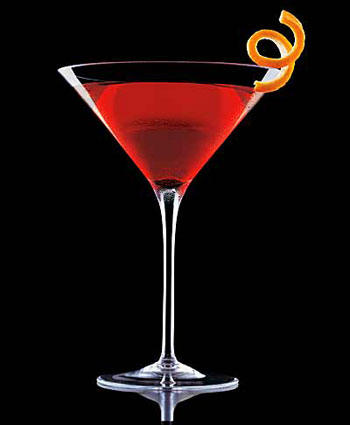
As Queen Mum she had a steady pattern in her alcohol consumption that she held onto till her dying days in 2002. Major Colin Burgess, the personal attendant to the queen, describes this in the book Behind Palace Doors. According to Burgess Elizabeth would start at noon with a cocktail with 1 part gin and 2 parts Dubonnet, topped off with a slice of lemon or orange. The official name is a Zaza cocktail or a Dubonnet cocktail, but thanks to Elizabeth everyone around the world now calls it the Queen Mother cocktail.

At lunch the Queen Mum would drink red wine and after the meal a glass of port. According to Burgess she also insisted that the people around her joined her. When anyone dared to ask for water, Elizabeth would ask incredulously: “How can you not have wine with your meal?” At 6 in the afternoon it was what the Queen Mother would call ‘Magic Hour’ and she had herself a martini. And at dinner she would drink 2 glasses of Veuve Cliquot, a pink champagne. 

While trying to hold tight to this drinking schedule, her duties as queen and later Queen Mother didn’t always allow it. That’s why Elizabeth instructed her staff to hide bottles of gin in hatboxes when she was on the road, so she could have a secret sip whenever she wanted. As the Queen Mum herself once said: “I couldn’t get through all my engagements without a little something.”

That sounds about right! Up yours fussbuckets. Let's drink to a great 2016.

....

Monday, 4 January 2016

Temperance scaremongering about old people drinking

****

Accompanied by a stock photograph of a grey-haired couple with a glass of wine, the latest piece of anti-booze scaremongering has hit the news:

New figures show that dangerously high levels of alcohol consumption by baby boomers are leading to growing numbers of over-65s being hospitalised, adding to pressures on the NHS. “The number of older people drinking unsafely and unhealthily is rising at an alarming rate, putting their health at risk and further strain on NHS services,” said Dr Tony Rao, Britain’s leading expert on older people’s drinking.

It seems that boozed-up oldies are swamping the hospitals as they succumb to something called by the doctors "mental and behavioural disorders related to alcohol use". It's not clear what exactly these mental and behavioural disorders are (or indeed whether they are directly related to alcohol or merely exacerbated by drinking). Dr Rao though has seen a huge increase in patients at his clinics:

“Ten years ago I would have been treating no more than three people at any one time for alcohol-related brain damage. Now there are at least 10 patients with that in the service I work in.”

Yes folks, this entire story is about ten people in South London who have Korsakoff Syndrome - hardly a problem that is going to 'bankrupt' the NHS. And we don't even know whether Dr Rao's ten patients are over 65 and whether what they have is Korsakoff Syndrome or some other form of alcohol induced brain damage. The truth here - and this is hinted at in the article - is that the patients admitted to hospital for these 'mental and behavioural disorders' are people with a long history of heavy drinking. This isn't about that couple in the picture having a glass of wine with dinner but about people we might call 'serious drinkers'.

And all this ignores the well-established evidence showing a link between moderate alcohol consumption and reduced incidence of dementia:

The inverse relationship between moderate wine drinking and incident dementia was explained neither by known predictors of dementia nor by medical, psychological or socio-familial factors. These results were confirmed from data of the Rotterdam study. Light-to-moderate drinking (one to three drinks per day) was significantly associated with a lower risk of any dementia (hazard ratio 0.58 [95% CI 0.38-0.90]) and vascular dementia (hazard ratio 0.29 [0.09-0.93]). No evidence that the relation between alcohol and dementia varied by type of alcoholic beverage was found.

Not that the temperance lobby are interested in this sort of evidence. They prefer to scaremonger.

...

Saturday, 19 December 2015

This is not a scandal - it merely shows us the difference between policy and advice


It is reported that 'minsters pressured' the National Institute for Health and Clinical Excellence (NICE as it's illiterately known) on the matter of minimum pricing for booze:

MINISTERS are accused of pressuring an independent health watchdog into dropping support for minimum booze pricing.

The National Institute for Health and Care Excellence removed backing for the scheme from recent NHS guidelines. It had previously supported it in advice which said slashing OAPs’ drinking could cut dementia.

But a British Medical Journal probe claims the watchdog only made the change after health ministers intervened.

Well actually this allegation - unsurprisingly from the British Medical Journal the house magazine for nannying fussbuckets and health fascists - is completely false.

NICE were clear that they had given advice on this matter and that it wasn't withdrawn (just not repeated - NICE isn't a lobby group). What we have here is departmental officials explaining that policy decisions are for ministers, the people elected to do that job, not advisors. And ministers are entitled to make policy decisions that run counter to the advice they are given by bodies like NICE. It is not the role of an advisory body like NICE to make statements of support for or disagreement with policy when that support or opposition is contrary to the government's position.

I wouldn't expect the fussbuckets to understand this distinction - indeed they usually adopt the position that government should do exactly what they say even when, as is the case with minimum pricing for alcohol or taxing sugar, the negative impact of that policy is very considerable (something the fussbuckets can ignore but which ministers have a duty to consider). What this advice to NICE reminds us is that political decision-making is - or should be - the reserve of the politicians we elect not advisory bodies. And there is no doubt that imposing a price floor or a new tax is a political decision not merely 'public health advice'.

....

Tuesday, 8 December 2015

Gay people drink on a night out, too! Who knew?

****

And booze companies craft promotions to appeal to gay drinkers:

THE lesbian, gay, bisexual and transgender community is increasingly being targeted by drinks promotions in bars and clubs and by alcohol companies, according to new research.

Concerns were raised that alcohol was found to be a central part of a night out on the commercial scene for LGBT people, with fears that this is being exploited by drinks manufacturers.

I am deeply shocked that drinks companies are targeting promotions towards a section of the adult population. How dare they.

....

Tuesday, 17 November 2015

Misusing the idea of 'evidence' - the case of alcohol policy

****

It's Alcohol Awareness Week when all the fussbuckets issue tutting press releases lecturing ordinary folk about how they're drinking too much. These are leapt on by gleeful health reporters keen to fill pages with yet another load of old toss about how what we're eating and drinking is leading us to an early grave.

So we shouldn't be surprised if two of the UK's leading centres of fussbucketry - Sterling and Sheffield Universities - have published a new report about alcohol policy. The premise of the report is this:

Alcohol policies across the four UK nations vary widely in the extent to which they are grounded in scientific evidence, with political considerations appearing to have significant bearing

Awful, I think you'll agree, awful. How very dare politicians take account of "political considerations" such as how many jobs, businesses, exports and so forth link to the drinks industry.

What concerns me here is what these people consider to be evidence. And the truth here is that we're not talking about evidence at all but rather about a report setting out a series of policy proposals loosely based on a selective interpretation of the "evidence" and wholly wedded to the lie that alcohol harm is a "whole population" problem. In simple terms the "research" simply castigates the UK government for failing to do what the researchers said the government should do - concluding their press release with a quotation accusing the government of 'ideology' which is a bit rich considering that their anti-booze position is deeply ideological.

The 'evidence' presented isn't evidence at all - not surprising since these are the sort of researchers who ignore facts like a nearly 20% decline in alcohol consumption and a similar decline in linked issues like violent crime. Nor do these researchers recognise the enormous - and consistent - body of evidence showing that moderate drinking, far from being remotely harmful, is actually healthy (indeed healthier than abstinence).

The most egregious element of this 'evidence' is that our researchers believe that engaging in 'partnerships with the alcohol industry' is a terrible sin because that industry doesn't support the researchers temperance and prohibitionist position.

It really is time we told these supposed 'scientists' to end their evidence-light, ideological attack on drinking. An attack based on prejudice and ignorance rather than any actual facts about drinking. They are wrong about pricing, wrong about marketing and advertising, wrong about the costs and benefits of alcohol to the UK, wrong about children and drinking, and wrong about the level of alcohol-related harm. And by wrong I mean they have no evidence to support their position not just that I disagree with them.

....

Sunday, 9 August 2015

Vegemite - a reminder (if you needed one) that prohibition doesn't work

****

OK it's Australia, home to some of the world's most intrusive fussbucketry but it's a lesson:

Australia’s government says Vegemite sales should be limited in some communities to prevent the yeast-based spread being used to make home-made alcohol.

Nigel Scullion, the indigenous affairs minister, said the spread – which is considered something of a national culinary staple – was a "precursor to misery" in communities suffering from alcohol abuse.

He said he was not proposing a ban but wanted to restrict excessive sales of high-yeast products such as Vegemite in “dry” communities – typically remote Aboriginal townships where alcohol sales are banned.

“Addiction of any type is a concern but communities, especially where alcohol is banned, must work to ensure home brewing of this type does not occur,” he said.

See what's happened here? These 'dry' communities (apparently Aussie white people think Aboriginal drink problems relate to some natural predisposition not to 200 years of oppression) do what dry communities always do - they make their own booze. And, as we all know, alcohol is very easy to make.

You see, prohibition doesn't work.

....

Tuesday, 12 May 2015

The most striking thing about these figures is how low they are...

****

Bradford's Telegraph & Argus has revealed the findings from a 'freedom of information' request relating to the number of offences recorded at individual licenced premises in the city. Now we should note that the approved narrative when discussing crime and drinking is to use terms like 'drink-fuelled violence and anti-social behaviour' accompanied by a load and judgemental implied 'tut'.

So how much crime is there - of any sort - recorded at Bradford's busy city centre pubs and clubs? The answer - although the newspaper doesn't report it quite this way - is close to bugger all. The worst venue - a busy bar/nightclub - witnessed a staggering 23 offences during the year to 26 March 2015. That is less than one a fortnight. Given the bewildering array of possible offences (at times it seems the police can arrest anyone for anything) available to the enforcement authorities we should, rather than tutting about crime, be celebrating just how incredible safe Bradford's night life has become.

The truth is that, with violent crime at the lowest levels since the 1970s and consumption of alcohol (whatever the health fascists want to pretend) at similarly low levels, going out on a evening in a place like Bradford is pretty safe. Of course this isn't the same as saying it's pleasant but that's an aesthetic judgement not a matter of personal security - there will be plenty of swearing, oodles of testosterone and plenty of drunkenness but what there won't be is that violent crime the police and other assorted nannying fussbuckets want you to believe is inevitable wherever people (and especially young people) gather to party.

We should be celebrating - with a large drink, of course - the fact that licensing reform and the promotion of sensible drinking has resulted in a turnaround in the safety of our town centres. Instead newspapers in search of a cheap headline, scaremongering politicians and assorted fussbuckets still present it as if our town centres are places of untrammelled behaviour, dangerous places of utter chaos. This is complete nonsense. But I guess that's always sold newspapers!

....

Thursday, 19 February 2015

NHS boss, Simon Stevens is either ignorant or lying

****

The New Puritan who we've put in charge of the NHS is off on one again:

The head of the NHS is calling for increases in the price of cheap alcohol amid warnings that heavy drinking is taking a “huge” toll on Accident & Emergency departments. 

This is a straightforward pitch for minimum unit pricing. The problem is that we already have some of the highest taxes on booze in Europe and, just as importantly, it is already evident that this tax is leading to the manufacture and distribution of illegally manufactured or smuggled spirits.

Now it's true that some A&E departments have a problem with alcohol-related patients but it isn't true that this has changed much over the past couple of decades. Indeed there's something of a myth that A&E Departments are quiet, calm places until 11pm on a Friday when they transform into a Hogarthian hell-hole of drugged and boozed up patients. In reality there are fewer people in A&E departments at these times - the peak hour according to the King's Fund is 10am on a Monday morning. And, as studies have shown, we really have little or no idea as to the real scale of alcohol-related attendance at A&E.

Given the limitations in data coverage and quality, A&E diagnosis data should be treated with caution. As the level of missing data is so high, and coding is largely not comparable between providers, this field should only be used for Trust-specific analyses (e.g. to produce profiles, possibly focusing on specific diagnoses, within single Trusts).

What we do know is that the sort of people Simon Stevens believes he is targeting represent a very small part of the A&E departments' work - just 0.4% in 2008/9 according to NHS England. But despite the lack of good information (a problem caused by the excellent news that doctors and nurses in A&E are more bothered with sorting peoples problems out than with how many sherbets they've had before arriving) this doesn't stop statements such as this:

Latest figures show that 20 per cent of A&E attendances are alcohol related, a figure which rises to 80 per cent during peak weekend periods on Friday and Saturday nights.

It may well be the case that these figures are right but it still doesn't tell us that introducing a minimum price will make a jot of difference. I'm guessing that many of that 80% on Friday and Saturday nights consumed much of their alcohol in licensed premises - meaning they're paying well above the 50p per unit that the health fascists want to introduce.

Not content with peddling fictions about drinking, Mr Stevens has a side-swipe at sugar:

Mr Stevens said heavy drinking and soaring levels of sugar consumption by the British public were now two of the most urgent health problems facing the nation, 

Soaring sugar consumption? An explosion in consumption that has seen our sugar intake fall significantly since the 1970s?  Here are the stats from Australia - they're not much different in the UK:


The AHS (Australian Health Survey) was conducted by the Australian Bureau of Statistics, which also conducted Australia’s last national dietary survey of adults and children in 1995, so now we have insights into how the diet of Australians has changed over the intervening period of approximately 16 years. Here are some of the top-line results relating to sugar.

• Intake of total sugars has fallen in men, women and children.
• The percentage of dietary energy from total sugars has also fallen.
• Carbohydrate intake has fallen, both in absolute terms and as a percentage of energy.

Total energy intake has also fallen.


Simon Stevens is simply not telling us the truth.

....

The AHS was conducted by the Australian Bureau of Statistics, which also conducted Australia’s last national dietary survey of adults and children in 1995, so now we have insights into how the diet of Australians has changed over the intervening period of approximately 16 years. Here are some of the top-line results relating to sugar.
• Intake of total sugars has fallen in men, women and children.
• The percentage of dietary energy from total sugars has also fallen.
• Carbohydrate intake has fallen, both in absolute terms and as a percentage of energy. Total energy intake has also fallen.
- See more at: http://scepticalnutritionist.com.au/?p=1438#sthash.9YpE5HzL.dpuf

Friday, 16 January 2015

The Labour Party really has it in for poor people.

****

The other day, to more or less blanket media coverage, Andy Burnham (Britain's most shameless MP) launched Labour's public health strategy - "Protecting Children, Empowering All" is its title:

Changes to diet and lifestyle mean it is all too easy to lead a less healthy life than in times gone by, and we all risk taking on more sugar, fat and salt than is good for us and failing to move about enough to burn it off. Our complex and fast-moving modern world is exposing children to ever-more sophisticated commercial pressures. We are all absorbing higher levels of stress and insecurity which can erode mental health and well-being and lead to poor diet and addiction. For too many people this is the new reality of modern living in the 21st century. Helping people deal with it will require a new approach to public health.

The authors of this 'new approach' go to great lengths to tell us that this isn't the 'nanny state' - mostly because those authors have chosen to redefine what we mean by that term. But what is most shocking - from the political party that claims to champion the interests of the working class and the poorest in society - is that the proposals are for a series of highly-regressive interventions based on a combination of poor science and a snobbish attitude to the personal choices of those people. As Dick Puddlecote puts it:

It reads like it was written in Islington by a bien pensant yogic chakra-chasing millionaire surveying life outside their window with disdain and revulsion at how the unwashed choose to enjoy themselves. This, apparently, is what the modern Labour party thinks will chime with working class people...

The core of the policy is a renewed legislative attack on booze, fags, burgers and fizzy drinks. Or, as Labour describes it - alcohol, tobacco and sugar.  The proposals are founded - as ever - on poor science and an almost complete absence of evidence. On alcohol the proposals are for a series of specific actions targeted at the lowest cost alcohol - bans and taxes that hit the poor not wealthy folk like Andy Burnham. We will see bans or a new higher duty on cider, giving public health directors the power to oppose licensing decisions and, I would expect, a renewed effort to introduce a blanket, regressive attack on the poorest in the form of minimum unit pricing.

On tobacco, we'll see the introduction of plain packaging for cigarettes - a policy that will destroy good manufacturing jobs in Bradford without making (as we now know from the policy's effect in Australia) the slightest difference to rates of smoking. And - as befits a bunch of fussbuckets - Labour leaves the door open to bans and restrictions on vaping. Yet again, this is pointless posturing that does more harm than good for the working classes Labour claims to represent.

But it's the attack on sugar that reveals Labour at its worst. Chris Snowdon reminds us that the source of Burnham's anti-sugar position (a position almost entirely without evidential support) is pretty dodgy:

Time and time again Action on Sugar make hyperbolic and downright false claims that cannot be supported by their own citations, let alone by the wider scientific literature. It is scary to think that there are people in power who take them seriously.

The sad truth is that Labour has accepted these false arguments almost entirely, telling us that we're eating more sugar, fat and salt than we used to and that this is why we are fatter. This is quite simply untrue but it doesn't stop Labour launching into yet another attack on advertising and further judgement of the pleasing and personal choices that millions of Britons make, choices to smoke, to drink and to eat salty or sugary food.

These proposals are not only ill-founded but represent a direct, regressive attack on the poorest - things like a soda tax (which Burnham is very keen on) falls heaviest and hardest on the poor and a sugar tax would be even worse. New powers on licensing mean that pubs and clubs in poorer areas will be targeted for closure - on the grounds of combating 'health inequalities' and the entirely false belief that concentrations of licensed premises lead to higher alcohol consumption.

Hardly a day passes without some posh left-winger sniffily and disdainfully dissmissing the choices and preferences of ordinary people. For all the protests of Burnham, these labour proposals represent an extension of the nannying, controlling and dictating state. What Labour's policies tell us - yet again - is that the party doesn't believe that people, especially poorer people, are capable of making their own decisions and choices. Egged on by the health fascists in the growing public health industry, what Labour is doing is planning to ban, control or limit the pleasures of ordinary folk. The pleasures that make like just a little bit more tolerable for the poorest in society.

Labour, it seems, really has it in for poor people.

....


Monday, 29 December 2014

There is no evidence linking sports sponsorship with children drinking

****

A few days ago "...a group of medical leaders, public health campaigners and health charities" wrote to The Guardian calling for the banning of sports sponsorship by drinks companies:

Our children deserve a better future and we must take the opportunity to give it to them. Self-regulation of alcohol advertising isn’t working when it allows drink brands to dominate sporting events that attract children as well as adults, creating automatic associations between alcohol brands and sport that are cumulative, unconscious and built up over years. Evidence shows that exposure to alcohol advertising leads young people to drink more, and to drink at an earlier age.

The lead signatory of the letter was Professor Sir Ian Gilmore perhaps the UK's leading temperance campaigner and a man who has never knowingly missed the opportunity to exaggerate, embellish and invent statistics to promote his mission to limit, perhaps to prohibit, drinking. And our natural instinct to protect children is a high value trump card to the likes of Sir Ian.


So - given that drinks brands have been advertising their brands on the shirts of football, rugby and cricket teams for a couple of decades, we'd expect there to be more teenage boozers drinking more alcohol. The problem is that this isn't true (pdf see page 122):

Thirty two per cent of young people reported having had an alcoholic drink. This represents a significant drop-off from LSYPE1, when 55 per cent of young people reported having tried alcohol. This fall appears to have taken place across almost all groups of young people.

This comes from a detailed longitudinal study by the Department for Education which makes it pretty reliable as evidence. So over the period when drinks brands have been sponsoring high level sport the consumption of alcohol by children and young people has fallen by around 40%. This suggests that Sir Ian and his pals have absolutely no evidence to support their argument. Not that this makes any difference to them using the argument.

....

Monday, 20 October 2014

There are more drunks in Blackpool than Barton-le-Clay

****

Apparently it's a shocking discovery. There are huge regional variations in the incidence of liver disease:

The study uncovered a stark north-south divide, with more than four times as many male adults dying from the disease in Blackpool (58.4 per 100,000) than central Bedfordshire (13 per 100,000).

Predictably this has resulted in a call for more controls over alcohol - doubtless we'll get the familiar set of prescribed solutions: minimum unit pricing, advertising controls, bans on 'super-strength' beer and plain packaging or graphic health warnings. But look again at those figures and ask two questions.

Does it really surprise you that there are a lot more problem drinkers in Blackpool? It really doesn't surprise me and, without wishing to do down Blackpool, it is entirely in line with the town's demographics. I suspect you'll see more street drinkers in a day on Blackpool front than you will over half a year in Dunstable or Flitwick. And this is because Blackpool is where those people go. The town doesn't breed those street drinkers but it's where too many of them end up.

Secondly, we need to ask whether the rise in liver disease really is down to drinking - check out the figures:

The report, Deaths from Liver Disease – Implications for End of Life Care in England, showed that the north-west region had the highest liver disease death rate – 24 per 100,000, with 11.4 from alcohol complications. It was followed by the north-east with 21.9 and 10.1. The east of England had the lowest rate, 12.9 and 4.9, followed by the south-west, 14.3 and 6.4, and the south-east,14.8 and 5.8.

Nearly 60% of deaths from liver disease aren't due to alcohol. But whenever the statistics are quoted we get a splurge of anti-alcohol campaigning. I've noted before that there has been a rise in viral hepatitis cases and there has also been an increase in morbid obesity. And a good chunk of Blackpool's problem will be down to drug use rather than alcohol.

To put the problem in context, 0.0114% of the Blackpool population die as a result of liver disease caused by alcohol abuse. This is a big problem for those sixty or so people in Blackpool and we need to get better at dealing with this issue but it really isn't a massive public health problem.

But then, when the Guardian journalist starts with a blatant untruth there really isn't much hope is there:

The changes in pub opening hours and higher levels of alcohol consumption are directly linked to the “rapid and shocking” increase in death rates, according to Prof Julia Verne, who led the research for PHE.

Alcohol consumption has fallen by around 18% over the past decade and this decline matches (although I'm not saying it was caused by the change) the liberalising of licensing.

....

Thursday, 9 October 2014

Why all population public health strategies on alcohol abuse don't work

****

We've run all population programmes in public health around alcohol for some long while. We've raised the price of alcohol, controlled its distribution and imposed a variety of advertising, promotion and other controls. And, in one respect this has worked - alcohol consumption has plummeted, falling by some 18% in the UK over the past decade or so with the biggest falls in among the young.

But, as we're repeatedly reminded by the public health gang, the levels of alcohol harm simply haven't fallen to match this decline in consumption - most to the statistics suggest that, in fact, levels of alcohol admissions to hospital have risen significantly over that same period. Now some of this (a great deal if you ask me, but that's a guess) is down to the way in which statistics are gathered by medical staff in situ but there's still that paradox - we're drinking loads less but there are still plenty of people causing themselves real harm through abusing the booze.

These statistics - for the USA where levels of alcohol consumption are quite a bit lower than in the UK - explain the problem:
 

...the top 10 percent of drinkers account for well over half of the alcohol consumed in any given year. On the other hand, people in the bottom three deciles don’t drink at all, and even the median consumption among those who do drink is just three beverages per week. 


We are setting policies that target 100% of drinkers when we should be targeting about 15% of drinkers. And this is why the all population strategy doesn't work - indeed we are scaring people who are drinking perfectly healthily into reducing their consumption further (because they care about their health and, foolishly, believe the newspapers and TV pundits) while the hardened drinkers carry on sloshing back the pop.

....

the top 10 percent of drinkers account for well over half of the alcohol consumed in any given year. On the other hand, people in the bottom three deciles don’t drink at all, and even the median consumption among those who do drink is just three beverages per week. - See more at: http://marginalrevolution.com/marginalrevolution/2014/10/alcohol-inequality.html?utm_source=feedburner&utm_medium=feed&utm_campaign=Feed%3A+marginalrevolution%2Ffeed+%28Marginal+Revolution%29#sthash.ptcipuVR.dpuf