Showing posts with label junk food. Show all posts
Showing posts with label junk food. Show all posts
Monday, 15 May 2017
"You will eat want we tell you to eat" - fussbucketry on our TVs
The clip starts with one person presenting how standardised packaging for "junk food" would look - this is accompanied by "ewwww" sounds from the others round the table as they agree they'd never eat something packaged like that. "But I wouldn't eat it anyway" giggles one of the participants.
None of the people round the table 'debating' the subject - "Junk Food: should it come with a health warning" - is is any respect an authority. No nutritionists are present, no-one who understands advertising, not even a public health professional. Instead we've a bunch of TV presenters and journalists who proceed to demonstrate just how much they loathe the choices of a lot of ordinary people out there in the real world.
We see James Caan, he of Dragons' Den fame, exclaiming "yes, yes" at the idea of banning Burger King and KFC. And Rachel Johnson, Remainiac extraordinaire suggesting that parents are incapable of resisting the pestering of children to buy a "bottle of water and a Cadbury's for a £1 in WH Smiths". Not, of course, that station forecourt booksellers are the favoured haunt of mums with screaming kids in tow.
For me this three minute long clip sums up so much that is wrong with our society, with government and with the punditry that sets the tone. "We can't afford...", "one in eleven children...", "Our NHS..." - a collection of ill-informed, evidence-free comments from people who've no idea at all what it's really like to raise a couple or three kids on a low income but who are ready and eager to condemn the failings (or what they see as failings) of those in this circumstance. All summed up by the first presenter (my apologies for not knowing who he is apart from being a vaguely familiar TV presenter sort) saying "people are making the wrong choices" and that we have to educate them into making the right choices (by telling lies about cancer, heart disease and rotten feet).
What we have is a bunch of privileged - in every meaning of this word - people given a platform to promote an intolerant and snobbish disdain for what other people do. The tone and the comments display a belief that somehow people like those gathered here to 'debate' the issue of "junk food" have some sort of righteous duty to stop other people making what they've decided are the "wrong" choices.
For me this agenda - nannying fussbucketry - is at the heart of the elite attack on the personal choices of ordinary people. The subtext of the debate is that we are not capable of making our own decisions, right or wrong, but must be guided by great and good people who have experience of presenting TV shows, writing newspaper columns and telling bad jokes. Every TV entrepreneur, actress, comedian and writer of columns in weekly magazines must adopt - with passion - a cause that involves lecturing poor people about how they're doing it all wrong.
Whether it's food, drink, bicycles, dress sense, or buying blue toys the great and the good want you to do what they say. They want to tell you that you've bought the wrong sort of car, gone on the worng holiday, visited the wrong restaurant and had the audacity to buy cheap semi-sparkling wine. These great and good believe they know what you should do and what is good for you. Like nineteenth century Methodist preachers they're going to bang on about how you are not living you lives properly.
And, if you're not compliant enough, these splendid folk will campaign for the government to damn well make you do what they want you to do. Moreover, such wonderful people are not to be challenged - fussbuckets like Jamie Oliver are to be given acres of print and hours of sychophantic TV without ever once being challenged on the evidence for the fads and food fascism they're promoting (or indeed the way in which it's used to promote their latest money making scheme).
The little clip I linked to above isn't a debate (although Nick Ferrari does at least try) it's a love-in where a bunch of self-important semi-celebrities outbid eachother as to who can be the most illiberal, the most snobbish and the most patronising about poor people. There's an important debate to be had about diet, food and obesity but conducting it on the basis of "let's ban stuff" and "you'll all get heart disease and diabetes if you eat this stuff" is simply dreadful - especially when this is done without any evidence.
The problem is that the views of such folk - nasty and bigoted views about people not in their high society - influence the decisions made by politicians. We can see the trajectory, the slippery slope, towards advertising bans, sin taxes, mandated school dinners, forced reformulation and standardised packaging. Add in bans on new shops, the removal of shiny branded livery and restrictions on what can be sold to minors and we have the full agenda. Unless we shout at these fussbuckets, these health fascists, expect this to happen, expect a duller world made ever drearier by the pompous nonsense of great and good folk on TV.
....


Monday, 8 May 2017
Let's ban stuff (or how not to get people's vote)
Today appears to be public health day in the election diary which means that we've proposals from the Labour Party to ban stuff:
We are, unlike the sort of wise person who becomes a Labour front bench spokesperson on public health, completely captured by advertising, snared by the subtle webs of influence that cunning marketers weave around their products. There is no escape. We are doomed to a life entirely driven by the content of prime time advertising. Like puppets we bounce along to the tunes of neoliberal hegemony as presented by crafty copywriters who force - yes, force - us to consume, consume and consume again.
Research has shown this. That sociologist friend of the Labour Party front bench spokesperson says so and who are we to argue with the author of masterworks whose titles drip with stuff about 'neoliberalism'. Parents everywhere will flock to the party's banner knowing that they will be rescued from their children throwing a tantrum because they've said 'no' to a sugar, fat and salt stuffed snack.
This is easy politics - "for the children" screeches the Labour frontbench spokesperson and the media joyfully laps it up, wraps it in a comfort blanket of "we should do something", and then wheels out all its friends from the public health industry to support the proposals. Action on Sugar, Campaign Against Salt, Fuss About Fat - legions of publicly funded cheery souls pop up on TV and radio sternly explaining how if we banned advertising everyone will suddenly be thin as rakes and healthy as the butchers dog (except we're not allowed red meat any more because that will give us cancer).
Let's get some things clear here.
Advertising does not raise aggregate demand (however loudly kids shout)
People have agency (we don't have to buy stuff just because it's on telly)
Obesity isn't caused by eating sugar (or fat)
Salt is not bad for you (it's an essential nutrient - without it you die)
Obesity - or smoking or drinking - isn't the reason for the NHS funding crisis (quite the opposite)
Banning adverts means less money for TV companies to make programmes you like
Neoliberalism is a word made up by idiot sociologists
Voters are fed up with being bossed around (hadn't you noticed yet?)
.....
"We are going to apply the rules currently applied to children’s TV and apply that to TV more generally, so when you’re sat down with your children, as I do, watching X Factor or Britain’s Got Talent, you’re not going to be seeing adverts for junk food,”Apparently there is "research that children see the adverts for McDonald’s and hassle their parents to go there". And, of course, parents are incapable of resisting. Like zombies they rise from the sofa at nine in the evening (after Britain's Got Talent with all the wicked advertising has finished) and, as if in some drug-induced trance, take the pestering children to McDonald's, KFC or whatever else was advertised during the latest piece of cash generation for the Cowell empire.
We are, unlike the sort of wise person who becomes a Labour front bench spokesperson on public health, completely captured by advertising, snared by the subtle webs of influence that cunning marketers weave around their products. There is no escape. We are doomed to a life entirely driven by the content of prime time advertising. Like puppets we bounce along to the tunes of neoliberal hegemony as presented by crafty copywriters who force - yes, force - us to consume, consume and consume again.
Research has shown this. That sociologist friend of the Labour Party front bench spokesperson says so and who are we to argue with the author of masterworks whose titles drip with stuff about 'neoliberalism'. Parents everywhere will flock to the party's banner knowing that they will be rescued from their children throwing a tantrum because they've said 'no' to a sugar, fat and salt stuffed snack.
This is easy politics - "for the children" screeches the Labour frontbench spokesperson and the media joyfully laps it up, wraps it in a comfort blanket of "we should do something", and then wheels out all its friends from the public health industry to support the proposals. Action on Sugar, Campaign Against Salt, Fuss About Fat - legions of publicly funded cheery souls pop up on TV and radio sternly explaining how if we banned advertising everyone will suddenly be thin as rakes and healthy as the butchers dog (except we're not allowed red meat any more because that will give us cancer).
Let's get some things clear here.
Advertising does not raise aggregate demand (however loudly kids shout)
People have agency (we don't have to buy stuff just because it's on telly)
Obesity isn't caused by eating sugar (or fat)
Salt is not bad for you (it's an essential nutrient - without it you die)
Obesity - or smoking or drinking - isn't the reason for the NHS funding crisis (quite the opposite)
Banning adverts means less money for TV companies to make programmes you like
Neoliberalism is a word made up by idiot sociologists
Voters are fed up with being bossed around (hadn't you noticed yet?)
.....
Monday, 28 July 2014
Dr Sarah Wollaston and the "duty to intervene" - how health fascism works
****
Dr Wollaston MP, il capo di tutti capi of nannying fussbucketry, who chairs the House of Commons Health Select Committee has called for laws to ban 'supersized foods':
Now in one respect this is just another judgement on a particular type of food service - one that is most popular with ordinary folk who can't afford to pig out in Michelin starred restaurants. But the most disturbing aspect of Dr Wollaston's call wasn't that she wants a ban - such is the default position of nannying fussbuckets everywhere - but rather that the government has "a duty to intervene".
For a Conservative MP to set out such an argument is quite disturbing. For sure, we've had our flirtations with the intellectual underpinnings of fascism before but this is a disturbing rationale - government must intervene to stop people making a choice that may (or may not) have a negative impact on their health. The context for this is apparently:
Now apart from being surprised that anything at all in a cinema is priced as cheaply as 20p, this argument presupposes that people are mere automata programmed from childhood to exclaim 'yes, please' at every piece of marketing communications. Even offers mumbled at the buyer by a food service operative in a cinema queue.
Indeed, Dr Wollaston, in an indication as to the scale of her ignorance of how marketing works, has this to say:
This is straight from the Naomi Klein "brands-are-evil" playbook - again an odd position for an intelligent Conservative MP to adopt. We are to believe, Dr Wollaston says, that consumers are rendered incapable of choice when presented with the question 'would you like to supersize that?' or 'would you like a large one of those?' This reflects the infantilising of society by lawmakers - people aren't fat because of their own poor decision-making but because the marketing of food 'targets' them, 'forcing' them to consume 'unhealthy' products.
All this suggests that those people - the majority of people as it happens - who remain at a healthy weight are stoical ascetics. Or else (and I'm inclined to this view) Dr Wollaston and her fellow fussbuckets are peddling nonsense about the marketing of food.
So where does this 'duty to intervene' come from? It's clear that no such duty exists so what Dr Wollaston is saying is rather that she thinks only 'tough' measures such as bans can deal with the 'obesity crisis'. As I'm inclined to kindness in these things, I could say that Dr Wollston is befuddling her duty as a doctor to advise her patients with some sort of wider duty falling on the state. However, regardless of Dr Wollaston's motives, the result of setting out a concept such as a 'duty to intervene' is to redefine the role of the state, to turn its role from guarantor of rights and provider of services to a primary role of shaping society.
Which is why the term 'health fascist' is entirely appropriate to describe Dr Wollaston's position. The central tenet of fascism is that the state has a duty to change men so they serve the wider purpose of the nation - we are subservient to the needs of that state because it understands what is necessary to build the right kind of society. So it is with the 'duty to intervene' - people ordering 'supersized' boxes of popcorn are not merely damaging themselves, they also damage society by placing a 'cost' on us all. Such practices are decadent with the sin compounded by the suggestion that someone profits from making people eat larger portions.
So to put this right government has that 'duty to intervene'. The wider interests of society - defined with the term 'obesity epidemic' - are served by banning a person from entering freely into a contract with another person because the state has decided that large servings of fizzy-pop and popcorn are unhealthy.
This rejection of choice in a free society because of associated 'health risks' or the 'normalisation' of somet proscribed behaviour represents a degree of control and a justification on the basis of wider society's 'interests' that can only be described as fascist. Yet this health fascism - the view that bans and controls are needed because of the 'cost to society' - has become ever more common. That we are weak and make poor choices is undeniable and society should help us to deal with these problems but this does not justify saying that I cannot be allowed the option of a 'poor' choice. The former is good government, that latter health fascism.
....
Dr Wollaston MP, il capo di tutti capi of nannying fussbucketry, who chairs the House of Commons Health Select Committee has called for laws to ban 'supersized foods':
“Supersized” food and drinks should be banned by law in a bid to combat Britain’s obesity epidemic, the new head of the Commons health select committee has said.
Now in one respect this is just another judgement on a particular type of food service - one that is most popular with ordinary folk who can't afford to pig out in Michelin starred restaurants. But the most disturbing aspect of Dr Wollaston's call wasn't that she wants a ban - such is the default position of nannying fussbuckets everywhere - but rather that the government has "a duty to intervene".
For a Conservative MP to set out such an argument is quite disturbing. For sure, we've had our flirtations with the intellectual underpinnings of fascism before but this is a disturbing rationale - government must intervene to stop people making a choice that may (or may not) have a negative impact on their health. The context for this is apparently:
"You go into the cinema and someone will ask if you want to supersize for an extra 20p - we don’t need that.”
Now apart from being surprised that anything at all in a cinema is priced as cheaply as 20p, this argument presupposes that people are mere automata programmed from childhood to exclaim 'yes, please' at every piece of marketing communications. Even offers mumbled at the buyer by a food service operative in a cinema queue.
Indeed, Dr Wollaston, in an indication as to the scale of her ignorance of how marketing works, has this to say:
“The scale of the marketing towards children of unhealthy foods is wholly unacceptable in my view given the scale of the problem."
This is straight from the Naomi Klein "brands-are-evil" playbook - again an odd position for an intelligent Conservative MP to adopt. We are to believe, Dr Wollaston says, that consumers are rendered incapable of choice when presented with the question 'would you like to supersize that?' or 'would you like a large one of those?' This reflects the infantilising of society by lawmakers - people aren't fat because of their own poor decision-making but because the marketing of food 'targets' them, 'forcing' them to consume 'unhealthy' products.
All this suggests that those people - the majority of people as it happens - who remain at a healthy weight are stoical ascetics. Or else (and I'm inclined to this view) Dr Wollaston and her fellow fussbuckets are peddling nonsense about the marketing of food.
So where does this 'duty to intervene' come from? It's clear that no such duty exists so what Dr Wollaston is saying is rather that she thinks only 'tough' measures such as bans can deal with the 'obesity crisis'. As I'm inclined to kindness in these things, I could say that Dr Wollston is befuddling her duty as a doctor to advise her patients with some sort of wider duty falling on the state. However, regardless of Dr Wollaston's motives, the result of setting out a concept such as a 'duty to intervene' is to redefine the role of the state, to turn its role from guarantor of rights and provider of services to a primary role of shaping society.
Which is why the term 'health fascist' is entirely appropriate to describe Dr Wollaston's position. The central tenet of fascism is that the state has a duty to change men so they serve the wider purpose of the nation - we are subservient to the needs of that state because it understands what is necessary to build the right kind of society. So it is with the 'duty to intervene' - people ordering 'supersized' boxes of popcorn are not merely damaging themselves, they also damage society by placing a 'cost' on us all. Such practices are decadent with the sin compounded by the suggestion that someone profits from making people eat larger portions.
So to put this right government has that 'duty to intervene'. The wider interests of society - defined with the term 'obesity epidemic' - are served by banning a person from entering freely into a contract with another person because the state has decided that large servings of fizzy-pop and popcorn are unhealthy.
This rejection of choice in a free society because of associated 'health risks' or the 'normalisation' of somet proscribed behaviour represents a degree of control and a justification on the basis of wider society's 'interests' that can only be described as fascist. Yet this health fascism - the view that bans and controls are needed because of the 'cost to society' - has become ever more common. That we are weak and make poor choices is undeniable and society should help us to deal with these problems but this does not justify saying that I cannot be allowed the option of a 'poor' choice. The former is good government, that latter health fascism.
....
Tuesday, 30 April 2013
More lies about advertising - this time from the Children's Food Trust
****
The Children's Food Trust are back again with their proposals for advertising bans and controls. And, since it's the enemy of choice, the attack on advertising is couched in terms of a criticism of self-regulation.
The problem, we're told, is that the self-regulation of advertising (remember that broadcast advertising isn't self-regulated but regulated by statute) under the aegis of the Committee of Advertising Practice has allowed advertisers of food products to use online advertising. This, of course, means that some of the adverts are seen by children.
What struck me about the reports from the Trust is that the main evidence it presents (about four or five websites) simply doesn't indicate anything different from what is allowable in broadcast advertising already. However, they also demonstrate the scale of parental irresponsibility when it comes to Internet use:
So let's be clear about this - Rowntree, Krave, Cheesestrings and Nesquik are advertising in media that have a 13 age minimum. But because irresponsible parents allow their under-13 children to use those sites those advertisers should be banned from doing so?
Yet again we are seeing the use of poor quality research - with no peer review and no robust methodology - to justify arguments for advertising bans. Controls proposed solely because some parents can't say 'no' to their children. Meaning that children see advertising that they would not see on a commercial children's TV channel - advertising that complies with the agree codes of practice. Indeed, because the websites all show TV advertisements, these are codes of practice subject to statutory regulation.
But I guess that blaming advertising gets a better headline than blaming parents for letting their ten year olds go on Facebook (where an advert for Sugar Puffs is probably the least of worries).
....
The Children's Food Trust are back again with their proposals for advertising bans and controls. And, since it's the enemy of choice, the attack on advertising is couched in terms of a criticism of self-regulation.
“The ASA has proved itself unwilling and unable to fulfil this role,” he added.
“In industry after industry – from MPs’ expenses, to phone-hacking, to banks, and now in online marketing – self-regulation has proven to be a failed model. More of the same is not what is needed to protect children’s health or to give parents more help in making healthy choices for their family.”
The problem, we're told, is that the self-regulation of advertising (remember that broadcast advertising isn't self-regulated but regulated by statute) under the aegis of the Committee of Advertising Practice has allowed advertisers of food products to use online advertising. This, of course, means that some of the adverts are seen by children.
What struck me about the reports from the Trust is that the main evidence it presents (about four or five websites) simply doesn't indicate anything different from what is allowable in broadcast advertising already. However, they also demonstrate the scale of parental irresponsibility when it comes to Internet use:
Social networking websites, like Facebook, are especially popular amongst children and young people, 28 per cent of 8–11 year olds and 75 per cent of 12–15 year olds have an active social networking site profile. One third of 8–12 year olds have a profile on sites that require users to register as being aged 13 or over.
So let's be clear about this - Rowntree, Krave, Cheesestrings and Nesquik are advertising in media that have a 13 age minimum. But because irresponsible parents allow their under-13 children to use those sites those advertisers should be banned from doing so?
Yet again we are seeing the use of poor quality research - with no peer review and no robust methodology - to justify arguments for advertising bans. Controls proposed solely because some parents can't say 'no' to their children. Meaning that children see advertising that they would not see on a commercial children's TV channel - advertising that complies with the agree codes of practice. Indeed, because the websites all show TV advertisements, these are codes of practice subject to statutory regulation.
But I guess that blaming advertising gets a better headline than blaming parents for letting their ten year olds go on Facebook (where an advert for Sugar Puffs is probably the least of worries).
....
Monday, 19 November 2012
The attack on takeaway food is about snobbery not health
****
With a cry I turned off the radio. I could take no more of the Labour leader from Waltham Forest Council celebrating preventing new businesses, new jobs and more choice for the residents of his borough. And all in the cause of health.
Maybe I'm over-reacting but this 'demonising' of the takeaway - blaming it for fat kids, poor schools and litter - is getting too much. For sure, there are places where converting shops to takeaways isn't right - where there's no parking, or adjacent properties that will be adversely affect by smells for example - but this campaign isn't about those issues, it's about judging the choices of others.
Now the London Food Board in partnership with the Chartered Institute of Environmental Health has issued a set of rules that planning authorities can use to stop all new hot food takeways. This is what the Councillor from Waltham Forest was crowing about - the prevention of business and job creation on the wholly unevidenced and spurious basis that takeaways make kids fat and unhealthy.
Here's the justification from the fussbuckets who authored the "Takeaways Toolkit" - after they'd admitted that takeaways employ local people and provide a valuable economic and community function:
Firstly, let's say it again - there is no "growing obesity epidemic" - rates of childhood obesity have stabilised and, on some measures, are falling. So we're building a scary straw man to beat up rather than addressing a real problem.
And secondly there is precisely zero evidence that fast food contributes to childhood obesity. Indeed there is evidence that suggests the very opposite is true:
Now is that clear enough for you? Essentially these findings show that the less often you visit a fast food outlet, the more like you are to be overweight.
And this isn't an isolated discovery either:
Put simply, fast food is not the cause of that "obesity epidemic" (if there is one which there isn't). It's just that it's down-market finger food that's eaten by spotty kids in baseball caps - the Guardian and Daily Mail reading classes don't like fast food because it the sort of thing that "common" people eat.
This attack on the takeaway is about snobbery not health - us foodies peering down our noses at those working class people who don't know about "proper" food.
....
With a cry I turned off the radio. I could take no more of the Labour leader from Waltham Forest Council celebrating preventing new businesses, new jobs and more choice for the residents of his borough. And all in the cause of health.
Maybe I'm over-reacting but this 'demonising' of the takeaway - blaming it for fat kids, poor schools and litter - is getting too much. For sure, there are places where converting shops to takeaways isn't right - where there's no parking, or adjacent properties that will be adversely affect by smells for example - but this campaign isn't about those issues, it's about judging the choices of others.
Now the London Food Board in partnership with the Chartered Institute of Environmental Health has issued a set of rules that planning authorities can use to stop all new hot food takeways. This is what the Councillor from Waltham Forest was crowing about - the prevention of business and job creation on the wholly unevidenced and spurious basis that takeaways make kids fat and unhealthy.
Here's the justification from the fussbuckets who authored the "Takeaways Toolkit" - after they'd admitted that takeaways employ local people and provide a valuable economic and community function:
However, as the modern world begins to wake up to the threat of a growing obesity epidemic more and more people have been turning their attention to the impact this food has on the health of the population.
Firstly, let's say it again - there is no "growing obesity epidemic" - rates of childhood obesity have stabilised and, on some measures, are falling. So we're building a scary straw man to beat up rather than addressing a real problem.
And secondly there is precisely zero evidence that fast food contributes to childhood obesity. Indeed there is evidence that suggests the very opposite is true:
When the researchers weighed these children they found something rather interesting. Here are the average body mass index (BMI) figures for each group by frequency of visits to fast food outlets. Bear in mind that a 'healthy weight is 18.5 to 25:
Weekly visits BMI
Every day: 17.8
4-6 times: 18.3
2-3 times: 19.6
Once: 20.3
Less than once: 21.4
Now is that clear enough for you? Essentially these findings show that the less often you visit a fast food outlet, the more like you are to be overweight.
And this isn't an isolated discovery either:
...there was no significant association between increasing takeaway and fast food consumption and obesity as measured by BMI corrected for age and gender. This is not a new finding. For example, French and colleagues found no significant relationship between frequent consumption of fast food and being overweight in their analysis of a cohort of 11-18-year-old boys and girls. Similarly, Simmons et al found no correlation between increasing takeaway consumption and obesity measured by either BMI or waist circumference.
Put simply, fast food is not the cause of that "obesity epidemic" (if there is one which there isn't). It's just that it's down-market finger food that's eaten by spotty kids in baseball caps - the Guardian and Daily Mail reading classes don't like fast food because it the sort of thing that "common" people eat.
This attack on the takeaway is about snobbery not health - us foodies peering down our noses at those working class people who don't know about "proper" food.
....
Saturday, 9 July 2011
Tenets of the New Puritans #3: Healthy living, hedonism and the curse of the clown
In appreciating the ideology of the New Puritans we have to understand first that these are not bad people hell bent on destroying our pleasures. Rather they believe – fervently in many cases – that it is those very pleasures that are destroying us and damaging society. It is as the only song goes:
Cigarettes and Whisky and wild wild women
They'll drive you crazy, they'll drive you insane
Cigarettes and Whisky and wild wild women
They'll drive you crazy, they'll drive you insane
To which sins we must now add the humble hamburger:
We worry so much about the many dangers to our children, like drugs and pedophiles and violence. But we often take for granted what might very well be the largest danger of all to our kids: the hundreds of billions of dollars spent each year on ads designed to get them hooked on junk food.
That's why I think it's important that this week more than 550 health professionals and organizations signed an open letter to McDonald's, imploring the fast food giant to stop marketing junk food to kids.
We have to understand the mindset of those “550 health professionals and organisations” since they are the shock troops of New Puritanism. And what they want is for us to adopt their ideology of “healthy living”. And a great deal of resource is invested in promoting this ideology through the health service and through local councils
In this section you will find a number of improvement tools, examples of good practice and case studies that address issues of health inequalities and health improvement. The information is divided into subject areas and includes those with high impact and high importance on the current government agenda. We showcase successful case studies from across all sections of the health improvement and health inequalities agenda - from smoking and teenage pregnancy to sexual health and the built & natural environment.
So say the LGID – the ‘improvement and development’ arm of the Local Government Group (what used to be the LGA). And goes on to provide hundreds of examples of what local councils and their ‘partners’ are doing – much of it good advice, some of it excellent and impactful but all of it entirely wedded to the New Puritan ideology of ‘healthy living’.
The problem isn’t that good diet, exercise and moderate behaviour are being promoted but that things that fall outside the ‘healthy living’ prescription – alcohol, “fatty foods”, salt and fizzy drinks – are condemned outright. Hence the letter from those “550 health professionals and organisations”. And such condemnation does not require good evidence but instead just two things – the fact that consumption is a pleasure and the suggestion, ideally from a doctor or “healthy living expert”, that that consumption might be bad for you.
Armed with these two findings, the New Puritans set about persuading the authorities to start controlling these bad pleasures:
‘We really need to be careful about when these adverts are being shown.
'A 9pm watershed for junk food adverts would ensure that they are banned from not just children's programmes during the day but programmes shown at night where families view them together.
'Parents also need to limit their children's screen time and talk to them about the motives behind advertising.'
Britain is said to be on the brink of an obesity epidemic.
The last line – unsupported by evidence, baldly stated – shows how the New Puritans are winning the argument. This is not prohibition but control and such regulation is needed to protect society from that obesity epidemic (as if getting fat is something that we can catch). This will be followed by calls for stronger labelling, health warnings and other elements of the New Puritan “denormalisation” strategy.
And remember, New Puritans are not evil, they are pleasant people who care deeply about society. They are holding out against decadence and hedonism – seeking to protect us from our actions. Importantly, we are infantilised – powerless in the face of advertising’s might and the corruption of “big business”. By accepting that we are unwilling puppets, we allow the New Puritans space to promote another of their beliefs – that the ‘wrong’ lifestyle choices can be cured by doctors. That sin should be medicalised, that the sinner is a victim of “Big Tobacco”, the “Beerarchy” or “the Evil Clown”

I will look at corporate backing for New Puritanism on another occasion but remember that this is now – since the capture of the NHS by New Puritans – a massive, successful and expanding industry supported by multi-million pound public budgets. So it is no surprise that big industries such as pharmaceuticals are at the forefront of the attack on booze, fags and hamburgers.
The idea of “healthy living” seems harmless yet has become the soft smiling face of the New Puritan mission – a mission to “denormalise” those unapproved pleasures. Most importantly, the New Puritan sees what we eat as a mean to an end – to a “healthy life”. Food as pleasure, indulgence, as a joy isn’t acceptable – if we are to get pleasure from food is should be from knowing we eat only that which is “good for us”. For the New Puritan, all aspects of our lifestyle must be purposeful and eating a McDonald's or grabbing a Snickers from the countline is not purposeful – such hedonism has to be stopped:
A new Food Commission campaign will call for supermarkets, grocery stores and pharmacies to stop displaying snacks at the checkouts and to put such products out of temptation's reach.
While we have yet to reach the point where one taste of cheap chocolate or one hamburger leads inexorably to a squalid death from heroin addiction, the message remains that such things are indulgent and dangerous – and there are healthy alternatives!
....
Tuesday, 5 July 2011
New Puritans revisited - fast food madness
****
From the comments here:
Of course some other places have already passed such nonsense:
Personal responsiblity - no way, those kids are drawn to the chippie as if by magnetic force!
....
From the comments here:
I have just sat through a council meeting where it has been seriously suggested that planning should stop fast food outlets within 400m of schools because it encourages obesity. It just encourages me that I am right to leave the council at the end of my term
Of course some other places have already passed such nonsense:
St Helens council has set a 400m fast food “exclusion zone” around schools and sixth-form colleges.The step was taken in a bid to reduce childhood obesity.
Personal responsiblity - no way, those kids are drawn to the chippie as if by magnetic force!
....
Thursday, 8 July 2010
Junk food and cabbages - why what I eat is none of the Government's business
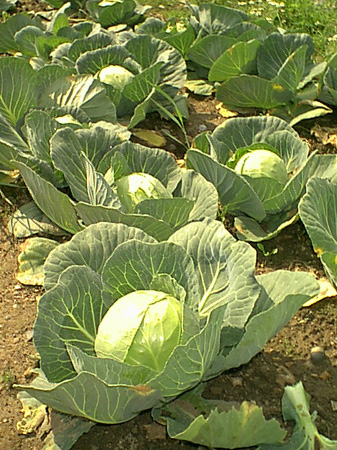 Junk food is the secret of our success – since we started on this non-stop cycle of eating, we’ve grown taller, started living longer and generally had a much better life than our poor ancestors denied the delights of burgers, pizzas and fried chicken. Look out onto the rosy-faced, cheery young folk clutching their Big Macs and ask yourself this – why are we getting quite so fussed about the supposed problems that come from being an ounce or two overweight? And why do (rather overweight if you ask me) celebrity cooking folk take a break from making loads of money promoting supermarkets or selling overpriced pizza and lecture us on how we’re making our kids ill by giving them a bit of stodge?
Instead of junk food these bossy folk want us to eat more green stuff. You know those smelly sprouts, cabbages and spring greens you hated as a kid but eat now under sufferance because some self-appointed expert on the telly tells us it’s good for us. In fact many folk wonder what all the fuss is about with brassicas – other than how one plant can produce such an array of annoying vegetables (although it was always a disappointment to me that sprouts didn’t turn into big cabbages if you left them on the stem, in fact that big cabbages are in fact just giant sprouts – which explains a great deal). As a small relative of mine once observed, ‘if God had meant us to eat cabbage, he would’ve made it taste nice.’
Now don’t get me wrong, I am not a big consumer of so-called junk food (in the case of Big Macs not a consumer at all under any circumstances other than near death from starvation) but I really don’t see that what other folk eat is any concern of mine – or, more importantly, any concern of the Government. If people want to stuff their faces with fattening food and wash it down with fizzy-pop or cheap lager (while smoking bootleg Lambert & Butlers) that’s their business. And, if as a result such folk die a terrible painful death at 55 (as appears to be the case with half Glasgow’s population if the figures are right) that’s their problem not mine.
If you like eating cabbage – eat cabbage (or how about deep fried sprouts – might they address the Glasgow diet problem?). If you enjoy a juicy venison steak pan-fried with a red wine jus that’s great too. And if you want pizza, chips and a deep-fried mars bar, go for it. And when you’ve digested all that get out a pen and paper (or fire up the old laptop) and tell the government to butt out.
....
Subscribe to:
Posts (Atom)