Showing posts with label puritans. Show all posts

Friday, 19 January 2018

Quote of the Day: Dry January is puritan finger-wagging


From Sophie Artherton in the Morning Advertiser:
If someone needs to be enabled to take control of their relationship with alcohol, or they drink so much that they need a whole month off from drinking, I’d call that a drink dependency problem. By its own definitions Dry January​ isn’t fit to solve that.

If Dry January​ isn’t about ‘alcohol dependency problems’ then what it amounts to is puritan finger pointing at people who enjoy a drink. Those behind the movement seem to want us to believe that anyone and everyone who drinks is at risk of becoming alcoholic, taking no account of the many reasons why some succumb to the disease.
Absolutely - Dry January is just another tool from the temperance movement to demonise drinking and we should reject it totally.

....

Saturday, 12 April 2014

New Puritans revisited

****

Here is Lord Macaulay on the Puritans:

"It was a sin to hang garlands on a Maypole, to drink a friend's health, to fly a hawk, hunt a stag, to play at chess, to wear lovelocks, to put starch into a ruff, to touch the virginals [a predecessor of the piano], to read the Fairy Queen.--Rules such as these, rules which would have appeared insupportable to the free and joyous spirit of Luther, and coutemptible to the serene and philosophical intellect of Zwingle, threw over all life a more than monastic gloom. The learning and eloqueuce by which the great reformers had been eminently distinguished, and to which they had been, in no small measure, indebted for their success, were regarded by the new school of Protestants with suspicion, if not with aversion. Some precisians had scruples about teaching the Latin grammar because the names of Mars, Bacchus, and Apollo occurred in it. The fine arts were all but proscribed. The solemn peal of the organ was superstitious. The light music of Ben Jonson's masques was dissolute. Half the fine paintings in England were idolatrous, and the other half indecent."

So those people who condemn, would limit and even ban so much pleasure simply to enforce their belief that it's for our own good - what else could we call them but New Puritans. These are the voices of the anti-consumer, the dry and pleasure free health fanatics, the people who see sex as a threat not a joy. Every day we are regaled with the patest dire warnings and every day a new call is made to the government for something to be done about these sins. Even harmless activities that look like the sin are condemned - recalling those who covered chair legs so as not to be reminded of the female form.

All these doctors, campaigners and activists who wish to order our lives for the benefit of our health are just worldly echoes of those old Puritans. We are reminded of this by Irma Kurtz:

Are health educators the new puritans? Yes, of course they are. They would cleanse and purify the new religion. The new religion is a paltry faith. It is worship of self. Religions get the puritans they deserve, and the new puritan is not much more than a rather fussy housekeeper who doesn't want cigarette ash on the carpet. Some of the new puritans, that is the medicos, are also the new priests. They are expected to intervene between mankind and the supernatural...

Since our health is placed on the highest pinnacle in this new religion, those charged with care for that health are not to be challenged even when they step beyond their knowledge. Thus, a doctor's opinion on the packaging of cigarettes is granted more value - because he is a 'priest' - than the opinion of those who understand the role of packaging or have studied its actual effect.

Those who contest these ideas, who challenge the New Puritians are condemned as the followers of Satan - in thrall to Big Tobacco, The Drinks Industry or Big Sugar. Even non-smoking, teetotal opponents are condemned as the New Puritans search for the tiniest justification for their condemnation.

Now, the New Puritans have adopted an ideology of total control - rejecting democracy and preferring instead the authority of the public health priesthood:

An urgent transformation is required in our values and our practices based on recognition of our interdependence and the interconnectedness of the risks we face. We need a new vision of cooperative and democratic action at all levels of society and a new principle of planetism and wellbeing for every person on this Earth - a principle that asserts that we must conserve, sustain, and make resilient the planetary and human systems on which health depends by giving priority to the wellbeing of all. All too often governments make commitments but fail to act on them; independent accountability is essential to ensure the monitoring and review of these commitments, together with the appropriate remedial action.

The voice of public health and medicine as the independent conscience of planetary health has a special part to play in achieving this vision.

These is little difference - other than reference to god - between this and the Puritan justification for banning the celebration of Christmas:

'More mischief is that time committed than in all the year besides ... What dicing and carding, what eating and drinking, what banqueting and feasting is then used ... to the great dishonour of God and the impoverishing of the realm.'
Such is the sad, drear, judgemental world the New Puritans would have us live in: rationed celebration, the condemnation of unlicensed pleasure, the placing of contentment - wellbeing if you must - as the primary virtue. These are the tenets of New Puritans, tenets that cannot be revoked by either the choices of individuals or the exercise of democracy - they are statements of faith in the religion of self proclaimed by that religion's priesthood - the public health profession.

....

Saturday, 6 July 2013

On the banning of harmless fun...the case of Hebden Bridge Burlesque Festival


Not a good week for Parish Councils I'm afraid - this time it's Hebden Royd Council (which covers what we more usually call Hebden Bridge). These fine upstanding representatives of the people have banned Hebden's Burlesque Festival:

"The Picture House Committee does not feel that it is appropriate for Hebden Royd Town Council to be associated with the Hebden Bridge Burlesque Festival. Burlesque arouses strong feelings, and many people feel it is demeaning to women, and raises issues of gender equality. It is also inevitable if held in the Hebden Bridge Picture House that it would be seen to be associated with Hebden Royd Town Council, so the committee declines the approach to host a part of the Hebden Bridge Burlesque Festival.”

Now while I'm resisting screaming out "political correctness gone mad" this strikes me as a typical judging (and ignorant) decision from a local council spoilsport - in this case a left wing spoilsport.

The Burlesque Festival is - like Earth - mostly harmless and it's banning an act of po-faced puritanism. And some local folk think so too and have got up a petition where they say:

Far from being demeaning to women burlesque has enabled the organisers (both women) to run their own very successful business, employ other people (both male and female) , support local businesses and provide some jolly good entertainment, both comedic and titillating but never sleazy or demeaning to women. The council has also overlooked the fact that around 70% of burlesque audiences are made up of women. Women do indeed find certain things demeaning and patronising, one of those is having their decisions made for them and assumptions made about what they find offensive.

Absolutely - especially the last sentence. You can sign the petition here.

...

Thursday, 16 August 2012

Quote of the day...

****

From Tim Worstall:

...better England drunk and free than ruled by puritans.

Absolutely!

....

Saturday, 19 May 2012

Damian Thompson, New Puritan Sugar Addict


Not a headline I ever expected to write but Damian Thompson, acerbic, catholic journalist has come out as an enthusiast for the pseudo-science of popular addictions, a core part of the New Puritan agenda. I'm sure others will point out that quoting Robert Lustig on the subject of sugar is rather like using a witch doctor as a guide to modern medicine.

The impression Thompson gives is that there has been an explosion in sugar consumption:

Year after year, the West’s love affair with sugar intensifies. But we pay very little attention to our compulsive attitude to the stuff.

Is this the case? For sure the world's consumption of sugar has tripled since the 1960s but we should note that the world's population has doubled in that time - so the per capita consumption of sugar has increased by around 60%. However, in the UK the National Diet & Nutrition Survey showed:

There were no significant differences in energy intake in any age or sex group compared with previous surveys.  Intakes of total sugars as %food energy were lower in boys aged 4 – 10 y in 2008-9 than in 1997.  In children aged 4 – 10 years, median daily intakes of NMES as a %food energy were lower in 2008-9 (13.7-14.6%) than in 1997 (16.8%).  No significant changes in NMES were seen in children aged 11 – 18 years or adults.  In all groups the %participants who consume fruit juice has increased.  In children aged 4 – 10 years consumption of soft drinks (not low calorie) has reduced. No changes were reported for adult consumption of sugar, preserves and confectionery and savoury snacks.  Chocolate confectionery consumption was lower for all children compared to 1997.

So despite the cup cake revolution, we're actually consuming less sugar than we were 15 years ago. As with every scare story - and I guess Thompson has a book to plug - in public health the truth is very different from the popular New Puritan headlines. We are getting healthier not least because our diet is healthier.

The real agenda from the likes of Thompson is to promote the purposeful life and to condemn anything that seems like hedonism - pleasure for its own sake.

Should we worry? Yes – for several reasons. Cupcakes and mini-bites don’t just play havoc with our blood sugar levels: they reinforce the sense, very strong among hard-pressed urban professionals, that life is only bearable if we reward ourselves with endless “treats”. Yet we also feel guilty when we reward ourselves. 

The New Puritan is out - Damian Thompson accords entirely to its moralising creed. He disapproves of "addictive" pastimes - "prescription drugs, internet porn, computer games and dozens of other consumer items" - offering just condemnation rather than some sensible explanation of his position other than that it is sinful or, that worst of modern sins, unhealthy. And like many in this New Puritan age, Thompson cares little for accuracy, preferring instead the painted of disapproving pen pictures and the frowning critiques of doctors:

"Watch what happens in an office when somebody walks in carrying a box of Krispy Kreme doughnuts. There’s a general squealing sound and everyone rushes over excitedly. You’d think someone had just arrived at a party with a few grams of coke. People descend on it in the same way."

The doctor who Thompson approvingly quotes clearly goes to very different parties from the rest of us! And those squeals of delight? I've seen them over pizza, sausages and mushrooms, none of which are noted for their sugar content.

It may be that Thompson has a problem with sweeties - he certainly implies as much: 

Supermarkets are constantly ratcheting up our anxiety about fatty foods while pushing things called “mini-bites” at us. Speaking as a sugar addict myself, I can only describe these as an invention of the devil.

I think we're getting to the heart of the problem - Thompson thinks 'something should be done'  about sugar because he's a sugar 'addict'. All the rest of us should be refused access -despite being unaddicted (or quite comfortable in our addiction) - because he has a problem. All I can say to this is that Thompson should sort out his problem rather than pretend that it's a problem all the rest of us share.

....

Tuesday, 5 July 2011

Tenets of the New Puritans #1: denormalisation and social direction

****
The essence of the New Puritan faith is not prohibition – the adherents of the Church of Public Health do not wish to ban pleasure, any more than their Puritan antecedents wished to do so merely that such pleasure should be approved, communal and uplifting::


From the rich array of popular pastimes in Tudor-Stuart England…the reform-minded founders of New England drew selectively, transplanting only those "lawful recreations" compatible with their errand into the wilderness. Cock-fighting, horse racing, and ball games were out; reading and writing were in. Far from offering release from social duty, recreation was rationalized to serve official ends. Puritans socialized at public worship, town meetings, funerals, and executions. Integrating work and play, they enjoyed a "productive party" -- a barn-raising or quilting bee -- that epitomized the ideal of "useful recreation". Such civic events "expressed the communal spirit of a covenanted people".

The aim of the New Puritan is re-education – to bring about an epiphany of good behaviour. And while they make common cause with prohibitionists – and will support bans – New Puritans prefer the process of ‘denormalisation’.

However, as recent observers have noted, through the widespread implementation of tobacco ‘denormalization’ strategies, tobacco control advocates appear to have embraced the use of stigma as an explicit policy tool. In a recent article, Ronald Bayer (2008) argues that the mobilization of stigma may effectively reduce the prevalence of smoking behaviors linked to tobacco-related morbidity and mortality and is therefore not necessarily antithetical to public health goals.
While the ‘denormalisation’ strategy is most developed in the world of anti-smoking campaign, we see it begin to creep into anti-alcohol campaigns :

One of the key issues coming out of this research is the lack of any evidence showing that normalising the use of alcohol is a good prevention strategy" says Professor Doug Sellman of the University of Otago, Christchurch, who was invited to write an accompanying commentary.

"In fact the opposite is the case. The less alcohol is normalised in family life, and particularly when parents avoid being at all intoxicated in front of their children or supplying them with alcohol, the better the prevention of alcohol problems in young people will be" he says.
And with  ‘junk food’:

The issue of junk food and its consequences is a major challenge for 21st-century society, one which requires actions that are concrete, complementary, and immediate. Concerned by the urgent need to address it, and boasting a solid track record in the promotion of healthy eating habits and denormalization in the tobacco industry, the RSEQ1 is now involved in denor¬malizing junk food in schools.
Thus we see these “harmful” behaviours ‘denormalised’ while at the same time we are urged – and this is especially the case with young people – to seek “value” from leisure activity. Take this Chapter on “Youth Work Ethics”:
The young people decide that this is the way they want to spend Friday evening. It will be a good time. They have been looking forward to do it. It is a chosen and planned part of their life.

Their parents are pleased about the youth project. Their child (who they worry about) is making a good choice: they learn more about life in good ways, they meet new friends, their horizons are widened, and so on. Their child is also not making a bad choice: they are not getting drunk, falling into fights, at risk of dying, and so on.
Read those words – see the directions involved: “it will be a good time”, it is “chosen and planned” and the young people “learn more about life”. The New Puritan denies the possibility of pleasure for reasons of pure hedonism – fun for fun’s sake, if you will! Entertainment must only be entertainment with a purpose – the frivolity of mere fun is sinful. Or, as adherents to the Church of Public Health will say, ‘not in the interests of wider society’.

So youth work – activity taking place outside of formal education – seeks to indoctrinate young people with the tenets of the New Puritan faith: communalism, judgmental environmentalism, the stigmatising of sinful pleasures and the avoidance of risk.

This suppression of adventure, of exploration and of enterprise is carried forward by the New Puritans into their attitude to adult entertainment – the requirement for social meaning in art and literature, the preference for the uplifting story and the morality play, and the use of documentary to bend opinion towards purposeful pleasure and the denormalisation of hedonistic behaviour.

And educationalists grasp this in what they present to learners:

This unit helps students understand how artists can be influential in shaping human values. It does so by addressing social and global issues such as poverty, starvation, crime, discrimination, sickness, war and the environment. Students are encouraged to consider the subjective and expressive currents in art of our time in relation to these issues.
The idea that painting, music, reading and theatre are escapes from our workaday lives does not figure in the New Puritan’s mindset – these things are tools for passing on selected, preferred social values up to and including the denormalisation of those activities that are not approved.

That people continue to enjoy themselves – to reject the prescribed pleasures from the Church of Public Health in favour of hedonism remains a glint of sunlight in an otherwise bleak society. What we can hope for is that, as was the case in New England all those years ago, the search for real pleasure will triumph over the direction and denormalisation directed by our elders and betters:

Pursuing pleasure for its own sake, New Englanders seized on solemn occasions as pretexts for parties. Austere funerals turned into lavish affairs; "ordination balls" celebrated the installation of ministers; execution days took on "a carnival atmosphere". Notwithstanding jeremiads from the pulpit, alcohol was ubiquitous; under its influence, militia drills could descend into drunken brawls and corn-huskings into trysts. "The tavern became the new meetinghouse": a centre of news, politics, trade, and entertainment. In the more permissive atmosphere of the eighteenth century, men and women flirted at singing schools, drank and danced in alehouses, devoured romantic novels, and engaged in a good deal of premarital sex.”
*The two New England quotes are from a review "Leisure and Recreation in Colonial New England" by Bruce Daniels


....

Tenets of the New Puritans #1: denormalisation and social direction

****
The essence of the New Puritan faith is not prohibition – the adherents of the Church of Public Health do not wish to ban pleasure, any more than their Puritan antecedents wished to do so merely that such pleasure should be approved, communal and uplifting::


From the rich array of popular pastimes in Tudor-Stuart England…the reform-minded founders of New England drew selectively, transplanting only those "lawful recreations" compatible with their errand into the wilderness. Cock-fighting, horse racing, and ball games were out; reading and writing were in. Far from offering release from social duty, recreation was rationalized to serve official ends. Puritans socialized at public worship, town meetings, funerals, and executions. Integrating work and play, they enjoyed a "productive party" -- a barn-raising or quilting bee -- that epitomized the ideal of "useful recreation". Such civic events "expressed the communal spirit of a covenanted people".

The aim of the New Puritan is re-education – to bring about an epiphany of good behaviour. And while they make common cause with prohibitionists – and will support bans – New Puritans prefer the process of ‘denormalisation’.

However, as recent observers have noted, through the widespread implementation of tobacco ‘denormalization’ strategies, tobacco control advocates appear to have embraced the use of stigma as an explicit policy tool. In a recent article, Ronald Bayer (2008) argues that the mobilization of stigma may effectively reduce the prevalence of smoking behaviors linked to tobacco-related morbidity and mortality and is therefore not necessarily antithetical to public health goals.
While the ‘denormalisation’ strategy is most developed in the world of anti-smoking campaign, we see it begin to creep into anti-alcohol campaigns :

One of the key issues coming out of this research is the lack of any evidence showing that normalising the use of alcohol is a good prevention strategy" says Professor Doug Sellman of the University of Otago, Christchurch, who was invited to write an accompanying commentary.

"In fact the opposite is the case. The less alcohol is normalised in family life, and particularly when parents avoid being at all intoxicated in front of their children or supplying them with alcohol, the better the prevention of alcohol problems in young people will be" he says.
And with  ‘junk food’:

The issue of junk food and its consequences is a major challenge for 21st-century society, one which requires actions that are concrete, complementary, and immediate. Concerned by the urgent need to address it, and boasting a solid track record in the promotion of healthy eating habits and denormalization in the tobacco industry, the RSEQ1 is now involved in denor¬malizing junk food in schools.
Thus we see these “harmful” behaviours ‘denormalised’ while at the same time we are urged – and this is especially the case with young people – to seek “value” from leisure activity. Take this Chapter on “Youth Work Ethics”:
The young people decide that this is the way they want to spend Friday evening. It will be a good time. They have been looking forward to do it. It is a chosen and planned part of their life.

Their parents are pleased about the youth project. Their child (who they worry about) is making a good choice: they learn more about life in good ways, they meet new friends, their horizons are widened, and so on. Their child is also not making a bad choice: they are not getting drunk, falling into fights, at risk of dying, and so on.
Read those words – see the directions involved: “it will be a good time”, it is “chosen and planned” and the young people “learn more about life”. The New Puritan denies the possibility of pleasure for reasons of pure hedonism – fun for fun’s sake, if you will! Entertainment must only be entertainment with a purpose – the frivolity of mere fun is sinful. Or, as adherents to the Church of Public Health will say, ‘not in the interests of wider society’.

So youth work – activity taking place outside of formal education – seeks to indoctrinate young people with the tenets of the New Puritan faith: communalism, judgmental environmentalism, the stigmatising of sinful pleasures and the avoidance of risk.

This suppression of adventure, of exploration and of enterprise is carried forward by the New Puritans into their attitude to adult entertainment – the requirement for social meaning in art and literature, the preference for the uplifting story and the morality play, and the use of documentary to bend opinion towards purposeful pleasure and the denormalisation of hedonistic behaviour.

And educationalists grasp this in what they present to learners:

This unit helps students understand how artists can be influential in shaping human values. It does so by addressing social and global issues such as poverty, starvation, crime, discrimination, sickness, war and the environment. Students are encouraged to consider the subjective and expressive currents in art of our time in relation to these issues.
The idea that painting, music, reading and theatre are escapes from our workaday lives does not figure in the New Puritan’s mindset – these things are tools for passing on selected, preferred social values up to and including the denormalisation of those activities that are not approved.

That people continue to enjoy themselves – to reject the prescribed pleasures from the Church of Public Health in favour of hedonism remains a glint of sunlight in an otherwise bleak society. What we can hope for is that, as was the case in New England all those years ago, the search for real pleasure will triumph over the direction and denormalisation directed by our elders and betters:

Pursuing pleasure for its own sake, New Englanders seized on solemn occasions as pretexts for parties. Austere funerals turned into lavish affairs; "ordination balls" celebrated the installation of ministers; execution days took on "a carnival atmosphere". Notwithstanding jeremiads from the pulpit, alcohol was ubiquitous; under its influence, militia drills could descend into drunken brawls and corn-huskings into trysts. "The tavern became the new meetinghouse": a centre of news, politics, trade, and entertainment. In the more permissive atmosphere of the eighteenth century, men and women flirted at singing schools, drank and danced in alehouses, devoured romantic novels, and engaged in a good deal of premarital sex.”
*The two New England quotes are from a review "Leisure and Recreation in Colonial New England" by Bruce Daniels


....

Tenets of the New Puritans #1: denormalisation and social direction

****
The essence of the New Puritan faith is not prohibition – the adherents of the Church of Public Health do not wish to ban pleasure, any more than their Puritan antecedents wished to do so merely that such pleasure should be approved, communal and uplifting::


From the rich array of popular pastimes in Tudor-Stuart England…the reform-minded founders of New England drew selectively, transplanting only those "lawful recreations" compatible with their errand into the wilderness. Cock-fighting, horse racing, and ball games were out; reading and writing were in. Far from offering release from social duty, recreation was rationalized to serve official ends. Puritans socialized at public worship, town meetings, funerals, and executions. Integrating work and play, they enjoyed a "productive party" -- a barn-raising or quilting bee -- that epitomized the ideal of "useful recreation". Such civic events "expressed the communal spirit of a covenanted people".

The aim of the New Puritan is re-education – to bring about an epiphany of good behaviour. And while they make common cause with prohibitionists – and will support bans – New Puritans prefer the process of ‘denormalisation’.

However, as recent observers have noted, through the widespread implementation of tobacco ‘denormalization’ strategies, tobacco control advocates appear to have embraced the use of stigma as an explicit policy tool. In a recent article, Ronald Bayer (2008) argues that the mobilization of stigma may effectively reduce the prevalence of smoking behaviors linked to tobacco-related morbidity and mortality and is therefore not necessarily antithetical to public health goals.
While the ‘denormalisation’ strategy is most developed in the world of anti-smoking campaign, we see it begin to creep into anti-alcohol campaigns :

One of the key issues coming out of this research is the lack of any evidence showing that normalising the use of alcohol is a good prevention strategy" says Professor Doug Sellman of the University of Otago, Christchurch, who was invited to write an accompanying commentary.

"In fact the opposite is the case. The less alcohol is normalised in family life, and particularly when parents avoid being at all intoxicated in front of their children or supplying them with alcohol, the better the prevention of alcohol problems in young people will be" he says.
And with  ‘junk food’:

The issue of junk food and its consequences is a major challenge for 21st-century society, one which requires actions that are concrete, complementary, and immediate. Concerned by the urgent need to address it, and boasting a solid track record in the promotion of healthy eating habits and denormalization in the tobacco industry, the RSEQ1 is now involved in denor¬malizing junk food in schools.
Thus we see these “harmful” behaviours ‘denormalised’ while at the same time we are urged – and this is especially the case with young people – to seek “value” from leisure activity. Take this Chapter on “Youth Work Ethics”:
The young people decide that this is the way they want to spend Friday evening. It will be a good time. They have been looking forward to do it. It is a chosen and planned part of their life.

Their parents are pleased about the youth project. Their child (who they worry about) is making a good choice: they learn more about life in good ways, they meet new friends, their horizons are widened, and so on. Their child is also not making a bad choice: they are not getting drunk, falling into fights, at risk of dying, and so on.
Read those words – see the directions involved: “it will be a good time”, it is “chosen and planned” and the young people “learn more about life”. The New Puritan denies the possibility of pleasure for reasons of pure hedonism – fun for fun’s sake, if you will! Entertainment must only be entertainment with a purpose – the frivolity of mere fun is sinful. Or, as adherents to the Church of Public Health will say, ‘not in the interests of wider society’.

So youth work – activity taking place outside of formal education – seeks to indoctrinate young people with the tenets of the New Puritan faith: communalism, judgmental environmentalism, the stigmatising of sinful pleasures and the avoidance of risk.

This suppression of adventure, of exploration and of enterprise is carried forward by the New Puritans into their attitude to adult entertainment – the requirement for social meaning in art and literature, the preference for the uplifting story and the morality play, and the use of documentary to bend opinion towards purposeful pleasure and the denormalisation of hedonistic behaviour.

And educationalists grasp this in what they present to learners:

This unit helps students understand how artists can be influential in shaping human values. It does so by addressing social and global issues such as poverty, starvation, crime, discrimination, sickness, war and the environment. Students are encouraged to consider the subjective and expressive currents in art of our time in relation to these issues.
The idea that painting, music, reading and theatre are escapes from our workaday lives does not figure in the New Puritan’s mindset – these things are tools for passing on selected, preferred social values up to and including the denormalisation of those activities that are not approved.

That people continue to enjoy themselves – to reject the prescribed pleasures from the Church of Public Health in favour of hedonism remains a glint of sunlight in an otherwise bleak society. What we can hope for is that, as was the case in New England all those years ago, the search for real pleasure will triumph over the direction and denormalisation directed by our elders and betters:

Pursuing pleasure for its own sake, New Englanders seized on solemn occasions as pretexts for parties. Austere funerals turned into lavish affairs; "ordination balls" celebrated the installation of ministers; execution days took on "a carnival atmosphere". Notwithstanding jeremiads from the pulpit, alcohol was ubiquitous; under its influence, militia drills could descend into drunken brawls and corn-huskings into trysts. "The tavern became the new meetinghouse": a centre of news, politics, trade, and entertainment. In the more permissive atmosphere of the eighteenth century, men and women flirted at singing schools, drank and danced in alehouses, devoured romantic novels, and engaged in a good deal of premarital sex.”
*The two New England quotes are from a review "Leisure and Recreation in Colonial New England" by Bruce Daniels


....

Sunday, 28 November 2010

Hands off my beer, Mr Cameron

The thin end of the wedge is being gently inserted:


The coalition will follow a formula first used by Asda, the supermarket chain, in setting the price, which is intended to be a major weapon in the battle against binge drinking.

The formula, aimed at clamping down on "loss leader" deals, means that no outlet will be able to sell any alcoholic drink for below the cost of duty on the product, plus VAT.

If they do they are likely to lose their licence to sell alcohol as well as face fines.


I can hear you telling me to calm down. Saying that this isn't the advent of a steep downhill road to prohibition - to the 'denormalisation' of alcohol. It's just a little 'nudge' to get us to improve our drinking habits.

And, dear reader, you are wrong. This is that slender little sliver - the first step towards a semi-prohibition, to the medicalisation of alcohol:

"What I would want to see is a minimum price of 50 pence per unit of alcohol, across the board. This sounds like a step in the right direction, but it falls well short of the kinds of changes that I think we need to see."


The authentic voice of the medical prohibitionist lobby there! And his target isn't binge drinking or anti-social behaviour but:

"This doesn't go anywhere near far enough to make a difference. It won't hit wine at all, and it doesn't look like it will have much impact on people drinking other types of alcohol."


So this nannying fussbuckets will continues with their campaign - first for minimum pricing, then for control of the licensing process, then for higher levels of duty, then for plain packaging...and so on and so on. This change opens up - justifies, if you will - the setting of drink prices by Government. How long before we have Government liquor shops and pubs open for just three hours and evening?

Don't say you weren't warned.

....

Saturday, 4 September 2010

Diageo lines up with the puritans in calling for higher duty on beer.

In what can only be described as an orgy of self-interest, the booze manufacturers and their representative organisations are leaping about trying to sound all good and righteous in submissions and representations to the current Treasury review of alcohol duty. At the forefront is Diageo in calling for higher duty on beer and wine:

Diageo wants to see "full equivalence" between all kinds of alcohol, so that one unit is taxed at the same rate, regardless of the drink. The strongest drinks would therefore pay the highest level of tax. Diageo is proposing the move as a way of staving off political pricing on drinks such as alcopops and strong cider, targeted by health campaigners for encouraging binge drinking.

Now all this is just a little disingenuous of Diageo – makers of eight out of the top 20 spirits brands – since such a change would raise the level of duty on beer and wine considerably. Presumably Diageo think Guinness can take the hit while they increase profits on higher margin spirit and spirit derived brands.

All this has brought a robust response from the beer business with Wetherspoons’ boss, Tim Martin weighing into the drinks company branding them, “a bunch of morons” and this position has been – more moderately – supported by others:

Kristin Wolfe, head of alcohol policy at SABMiller, said: "Excise tax 'equalisation' is a ruse for making high strength alcohol cheaper relative to low strength alternatives," she said. Ms Wolfe pointed to the lower production costs associated with spirits. "Unless spirits are taxed proportionately higher, they can be sold at a much lower price per unit." Mark Hunter, head of Molson Coors in the UK, branded Diageo's call "self-serving".

What should concern us is that booze businesses appear to be lining themselves for a scrap that is essentially over market share within a declining industry. Oh yes, did we mention that alcohol sales have fallen year on year for six years?

And the effect of Diageo’s representation – if implemented – would be a further discouragement for the pub trade. On top of the smoking ban, a further increase in beer duty (dubbed ‘equalisation’) would undoubtedly push a further bunch of long-established pubs from marginal viability into closing.

That any booze producer is calling for any increase in tax is wrong. Yet the prohibitionists, puritans and health fascists will seize on Diageo’s proposal as another little nail in the coffin of the pub. And this time it will be the drinks industry hammering in the nail.

All this despite the welcome discovery that drinking helps us live longer!

....

Saturday, 6 March 2010

The New Puritans

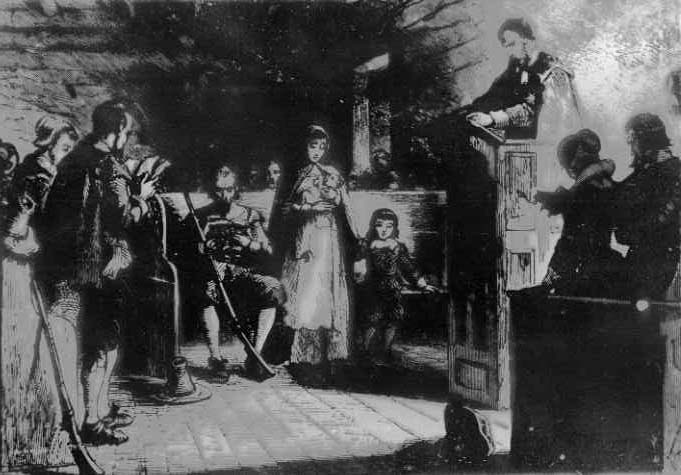
The essence of puritan belief was God's supremacy over human affairs through the church and through the bible. This required the simplification of worship - the ending of 'idolatry', the banning of music in church, the scrapping of prescribed prayers and the down-grading of the Eucharistic sacrament.


And from all this came the rejection of public pleasures - drinking, dancing, drama, gambling, sport and, famously, Christmas.


"The long Parliament gave orders, in 1644, that the twenty-fifth of December should be strictly observed as a fast, and that all men should pass it in humbly bemoaning the great national sin which they and their fathers had so often committed on that day by romping under the mistletoe, eating boar’s head, and drinking ale flavored with roasted apples." (Macaulay)

The 17th century puritan-led governments also opposed the extension of science and promoted hysteria about witchcraft:


Hath not this present Parlament
A Lieger to the Devil sent,
Fully impower’d to treat about
Finding revolted Witches out?
And has he not within a year
Hang’d threescore of them in one Shire?
Some only for not being drown’d,
And some for sitting above ground.
Whole days and nights upon their Breeches,
And feeling pain, were hang’d for Witches
And some for putting knavish Tricks
Upon green Geese or Turkey Chicks
Or Pigs that suddenly deceast
Of griefs unnatural, as he guess'd
Who after proved himself a Witch
And made a rod for his own Breech.

From Samuel Butler's - Hudibras (first published in 1663).


It was not a reign of terror - all pleasures were not stopped but the promotion of moral panic by public and ecclesiastical authorities brought about the suppression of good cheer and its replacement with a dour, prejudged world of sins to be avoided and expunged.

Travel forward 350 years in time to today's world and listen to the cries: binge drinking...sexualisation of young girls...childhood obesity...smoking. Those puritan sins have returned labelled rather with the groupthink and collectivism of social democracy than with the strictures of bible bashing certainty. We are lectured about the "cost to society" of our sins: "...drinking costs the NHS £2.7 billion", "...a generation of 'damaged' girls", "obesity set before the age of two" - you are all sinners, repent, repent, repent!

This 'your sins are bad for society' message extends to what we put in our bins, what car we drive, our choice of holiday and, of course our choice of pleasure. Every agent of the collectivist, socialist state is brought to play - here is the leftie feminist rant about bad girls:

"There was a moment in the 90s – I wince to recall it – when women themselves fell in with the view that feminism was unglamorous and inhibiting. It was cramping our style and even worse, stopping us from shopping! Middle-class commentators encouraged their readers to embrace their "inner bimbos". Their paeans to hair products and sexy knickers read like new lad-mag paeans to tarty women. Comic exaggeration made it clear that the writers were self-aware –women who "should know better".

So girls like to dress up, look good, smell nice and feel sexy? Is that anything new? For the new puritans it is a sin. It is bad. It is corrupting society. And the same goes for lads who like a noisy night out and enjoy the sight of pretty women. Not much has changed there either, has it? Yet for the new puritans this is a sin. Here's Michael Gove:

"That's why I believe we need to ask tough questions about the instant-hit hedonism celebrated by the modern men's magazines targeted at younger males. Titles such as Nuts and Zoo paint a picture of women as permanently,
lasciviously, uncomplicatedly available."

The truth of which those lads quickly discover, of course! Those bad girls condemned by the Guardian will put them straight!

Just as did the Long Parliament, today's New Puritans propose to use the power and authority of the state to control pleasures of which they disapprove. We already have a heavy-handed smoking ban, we are moving towards an ever more restrictive approach to alcohol, a vast horde of 'experts' is crawling over our kids berating them about what they eat and we now have the dreadful recommendations of the Papadopoulos Report including:

  • launching an online ‘one-stop-shop’ to allow the public to voice their concerns regarding irresponsible marketing which sexualises children
  • encouraging the government to support the Advertising Standards Agency to take steps to extend existing regulatory standards to include commercial websites

Perhaps, we will shift back to a more balanced approach to these issues. Less judging, less hectoring. Or maybe we'll sleepwalk into a ghastly, oppressive world where the New Puritans police our behaviour for its adherence to the received orthodoxy of believe about pleasures. I am not all that hopeful right now.


....