Showing posts with label regulations. Show all posts

Thursday, 19 April 2018

If there's a global technology race, Europe is going to lose.


This is clear from an interview in Der Speigel with Pedro Domingos, author of 'The Master Algorithm' (which, we're told sits on Xi Jinping's bookshelf alongside Marx and Mao):
My literary agent told me: "You are going to sell this book all over the world, but not in France and Germany." And that's what happened. "The Master Algorithm" was sold to Japan, China, Taiwan, South Korea. There are Polish and Russian translations. But my agent was right when he said: "The Germans and the French don't like these things."
There still isn't a German translation of the book and it's because the Europeans are terrified of technology's implications:
The picture coming out of Silicon Valley is a very optimistic one, informed by libertarian ideas. The very opposite is true for Europe: I just came back from a conference in Berlin where I was struck by the sheer pessimism. Every other session was about: "Oh, we have to fear this. Who knows what may be going on here?"
This technology - Artificial Intelligence - is our future economy, it is our escape (if Silicon Valley's libertarianism wins over Jinping's autocracy) from being what sociologist C. Wright Mills called The Cheerful Robot back in 1959 (if not it's a world more like Taylorism on steroids - Zamyatin's 'We'). Yet European governments are closing the doors to the idea - from proposals for limits on robots to government access to commercial algorithms the EU and other European governments are set against the idea of a liberal, free market artificial intelligence.

Here in Britain it's not much better with the recent Facebook / Cambridge Analytica sessions, the House of Lords' risible report on AI regulation, the febrile 'we're being spied on by evil capitalists' line of national broadcasters and broadsheets, and a government that can't see how giving the state access to encrypted messaging makes that messaging useless.

We need a debate about the risks and benefits rather than about how we can control the technology - what are the downside risks of unregulated commercial AI set against the upside benefits of giving technology innovators free rein? What, as Domingos comments, is the balance between 'explainability' (this is what the algorithm does) and effectiveness?

Right now Europe, for all its brains and corporate clout, is dragging its heels and, worse, has a government in the EU that is actively opposed to both a liberal US-style technology surge and an autocratic Chinese-style approach. Whoever wins this battle, it isn't going to be Europe.

....

Friday, 22 December 2017

Stupid regulation and dumb government - why Detroit isn't regenerating


This piece from Scott Beyer sums up the problem with local government's default approach to business regulation - banning stuff:
The city has begun reinforcing regulations that, because of bureaucratic disorganization, have long been ignored. Central to this is the Operation Compliance Initiative, which was passed in 2012 by then-Mayor Dave Bing to regulate Detroit’s 1,500 illegal unlicensed businesses. Most operate on extremely low profits and, like the Browns’ project, are often run out of homes. Part of a complex underground economy, they are usually in poor areas. They offer everything from auto parts and electrical equipment, to basic retail and in-house dining—but they all have failed to meet the permitting and licensing requirements mandated by the city and the state of Michigan.
My city of Bradford isn't a broken as Detroit but we're just as dumb - banning A-Boards, charging upwards from £500 to put some chairs on the pavement, stopping taxi firms collaborating to compete with ride-share apps, imposing onerous planning restrictions on security, enforcing use classes to prevent innovation, banning takeaway food anywhere near schools. I guess we're probably no more unfriendly to business innovators than most other cities but, frankly, many of those can get away with it. Bradford, like Detroit, is damaged by these overzealous regulators and dumb rules.

.....

Monday, 9 October 2017

The case for Devo (Akron, Ohio version) - can we get satisfaction?


Aaron Renn headlines his commentary "Their Problems are not Your Problems" by which he means that basing our economic policies on the needs of superstar cities (New York, London, San Francisco and so on) rather ignores what's going on elsewhere. Renn cites an article by David Zipper:
If you live in a place like San Francisco or New York where urban tech startups (and, ahem, national media) are concentrated, these conflicts seem to be reshaping cities throughout the country. But if you dig a little deeper, it’s clear that’s hardly the case. With fewer than twenty new homes built in a city of 200,000 last year, Akron recently abated property taxes for new housing as a way to prop up the construction market. Many of Akron’s leaders would love to have the problem of excessive housing demand that Airbnb has allegedly created.
There are probably more places more like Akron than like San Francisco yet our discussion about public policy is still dominated by the problems of the latter (housing costs, transport investment, disruption and the gig economy, etc.) except for vague references to other places being 'left behind' with their people being unsuited to the shiny and exciting new economy being forged in the Superstar Cities. And when (as Trump did by unpicking some of the energy greenery policies promoted by his predecessor) policies do lean towards a place like Akron, they are attacked by politicians based in those superstar cities.

Right now in the UK we're in the throes of another somewhat occult but rather important debate linked to our planning system. The national government is consulting on a standardised methodology for the 'objective assessment of (housing) need' or OAN. For the layman this is the way in which the planners (backed up by lucrative consultancies selling macroeconomic models) decide on the number of houses that need building in a given 'local planning authority' or LPA. The reason for this new system is pretty straightforward - without a great big stick lots of those LPAs won't be allocating anything close to the amounts of land needed to meet housing need in their area. We're solving a problem for San Francisco (or London) rather than a problem for Akron (or Burnley if you'd rather).

The case for devolution - appropriate because the splendid 1970s semi-punk band, Devo came from Akron - is very clear when you realise the extent to which near every policy in England is determined by the needs of London and a few other over-heating places. It's not just the obvious stuff about housing and transport but also things like health systems, benefits and policing that get policies designed for London, Cambridge and Brighton rather than Bradford, Oldham and Stoke. Despite this case, the English programme of devolution is ridiculous consisting as it does of 'coalitions of the willing' competing through 'asks' for the few crumbs of power central government is prepared to give up.

I guess this brings us to the real deal in devolution - taxes, benefits and regulation. There's a debate in the UK about returning business rates to local councils (note this is the cash not the ability to set the rate) but no-one has raised the question as to whether local councils should get other taxes devolved - stamp duty, for example - or whether things such as planning and licensing policies should be locally determined rather than constrained within a tightly drawn national framework. Akron could zero property taxes to incentivise development but such an option isn't available to Burnley. In the 1960s, Singapore could use corporation taxes and investment exemptions as a way to attract business investment - Leeds and Manchester can't. We talk about the 'Celtic Tiger' but fail to notice that it was low taxes and business-friendly regulation that made those big tech companies head to Ireland (the EU noticed as they're busy trying to clobber the Emerald Isle for having the audacity to be creative in order to develop its economy). None of these policies are available to the North of England (even the bits with Heseltine's mayors) - we don't even get to decide which roads get improved first, we just get a promise of a meeting with the national agency responsible. Same goes for flood defences, for health services and for education investment.

For the North of England - or for it's constituent regions - the case for devo rests with the fact that, without real devolved powers, policy will always be determined by the demands of England's superstar city, London. And, right now, the devo deals on offer involve elected mayors with limited (now officially termed "soft") power and not much else. It may be that the Two Andys will transform Birmingham and Manchester by sheer force of personality but I suspect that real devolved power - even what Wales has got would do, we needn't go full Scots - would be a deal more effective as a way of transforming the economy and society of England's provinces.

.....

Thursday, 27 July 2017

Vested interests will always use regulation to protect that interest


From Dick Puddlecote a shocking example of a private business using regulatory pressure to protect its private interests:
The website for Vype e-cigarettes www.govype.com, was seen on 13 March 2017. The home page of the website featured a carousel with four slides. Text on the first slide stated "VYPE PURPLE ePEN STARTER KIT +1 PACK OF PREMIUM CARTRIDGES. FOR £19.98*". Smaller text below stated "*ENDS TUESDAY 28th MARCH 2017. P&P CHARGES WHERE APPLICABLE". The text was next to images of the starter kit, and a link which stated "SHOP NOW>". Text on the fourth slide stated "BUY 5 GET 1 FREE. INCLUDES VYPE PEBBLE CARTRIDGES, ePEN CARTRIDGES & eLIQUID BOTTLES*. SHOP NOW>". On the web page for the Vype Pebble Starter Kit, text stated "The small and mighty Pebble".
This complaint - partly upheld by the Advertising Standards Authority - wasn't from a concerned member of the public or even some shocked anti-smoking campaign group but from Johnson & Johnson, manufacturers of nicorette and other no-tobacco nicotine delivery systems. They're straightforwardly nobbling their competitor with this complaint.

So when we're talking about regulations supposedly protecting health or safety, we should always ask for the independent evidence and should further ask who benefits - which private business - benefits. Johnson & Johnson along with other pharmaceuticals with very profitable nicotine products campaigned very hard to firstly get e-cigs banned, then to get them regulated as medicines and then to hobble their marketing and promotion. Not for reasons of public safety or health but purely and simply to protect their business from competition.

.....

Saturday, 15 June 2013

EU regulations - we shouldn't laugh...we should cry...

****

Chris Snowdon reminds us of the lunacy that is EU regulation:

For example, the Commission wants to ban cigarette packs which are 54 mm wide, but will allow packs that are 55 mm wide (and only 55 mm wide). It will allow cigarettes to be sold if they have a diameter of 7.5 mm, but no more and no less than 7.5 mm. Only cigarettes which have a flip top lid will be allowed. Menthol cigarettes will be arbitrarily banned. Cylindrical rolling tobacco tins will be banned, but rectangular pouches will be tolerated. Packs of 20 will be OK, but packs of 19 will be illegal.

There will be some cod public health reason for each of the daft proposals. But, the complete picture is of an organisation so far up its bureaucratic backside that it simply doesn't comprehend how it destroys freedom, choice and independence.

And it's not a joke - however much we want to laugh about bent cucumbers or straight bananas. The result of this endless rule-making is to allow those with the cash to buy politicians or bureaucrats or the time to camp out in Brussels the power to damage our interests while pursuing their profits, prejudice or power.

....

Saturday, 21 May 2011

Is this the price of regulation?

****

Two stories in today's Daily Telegraph. Firstly, Tata Steel is laying off folk on Teeside again - and here's one of the reasons:

EU carbon legislation threatens to impose huge additional costs on the steel industry. Besides, there remains a great deal of uncertainty about the level of further unilateral carbon cost rises that the UK Government is planning."
Heavy manufacturing companies are penalised by European laws forcing them to buy carbon permits costing about £15 per tonne of emissions. 

Assuaging the cod guilt of Mr Huhne and his pals mean hundreds more on the dole in Redcar. Good result there for the Greens and fellow travellers.

Secondly, the banks aren't hitting their lending targets (resulting in froth and splutter from Vince):

Analysts at UBS said that while a "significant proportion" of the fall in lending was the results of poor demand, most of the blame can be placed at the door of the Government and the cost of meeting new capital and liquidity standards.

Tighter regulation means less lending - pretty simple and predictable really.

We might need to save the planet (although I suspect it's fine really) and to regulate the banks. But these actions come at a cost - unemployment, business failure, slow economic growth and more poverty.

But you knew that, didn't you?

....

Monday, 11 April 2011

Dear Res Publica, taxing the shopping habits of the poor to subsidise the preferences of the wealthy is immoral and stupid

I wasn’t planning to comment at length on Adam Schoenborn’s Res Publica report, The Right to Retail – indeed Guido’s comments might have sufficed:

Food price inflation is bad enough as it is without Blond trying to undermine the competitiveness of the supermarkets, who will inevitably just pass on increased costs to consumers. Blond and Zac are a danger to the affordability of basic needs to consumers with their attempts to foist a Tory form of autarky on us all. If Blond wants to open a grocery store good luck to him, no need to hobble the supermarkets in the process.

However, I made the mistake of starting to read the report and to consider what it says:

The finding of the Competition Commission in 2008 – that the grocery market represents a “good deal for consumers” – has exposed the limitations of our national competition framework. We participate in our economy not just as consumers but as employees, community-members, investors and crucially as owners. As such, competition law must go beyond price-based consideration of consumer interest. It must create and sustain markets and a model of growth that can sustain small owners alongside the big. If instead we continue to be indifferent to ownership, we will continue to be a society without assets, practicing capitalism without capitalists.

The obvious question that springs from this comment is why? Why do we need to “sustain small owners” – surely in a free market small owners will succeed if they make a good enough offer, buy well and are properly managed. And I know this because I wrote a Masters Dissertation on street markets and farmers markets. Unlike the author of this report, I took the trouble to read the wide academic literature, to look at the experience of the USA, Canada and Europe and to consider how you can see small traders succeed alongside the supermarket. And yes, there is a movement out there, growing and expanding – filling a niche of local, high-quality food.

  • FARMA, the farmers’ market, farm shop and pick-your-own organisation now boasts over 700 members trading through 800 markets and retail outlets across the country.
  • Ocado, set out in 2002 to provide high quality food online and is now a listed company – demonstrating again how new entrants to the grocery market can succeed
  • And Abel & Cole lead the field in the provision of veg boxes – regular deliveries of fresh, seasonal fruit and veg to the consumer’s home

Moreover if you visit inner-cities you’ll see other grocery phenomena – thriving municipal markets stuffed with Asian, African and East European stalls, corner shops that, in response to demand, have suddenly become the Polish shop and in places like Bradford great supermarkets like Pakeezah and Haq. All these businesses are successfully trading in competition to the big supermarket chains. I even saw fruit and veg van sales in Bradford last week – something I’ve not seen since I was a child!

What saddens me about Schoenborn’s report isn’t just that it completely ignores all this exciting new retailing but that there is absolutely no reference to the extensive literature about the drivers for supermarket success, the long term decline of town centres as locations for convenience and bulky goods shopping and the different strategies available to rejuvenate town centres. The only theory in the report relates to economics – there is nothing from the wider field of urban studies, from town and country planning (despite the proposal for a whole raft of new planning regulations and controls), from sociology or from geography.

And the prescription set out here – to introduce a further tax on out-of-town retail – won’t work. It may provide some extra cash for town centres but are we really suggesting that a tax on one business should be used to subsidise another business – selected through some unspecified process of ‘designation’? Is that not a recipe for state control, corruption and market distortion?

More importantly, at a time when food inflation is well in excess of 5%, such a tax would act merely to raise prices. And it would be the less well off – the folk who shop and Morrisons, Tesco and ASDA – who will pay those prices. What Schoenborn proposes is a tax on the shopping habits of the relatively poor so as to subsidise the shopping preferences of the relatively rich.

A while ago I wrote – referring to a study by US sociologists Susie Pryor and Sanford Grossbart (“The Ethnography of an American Main Street”, International Journal of Retail & Distribution Management 2005):

Main Street is not simply a place of commerce – a shopping centre. Nor is it (as if in some Soviet dream) just a place for formal events and celebrations. It is a place of engagement and co-operation between merchants, consumers and “ancillary actors”. It is alive.

The driver to the success of Main Street isn’t the shop – although to hear us talk about town centres you would think that – it is the relationship we have with that place and the space it provides for the events and activities of our lives. In Bradford, when Pakistan wins at cricket, hundreds of fans head for the local centres. Not to shop but to share their happiness at victory.

Yet we distrust such a use for the spaces of our town centres. Many of us grumble about public drinking, about young people gathering together, about hen parties and stag dos. And we certainly dislike political campaigns and religious promotion (unless of course it’s an official and state-sanctioned occasion) – to the point of complaining about these activities.

To make town centres work we need to start thinking about them differently:

1. Places of performance – planned or otherwise
2. Centres of culture not temples to shopping
3. A locus for excitement and discovery rather than the workaday
4. As venues for communal celebration, sharing and festivity

So rather than beating down the door of John Lewis, Selfridges or some other “iconic” store should we not be finding impresarios to programme and create the framework on which the community's events and occasions – large and small – might be hung? After all we won’t go to Tesco to celebrate when West Ham win the world cup again!

Simply using the blunt instrument of tax and planning controls to give preference to selected small high street shops (not street markets, farmers markets, van sales, veg boxes, farm shops or other innovative retail businesses) is both wrong and misguided. To make town centres work you have to animate them, to put on events, to make them party friendly and to make the centre accessible by car – so cheap or free parking and plenty off it, please.

And, when you undertake some research, it’s good practice to actually refer to the literature lovingly written by academics across the world who specialise in that field rather than simply revisit one report (in this case from the UK’s Competition Commission) the conclusions of which you – without any substantiation or theoretical basis – choose to disagree with.

 ....

Monday, 28 March 2011

How open for business is Britain?


Today, with great fanfare, a new "Start Up Britain" campaign is launched:


Prime Minister David Cameron is launching a new private-sector business initiative today called Start Up Britain. It is aimed at encouraging people to set up their own businesses and will be a major part of the governments attempt to encourage economic growth through private enterprise. New businesses will be able to apply for help worth around £1,500 in areas such as internet advertising and IT training.

And the Government has roped in some big businesses - mostly those with a real interest in small business that extends to wanting to sell something to these new businesses!

O2, Virgin, Blackberry, Google, Experian, Barclays and AXA - all signed up and ready! Ready to sell mobile phone services, credit checking, insurance, banking and technology hardware. Not much in the way of philanthropy here - just some big businesses scamming government for a few nice sales opportunities.

And let me tell what the problem is for small businesses - it isn't the cost of IT training or the expense of internet advertising, it's the endless barriers to getting going. Here are a few examples:

Try setting up a bank account. You thought you just walked into the bank with some cash, filled out the forms and bingo, a shiny new bank account! Nope, you need the forms, photo ID, a meeting with a "business advisor" and evidence that the business is established. And if you try to open the account with a grand in cash there's a further pile of questions and forms related to money laundering and heaven knows what else

Then you'll need some insurance. Pretty easy to obtain and you have to have it even if you're only employing yourself. And if you're planning to bid for public contracts there's a whole load more rules - you'll need to spend at least a grand on assorted insurances.

Now find an angel investor. Ah, problem here. The investor will want equity - that's how it works. And regardless of how you and he choose to structure the equity, it has a load of negative tax implications for that investor. Change it to a loan? Oh no, the tax man's wise to that and will still nobble the investor.

So it's a loan from the bank? For a start up business, who're you trying to kid! The banks won't be taking that risk any time soon - unless of course you want a loan on crap terms that the bank insist on treating like a personal loan? Limited liability - that's a laugh isn't it!

I could go on - talk about VAT, about business rates (watch out for double taxation when you work from home), reporting rules, accountancy fees and a host of regulations specific to different types of business. And this is before we get to the burden of actually employing people - you know the "creating jobs" bit! That opens up a whole load more costs and rules - national insurance, PAYE, assorted employee rights (maternity, paternity, sick pay, holidays and so forth).

As my old boss, Judith Donovan put it in commenting prior to the recent budget:

“I passionately believe SMEs are the engines of growth; this Government so far is paying lip service to that concept while cuddling up to big business; we don’t need schemes and incentives and special favours.

“Yorkshire folk will do it for themselves if given a level playing field; lift the ridiculous and onerous employment law burdens for businesses employing under 10 people and the Yorkshire economy will fly; I should know. I built an SME to over £10m turnover and I sold because of these appalling laws and I would never start another business while they persist.”

Setting up a business is a pain - sometimes it's the only option but no-one enjoys it, there are huge bureaucratic barriers and costs before you can do anything, let alone start making some money!

There are plenty of people who would love to start a business. They don't bother because, right now, the cards are stacked up against the start up - regulation, tax, more regulation, more tax, controls, dictats, instructions, all things of no point, value or purpose to the businessman or woman.

That's what has to change - not lending us a tenner and getting Google to provide some second rate IT training.

....

Tuesday, 11 January 2011

Some things needed to be said...thanks Bob!

****

While being grilled (as the newspapers like to put it) by the Treasury Select Committee, the new Chief executive of Barclay's Banks spoke a truth that needed to be spoken. It is a great shame - for all of us - that no-one was listening to folk like him a couple of years ago:

"It's not okay for taxpayers to have to bail out banks. They should be allowed to fail,"

Yes, yes and a thousand times yes - banks are just businesses. Businesses made over large by the terror of default and the indulgence of governments. Businesses resting snugly under a protective arm of state-directed central banks. But businesses nonetheless. And business doesn't work if there isn't the possibility of failure.

So thanks Bob for reminding us of this fact. Let's hope it sticks in people's minds this time.

....

Sunday, 28 November 2010

Hands off my beer, Mr Cameron

The thin end of the wedge is being gently inserted:


The coalition will follow a formula first used by Asda, the supermarket chain, in setting the price, which is intended to be a major weapon in the battle against binge drinking.

The formula, aimed at clamping down on "loss leader" deals, means that no outlet will be able to sell any alcoholic drink for below the cost of duty on the product, plus VAT.

If they do they are likely to lose their licence to sell alcohol as well as face fines.


I can hear you telling me to calm down. Saying that this isn't the advent of a steep downhill road to prohibition - to the 'denormalisation' of alcohol. It's just a little 'nudge' to get us to improve our drinking habits.

And, dear reader, you are wrong. This is that slender little sliver - the first step towards a semi-prohibition, to the medicalisation of alcohol:

"What I would want to see is a minimum price of 50 pence per unit of alcohol, across the board. This sounds like a step in the right direction, but it falls well short of the kinds of changes that I think we need to see."


The authentic voice of the medical prohibitionist lobby there! And his target isn't binge drinking or anti-social behaviour but:

"This doesn't go anywhere near far enough to make a difference. It won't hit wine at all, and it doesn't look like it will have much impact on people drinking other types of alcohol."


So this nannying fussbuckets will continues with their campaign - first for minimum pricing, then for control of the licensing process, then for higher levels of duty, then for plain packaging...and so on and so on. This change opens up - justifies, if you will - the setting of drink prices by Government. How long before we have Government liquor shops and pubs open for just three hours and evening?

Don't say you weren't warned.

....

Saturday, 20 November 2010

Why you mustn’t let the Government regulate the Internet – some thoughts on net neutrality


I mean, what do I know? Surely Simon you should steer away from those geek subjects like ‘net neutrality’! But it’s important – very important – because…

…the advocates of ‘net neutrality’ are asking for the Internet to be regulated by Government.

And, you are quite right dear reader; this is not a good thing at all.

But first the argument. Here’s Ed Vaizey upsetting the net neutrality wonks by saying no:


Internet service providers such as BT should be allowed to abandon net neutrality and prioritise users' access to certain content providers, the communications minister Ed Vaizey said in a speech today.

The move away from net neutrality in the UK will prove controversial as it opens the door for ISPs to favour some websites in terms of the volume and speed of the delivery of their content to users, while others given lower priority could see their internet traffic suffer.


This is a bad thing say those wonks (and some vested interests like the search engine providers and the BBC):


In this case the baby they'll eat is the open internet. If ISPs can say to firms, "nice data you've got here. It'd be a shame if anything happened to it" they can ensure that the next YouTube, the next iPlayer never takes off.

Bear in mind that many ISPs aren't just carriers: they're also in the media business, so for example ISPs such as BT, Sky and Virgin have services that could be seen as competitors to, er, YouTube and iPlayer. That should be reason enough to worry about net neutrality.

The problem is that the solution offered by the supporters of ‘net neutrality’ is more Government. Because we think that corporations eat babies, we hand control over to the biggest baby eater of them all – our Government? Now that seems a really good idea! What do you think that Government will do with its regulatory powers? Allow us really free access to the Internet? Any Internet? Who are you trying to kid!

Of course statist apologists like to play games with words – here’s the estimable Left Foot Forward demonstrating how he doesn’t understand what makes a free market:


What does net neutrality actually mean? Net neutrality can be hard to define because of technical issues involved. But according to one of the world’s experts on it, Professor Tim Wu of Columbia Law School in New York, it is a principle that advocates no restrictions by internet service providers, infrastructure providers or the government on content, sites or different ways of using the ’net. It is an online ‘free market’ in its purest sense.


Not really since net neutrality requires enforcement, regulation and controls that are designed externally to the market. But that’s not the big deal here. The big problem is that there are no constitutional protections in the UK – government, that rapacious, lying hobgoblin, can do as it pleases. And it will – even the waving of a tiny stick by Ed Vaizey shows a willingness to order and direct the operation of the market.

In a more considered and less frothing piece on Wired three concerns are raised about ‘net neutrality’ arguments:


First is that bandwidth is not, in fact, unlimited, especially in the wireless world. One reason ISPs are averse to neutrality regulation, they say, is that they need the flexibility to ban or mitigate high-bandwidth uses of their network, like BitTorrent and Hulu.com, which would otherwise run amok. Take away their ability to prioritize traffic, the ISPs say, and overall service will suffer.

Second, enforcement of neutrality regulations is going to be difficult. Comcast may not be able to block Skype traffic altogether, but what’s to prevent the company from slowing it down relative to other traffic it carries? Such preferential “packet shaping” is easy to turn off and on, as network demands ebb and flow. By contrast, proving such infractions of neutrality will be complex, slow and difficult.

Third, the new regulations create an additional layer of government bureaucracy where the free market has already proven its effectiveness. The reason you’re not using AOL to read this right now isn’t because the government mandated AOL’s closed network out of existence: It’s because free and open networks triumphed, and that’s because they were good business.


Now the FCC is proposing taking a free market that works, and adding another layer of innovation-stifling regulations on top of that? This may please the net neutrality advocates…but it doesn’t add up.


I’m somewhat equivocal about this but my instinct is that we should be more concerned with core market constraints - access, oligopolistic power, cartelization – than with introducing new regulations. Especially when Government has already taken to itself the power to act on such anti-competitive actions.


Finally I do not really subscribe to the ‘corporations eat babies’ principle that drives much of the ‘net neutrality’ support. In the main corporations operating in a free market have cause to provide for their customers what those customers want – and not just fifty percent plus one as is the case with government. Government’s duty is not to punish Virgin and News Corp for being successful businesses with strong brands but to ensure that those businesses do not prevent market entry or stifle competition. And we need no new laws to do that.

.....

Monday, 7 June 2010

Motorway services stations aren't there to serve you food - which is why it's so crap and expensive

****


Why are motorway service stations so awful? Why do we use them when we know the experience will be unpleasant? And how do these places get away with charging us so much for the poor excuse for food and drink they serve us? I know these are matters of great importance to you all and have merited my thoughts and attention over the past couple of days (not least because I’ve been in one of two of them during a trip to and from the South West).

My initial thoughts were that there has to be an explanation – after all such service stations are universally awful. Even Italy with its slow food delights has dreadful service stations selling expensive and poor quality food. So there has to be some rational reason for the problem – why services stations are so poor and (perhaps related) why we are prepared to put up with this situation.

There are several possible reasons (and these are not necessarily exclusive) including a semi-monopoly (both at the site and in the overall ownership of the service stations), the impact of regulation and exploiting a captive audience.

To appreciate this lets look first at a similar situation – the sale of popcorn at the cinema. Here there has been some serious research at Stanford University:

The findings empirically answer the age-old question of whether it’s better to charge more for a primary product (in this case, the movie ticket) or a secondary product (the popcorn). Putting the premium on the “frill” items, it turns out, indeed opens up the possibility for price-sensitive people to see films. That means more customers coming to theaters in general, and a nice profit from those who are willing to fork it over for the Gummy Bears.


This takes us a little way towards understanding the problem except that we can’t obviously see a primary product at the motorway service station – surely selling us food and drink is their primary activity? Here’s a clue, however, from the Highways Agency regulations:

The Government specifies that all MSAs must offer:

Free short term parking for all types of vehicle
Free toilets and hand washing facilities (in sufficient quantity to cater reasonably for the traffic flow on the motorway) and baby changing facilities
Fuel
Access for up to two hours for those carrying out emergency repairs to broken down vehicles.
Access to all facilities for disabled people.
Facilities must be available for 24 hours a day every day of the year
Access to a cash operated telephone

It seems clear from this that that primary function of motorway service areas is not to sell us food and drink – that isn’t in the list above. What we are doing by paying over the odds is allowing the provision of these free facilities required by regulation. Just as with the cinemas in the Stanford study, the service station operator is using the excess profits from high-priced food and drink to cross-subsidise the regulatory requirements – the free stuff the Highways Agency requires of the operators. If users paid for parking, to use to toilets and there was no free access it is likely that food prices would be much lower. More significantly, such an environment would put a greater emphasis on maintaining facilities – cleaning tables, sweeping floors and reducing litter.

I suspect that this is only part of the explanation – we now understand the high prices. But that does not (any more than it does for the cinema) explain the poor quality of both food and food service. Part of this may lie in the actual cost of the free stuff – to maintain food prices at a ‘reasonable’ level ‘requires’ quality to suffer. However, I suspect that the captive audience problem explains much of this as does the lack of real on site competition (would a ‘shopping mall’ type approach work better or would the site owner collect the monopoly profit through higher rents).

I suspect that we will carry on putting up with the price-gouging in order to have 24 hour, 365 days a year access to service stations – for the fuel, the toilets and the chance to park and have a break. And we’ll pay over the odds for food and drink so as to have that service. We’ll also put up with poor food and crap service because that’s not why we stop!


....

Tuesday, 27 April 2010

Of course markets work - especially free ones


As you all know I like markets – those grand municipal institutions like Kirkgate Market in Leeds (pictured above), little local covered markets like that at Keighley, great street markets in places like Walthamstow and Skipton. I like farmers markets, continental markets and pot markets. And it goes without saying that because of this I like free markets.

What I don’t understand – although I have tried – is why otherwise intelligent seeming folk like Susan Hinchcliffe can make sweeping statements saying that “free markets don’t work”. Especially when she works for a business organisation. Indeed, this sweeping ‘anti-market’ statement is really common – and hardly ever challenged.

Some folk seem only to like markets where everyone is small, where there are no large dominant organisations and no bad capitalists. Just friendly smiley folk talking to you over a market stall or serving you at their shop counter. And the way to do this is to tax big businesses and businesses doing or selling things we disapprove of (gas guzzling cars, premium lager in cans, cigarettes, imitation samurai swords and air travel). Or better still to ban them altogether.

This makes me cross. Firstly because banning things is a blunt – and mostly ineffective – weapon but mostly because really free markets would do just what these folk want if we stopped messing about with them! Why do you think large businesses support environmental auditing requirements, extensions of worker rights, tariff protections, the common agriculture policy, expensive city centre car parking, large regulatory quangos and an array of market controls too bewildering to describe?

Have you guessed? Big businesses like all this regulation because it keeps small businesses from competing! The big car manufacturers lobbied hard for OEM parts protection – and Nick Clegg’s euro-pals said yes and closed down the free market for car parts. All that banking regulation rather suits the banks and will continue to do so as it makes it really hard to set up a bank – keeps down the competition! And have you ever wondered why the newspaper industry is so keen on controlling the Internet and stopping new competition from self-generated news? It wouldn’t have anything to do with stopping competition would it now?

So next time you hear the terms “market failure” or “free markets don’t work” remember the small trader on your local market or the corner shop in your village. And note that they struggle because Government tries to control markets – through taxes, through regulation and through stupid laws. And remember that, despite all this, despite the efforts of government to do the bidding of big business, markets still thrive, still work and still deliver value for you and me.
Free markets do work - every time!
....

Saturday, 6 March 2010

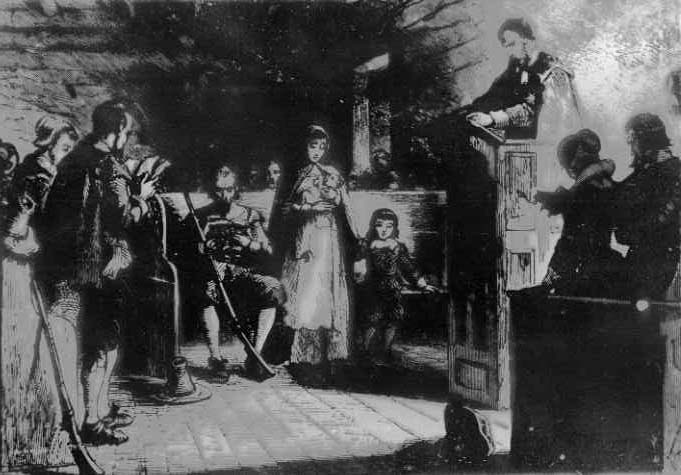
The New Puritans

The essence of puritan belief was God's supremacy over human affairs through the church and through the bible. This required the simplification of worship - the ending of 'idolatry', the banning of music in church, the scrapping of prescribed prayers and the down-grading of the Eucharistic sacrament.


And from all this came the rejection of public pleasures - drinking, dancing, drama, gambling, sport and, famously, Christmas.


"The long Parliament gave orders, in 1644, that the twenty-fifth of December should be strictly observed as a fast, and that all men should pass it in humbly bemoaning the great national sin which they and their fathers had so often committed on that day by romping under the mistletoe, eating boar’s head, and drinking ale flavored with roasted apples." (Macaulay)

The 17th century puritan-led governments also opposed the extension of science and promoted hysteria about witchcraft:


Hath not this present Parlament
A Lieger to the Devil sent,
Fully impower’d to treat about
Finding revolted Witches out?
And has he not within a year
Hang’d threescore of them in one Shire?
Some only for not being drown’d,
And some for sitting above ground.
Whole days and nights upon their Breeches,
And feeling pain, were hang’d for Witches
And some for putting knavish Tricks
Upon green Geese or Turkey Chicks
Or Pigs that suddenly deceast
Of griefs unnatural, as he guess'd
Who after proved himself a Witch
And made a rod for his own Breech.

From Samuel Butler's - Hudibras (first published in 1663).


It was not a reign of terror - all pleasures were not stopped but the promotion of moral panic by public and ecclesiastical authorities brought about the suppression of good cheer and its replacement with a dour, prejudged world of sins to be avoided and expunged.

Travel forward 350 years in time to today's world and listen to the cries: binge drinking...sexualisation of young girls...childhood obesity...smoking. Those puritan sins have returned labelled rather with the groupthink and collectivism of social democracy than with the strictures of bible bashing certainty. We are lectured about the "cost to society" of our sins: "...drinking costs the NHS £2.7 billion", "...a generation of 'damaged' girls", "obesity set before the age of two" - you are all sinners, repent, repent, repent!

This 'your sins are bad for society' message extends to what we put in our bins, what car we drive, our choice of holiday and, of course our choice of pleasure. Every agent of the collectivist, socialist state is brought to play - here is the leftie feminist rant about bad girls:

"There was a moment in the 90s – I wince to recall it – when women themselves fell in with the view that feminism was unglamorous and inhibiting. It was cramping our style and even worse, stopping us from shopping! Middle-class commentators encouraged their readers to embrace their "inner bimbos". Their paeans to hair products and sexy knickers read like new lad-mag paeans to tarty women. Comic exaggeration made it clear that the writers were self-aware –women who "should know better".

So girls like to dress up, look good, smell nice and feel sexy? Is that anything new? For the new puritans it is a sin. It is bad. It is corrupting society. And the same goes for lads who like a noisy night out and enjoy the sight of pretty women. Not much has changed there either, has it? Yet for the new puritans this is a sin. Here's Michael Gove:

"That's why I believe we need to ask tough questions about the instant-hit hedonism celebrated by the modern men's magazines targeted at younger males. Titles such as Nuts and Zoo paint a picture of women as permanently,
lasciviously, uncomplicatedly available."

The truth of which those lads quickly discover, of course! Those bad girls condemned by the Guardian will put them straight!

Just as did the Long Parliament, today's New Puritans propose to use the power and authority of the state to control pleasures of which they disapprove. We already have a heavy-handed smoking ban, we are moving towards an ever more restrictive approach to alcohol, a vast horde of 'experts' is crawling over our kids berating them about what they eat and we now have the dreadful recommendations of the Papadopoulos Report including:

  • launching an online ‘one-stop-shop’ to allow the public to voice their concerns regarding irresponsible marketing which sexualises children
  • encouraging the government to support the Advertising Standards Agency to take steps to extend existing regulatory standards to include commercial websites

Perhaps, we will shift back to a more balanced approach to these issues. Less judging, less hectoring. Or maybe we'll sleepwalk into a ghastly, oppressive world where the New Puritans police our behaviour for its adherence to the received orthodoxy of believe about pleasures. I am not all that hopeful right now.


....

Thursday, 11 February 2010

On Markets...(or why lawyers should stick to the law)

***

The problem with lawyers is that they don’t understand economics. OK that’s not the only problem with lawyers and it is a problem they share with most politicians and nearly all of the political punditry. And the matter of markets is the most obvious example where this ignorant misunderstanding crops up. Our lawyers seem to think economics is somehow a matter either of policy or of choice. It is neither.

Here’s one lawyer, our dear friend and sceptic, Jack of Kent:

“The ongoing economic crisis is a good moment to test this faith in the Market deity.”

Now describing the market as a God (an approach we might expect from a sceptical atheist, I fear) is something of a convenient metaphor. The suggestion is that we operate with a faith in Adam Smith’s laissez faire dictum of “the invisible hand”. Indeed our economically semi-literate lawyer bases his whole argument on a rejection of faith – in this case a faith in the ‘benevolence’ of markets.

OK, I hear you all cry, that’s fine but isn’t this faith in markets what caused the problem? On one level this might be an argument but it is better put this way:

The credit crisis and consequent recession were a result of our faith in Government’s ability to manage markets not faith in markets.

Indeed, if dear Jack no longer believes in “markets” he enters the same strange world as those who believe the earth is flat or that God created the world in 4004BC.

Markets are a matter of observable fact. Our understanding of markets relates to the ways in which exchange takes place. What Adam Smith observed and subsequent economic theory has supported is that the more free the market operates the better is it at allocating scarce resources. This position is not without challenge – indeed economists, as befits good scientists, continue to explore the ideas that underlie the discipline’s core assumptions.

The point about the current problem isn’t that markets have “failed” but that our management of markets has failed. The credit crunch illustrates the failures of interventions in the market and the culpable markets in this case (finance and property) are perhaps the two most extensively managed markets in our mixed economies. By way of example:

Interest rates are controlled by central banks not the market
Levels of risk taken by banks are subject of regulatory audit
Banks are licensed, inspected and registered
Deposits (up to a given level) are guaranteed
Property rights are only exercisable with regulatory permission
Ownership and disposal of property is subject to registration
Government reserves the right to acquire at a price its agents determine


I’m sure there is much else besides these but these examples illustrate the point. The market – to use Jack’s inappropriate metaphor – being worshipped wasn’t a free one but a managed one. OK, the bankers wanted you to believe it was a free market just as government agents want you to believe that planning law is not the de facto nationalisation of property rights. But these are managed markets.

Don’t take this as a defence of banks. With the consent of their regulators, bankers screwed us over big time. But it was not the free operation of markets that did the damage. It was allowing banks and related financial businesses to capture the regulation of their markets. And in doing so to fix them to the benefit of both the bankers and of the Governments they “advised”.

The lesson of the credit crunch and the banking crisis is that you don’t put the fox in charge of the chicken coop. Sadly, I fear a new sleeker fox is signing up to run the new chicken run.

...

Monday, 7 December 2009

On "doing something"...

***

I have often been accused of inaction. My defence is that my inaction is positive – I am resisting the endless push for us to “do something”.

...about “climate change”
...about “poverty”
...about “third world debt”
...about wicked property developers


...about an endless stream of noble causes. And politicians have “done something” – precisely the only something we can do.

...pass laws and regulations
...raise taxes

And has this “solved” these problems? Nope.
And will it solve these problems? Nope.

...