Showing posts with label schools. Show all posts

Wednesday, 24 October 2018

Manners maketh man - so let's teach them


"Manners maketh man" was one of William Horman's proverbs lovingly set out in his Vulgaria all the way back in the 16th century. It is still the motto of Winchester College and New College, Oxford and we should perhaps pay it a little more attention.

I recall one (middle class) parent, when pulled up on her childrens' poor behaviour at the table, exclaiming, "oh, table manners, they're so middle class". As if this did her children any favours. There's a reason why we think manners are important, why we frown on eating with mouths open, speaking while eating and the correct use of the cutlery provided. And there's a reason why we insist on children saying please and thank you, not interrupting and showing respect to older people.

That reason is that politeness and good manners make for better people - easier to live or work with, more pleasant to deal with and more likely to get on. Good manners, politeness and charm go a long way just on their own and, as that old teacher William Horman knew, they allow for brains, skills and creativity to shine through. Without manners all we see is coarseness, unpleasantness and rudeness. It's not that manners are everything but that they are an essential component of the successful person.

Manners and politeness aren't innate, they have to be taught. Left to their own devices children won't say please and thank you, won't show respect to others and won't become pleasant, charming adults. We seem, in our frantic age, to have forgotten all this and to have arrived at a point where aggression, bullying, vulgarity, cursing and rudeness are celebrated while politeness, charm, respect for others and good manners are become weaknesses.

I was at a posh dinner and, in a conversation with the gentleman besides me, the subject of a TV interview with former spin doctor, Alistair Campbell came up. My neighbour was blown away by Campbell's behaviour - he was being interviewed along with a woman (and remember Campbell is a very big man). "While she was talking," gushed my neighbour, "he folded his arms and leaned in dominating her, it was brilliant". It struck me at the time that, far from being brilliant, Campbell was just being an ill-mannered, rude bully. The argument wasn't won by the brilliance of Alistair's argument but by his intimidation of the other, far smaller, person.

Everywhere you look, people are celebrating this sort of behaviour - the sort of people who use violent metaphor in political debate have always been with us but it has never been normalised in the way it is today. And when the leaders in school begin to act, to once again teach children politeness, good manners and respect, the response from those celebrants on modern coarseness is shocking:
Top of the things that make me despair this week (there are many options) is the decision by Ninestiles secondary school in Birmingham to enforce silence on “all student movement, including to and from assembly, at lesson changeover and towards communal areas at break and lunch”. It is difficult to think of a more harmful and mean-spirited policy than taking away children’s means of communication for a significant part of the day.
To watch the opprobrium poured onto Katherine Birbalsingh for her advocacy of teaching working class young people manners, good behaviour and politeness is to see that "manners are so middle class" made flesh. Today, Ms Birbalsingh's Michaela School is routinely described as 'Britain's strictest school' because it insists on a set of standards in children's behaviour, enforces those standards and expects parents to back the school in this work. Hardly a day passes without some comment about behaviour in schools, how it stresses teachers, disrupts learning and contributes to mental ill-health. Yet when a school does something about this, the same folk pile in using words like "prison", "institutionalising" and "controlling".

I appreciate I've little room to talk but it really is time we called out ill-mannered behaviour and gratuitous rudeness. For sure, you can invoke free speech (and have my backing) but it's perfectly possible to support free speech and, at the same time, believe that good manners and politeness are preferable to vulgar insult or crude metaphor. Right now our political discourse is become corrupted by its language - the two extremes, having adopted an absolute position, do not seek to debate but rather to adopt that Alistair Campbell behaviour of aggressive domination, rudeness, ill-manners and wind up all spiced, if you're on Twitter, with gross language.

It is, for example, right that we call out the use of children by parents as vehicles for their political prejudice. This is a ghastly exploitative practice and grown ups should know better but calling the grown up using his child this way a 'cretin' isn't right or justified however angry we might be about the action. And using the "he said, she said" argument to defend this sort of language doesn't wash either - "we are better than that" is a far better argument.

I wish every success to people like Tom Bennett and Katherine Birbalsingh as well as Alex Hughes and Andrea Stephens, the joint heads at Ninestiles School in Birmingham. Civilisation is built on an assumption of good behaviour, politeness and respect, without these values it's hard to do all the other collaborative, co-operative and creative things that make for a great, successful society. Manners really do maketh man and for this to happen we need to teach those manners because they don't happen without that teaching.

....

Friday, 19 January 2018

So was there no-one from Bradford available to Chair a social mobility board in Bradford?


It's great news that the Government has send Bradford £11m to set up an "Opportunity Area" promoting social mobility. Here's a chunk from the press release:
The Opportunity Area programme will be delivered by a partnership between the Department for Education and Bradford Council.

The new plan has been developed by a partnership board with representatives from Bradford schools, the council, charities and the private sector.

Bradford is one of 12 Opportunity Areas across the country which are each receiving a £6m share of £72 million to improve opportunities for young people.

The district will also benefit from investment of up to £5 million over two years through the Essential Life Skills programme, to help disadvantaged young people develop life skills such as resilience, emotional wellbeing and employability.

As part of the Opportunity Area programme a Research School has been opened in Bradford, being run by Dixons Academies, which will work to share evidence-based research of what works in the classroom to help raise standards across the district.

Research schools are being supported by the Education Endowment Foundation and the Institute for Effective Education to act as local centres of excellence in Opportunity Areas.
I ought to be chuffed that a Conservative Government is, yet again, supporting the improvement of education in Bradford. All this on the back of successful free schools, academies and a renewed focus on educational outcomes. But there's a bit in all this that makes me really very angry:
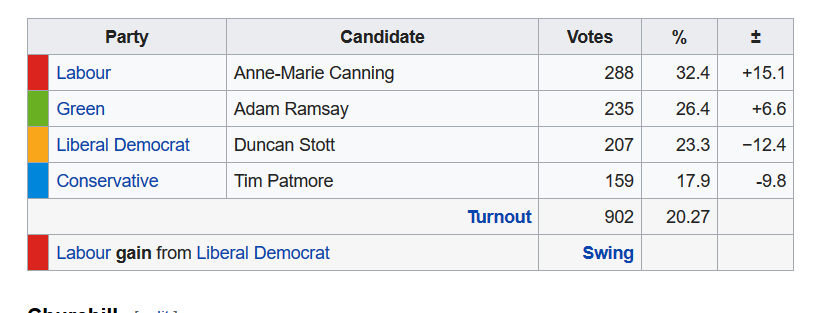
Anne-Marie Canning, the Chair of Bradford Opportunity Area Partnership Board,
Who is this person, I wondered. The name wasn't familiar to me but then I don't know everyone involved or connected to education in my city. So I googled:


Great credentials but she's doing a very senior job at a large university in London. I wonder, and don't take this as criticism of her specifically, whether she's going to be able to give the sort of attention to the project that someone who lives and works within Bradford (or at least somewhere nearby) could give? I also wonder why, given recent experiences, a Conservative government is appointing people to chair boards who have this sort of experience in their CV:


Yes folks. Not only is our new chair not from Bradford and working in London but she used to be a Labour Councillor.

In the end it probably doesn't matter greatly but it still sends out a message - loudly and clearly - from the Government in London that only people in London count and that important roles like overseeing the investment of £11m to improve educational opportunities for young people in Bradford cannot be trusted to someone who actually has some sort of connection to the city. And maybe part of the reason why boards and institutions are so ready to snap at the Conservative hand feeding them is because we keep appointing left wing academics, Labour councillors and their assorted fellow travellers to run them.

Was there no-one from Bradford available to do this job? Frankly I don't believe it, it's just a London presumption that nobody in Bradford would be good enough to do the job because, well, it's Bradford isn't it. You know Up North where the thick people live.

.....


Thursday, 25 August 2016

Bradford schools - how many children will we let down before we get it right?


So someone shares this article on Twitter. It's a story about an 'A' Level student who didn't quite get the grades to go to her chosen university. First reaction is sad for her but tough - there are thousands of students who've got tantalisingly close to meeting a challenging offer. There are other opportunities, other options, life goes on.

But the story's not really about the girl who didn't get her offer, the story's about the school:

Getting into Durham University is never going to be easy. But it’s near impossible when the school you go to has been placed on special measures by OFSTED three times since you started.

Failing OFSTED obviously shows the school is shit, but it also leads to another flaw that you’ll find in every school like the one Megan and I went to: The pass rate is way more important to the school than how well the students actually do.

Megan would never have even received an offer from Durham had she listened to her Head of Sixth Form, who told her that A-levels would be too difficult, and advised her to take BTECs instead. BTECs can be sneakily added into the overall A-level results of the school, making it look better than it actually is. BTECs avoid any risk because, realistically, who fails them?

These state school teachers are lying to intelligent students, stunting what they can achieve, all for the sake of league tables. It’s hard to know whether to blame them, or the government and regulators who incentivize that kind of behaviour.

And one other thing. The school is in Bradford and, as you know, I'm a councillor there.

I've a feeling that Megan will be fine. She'll get to a good university doing a subject she enjoys. She'll do well and get into a good career. But there are a load of other young people at that school who we're not talking about. These are the ones who left at sixteen with nothing. The ones who might have got an 'A' Level or two. The ones talked out of even applying for university. The ones who'll just be statistics on Bradford's skills gap, unemployment and crime levels.

The school in question is in 'special measures' and is in the process of transferring to an academy chain. Let's hope - once all the arguing over contracts is done - that this means the school, once one of Bradford's better schools, can start delivering the education that children going there deserve.

For Bradford as a whole, it's just another reminder that improving Bradford's education is like a depressing game of whack-a-mole - every time we get a failing or struggling school turned round, another one rears its head elsewhere. The City's education system lacks the capacity to respond - this isn't about the capability of the education staff, the best head teachers and the most effective governors but simply the realisation that we haven't enough of them.

I've argued - indeed the Conservative Group has put forward motions on the subject - that we need to start sharing capacity with neighbouring authorities, to begin to create a sort of 'Yorkshire Challenge' akin to the successful 'London Challenge'. This is rejected for what seems at times to be 'not invented here syndrome' plus ideological resistance to the central government agenda of academies, free schools and a tighter curriculum.

But in the end this isn't about ideology but rather about the very practical task of getting all schools to work like the best schools. We can see what works - ethos, leadership, good planning, high expectations - but too often allow matters like who owns a building or employs the staff to get in the way of running a good school. These days, us councillors have precious little to do with schools - we don't set the budgets, we don't determine what's taught and we don't inspect. Ofsted wants still more powers - our role in school improvement and chunks of child protection work - and the gradual procession to academies seems inevitable.

Rather than moan about the injustice of all this, we should see it as a liberation, as the opportunity to start saying things about schools, teaching, funding and the role of Ofsted that need to be said. To point at failing schools and say "you're failing", to act as an advocate for parents and pupils let down by bad schools and to challenge the use of poverty and social conditions as an excuse for failure.
...

Friday, 15 May 2015

Sorry Jamie but schools don't have the time to indulge your fussbucketry

****

Hardly a day passes without one or other lobby group calling for their particular passion to be a compulsory subject in schools - the latest is Jamie Oliver's 'food revolution' which demands that loads of limited teaching time is given over to this chef's particular brand of nannying fussbucketry:

FOOD REVOLUTION DAY IS FIGHTING TO PUT COMPULSORY PRACTICAL FOOD EDUCATION ON THE SCHOOL CURRICULUM.

With diet-related diseases rising at an alarming rate, it has never been more important to educate children about food, where it comes from and how it affects their bodies.

On the face of things teaching children how to cook (I assume this is what Jamie means by 'practical food education') is a great idea - cookery is a really useful life skill. But here's the problem - we get between five and six hours for five days a week across 30 weeks in the year of teaching time. That's a maximum of 900 hours a year in which to teach children how to read and write, add and subtract, read a map, know the basics of history, understand science, learn the rudiments of a foreign language or two, understand culture and religion, experience great literature and a thousand other really important things. And the real figure for teaching time in the UK is much lower - 635 hours/year in primary and 715 hours/year in secondary.

And then lobbyists pop up and say that every child should be taught how to code, manage family accounts, know about STIs, play sport, paint and draw, learn to dance, act, sing, understand the electoral system, know about the courts, grow vegetables, build a table, mend a car and now cook. All fantastic and useful skills. It's hard to argue with any of them.

Except that there isn't the time. I'm not a teacher but I'm prepared to bet that all the zillions of things that might be taught at school have to be whittled down to the ones that really matter. And because most of us aren't ill from overeating (or eating the "wrong" food) lecturing the hell out of kids about diet - often using inaccurate or even downright incorrect information - really isn't a priority. At least not alongside reading, writing, maths, science, geography and history.

The truth of course is that obesity isn't rising - it has more-or-less flatlined over the past decade. More to the point though (and Jamie misinforms us with a ridiculous claim about 'diet-related disease') we are better fed, live longer lives and suffer far fewer diet-related conditions than past generations. It's true that there are too many morbidly obese people but hectoring kids with green peppers isn't going to change this one jot.

Whatever the truth or fiction here (and Jamie's campaign is mostly the latter) the one incontrovertible fact is that, if schools are made to put 'food eduction' into the curriculum, it will be at the expense of something else - learning french perhaps, maybe geography, or cutting back even more on physical exercise. As parents we want schools to give our children the skills and aspiration to succeed in a challenging world. And being rude about McDonalds and waving tomatoes around doesn't meet that need.

So I won't be signing Jamie's petition.

....

Monday, 23 February 2015

Why do Bradford's schools do so badly?

****

Perhaps the most worrying thing about Bradford is the continuing underperformance of the District's schools - certainly relative to other local education authorities (LEAs). This problem isn't a new one - back in the 1990s we saw the same situation and the Council then found the fault in Bradford's three-tier system of schooling and abolished middle schools. Ofsted then piled in and produced a damning assessment of Bradford's performance, closely followed by government education ministers who insisted that the Council outsource its LEA functions (this was by this point, of course, a Labour government minister insisting a Conservative-led council outsource the LEA functions).

We then had about ten years where it was, shall we say, convenient for the Council to suggest that the continued poor performance of Bradford's schools (they did get a little better but not by much) could be blamed on Serco who had won the contract to deliver those outsourced LEA functions. Towards the end of those Serco years a new excitement fell onto Bradford's education bureaucrats and the councillors they advised. We were bringing education back in-house - for at least three years the planning for this process was the obsession of the local leadership and, once complete, everything would change as we could deliver a 'step change' in the District's schools.

We're now nearly five years into this time of excitement. The LEA has been under the same political leadership - the same person - since 2010 and the situation is that, as the local paper reported, results at 16 have declined leaving Bradford joint second bottom with Blackpool in the ranking of LEA performance.

The percentage of Bradford district pupils passing at least five A* - C GCSEs, including English and maths, fell from 53 per cent in 2013 to 44 per cent in last summer's exams.

The results leave Bradford tied with Blackpool in joint second bottom place, with only Knowsley in Merseyside faring worse.

The statistics, published yesterday by the Department for Education, show that 16 Bradford schools have fallen under the Government's "floor" standards, which require at least 40 per cent of students to get five or more A* - C GCSEs including English and maths. 

We all know that this is unacceptable (or I hope we do) and Bradford's education leadership has adopted a plan to improve attainment - here's a quote from the introduction that suggests a degree of complacency:

“The Strategy was revised from the one published in June 2012 after we carried out a detailed analysis of data and it also follows discussions with leaders of school partnerships and governing bodies. This revised Strategy has a focus on accelerating our improvements."

So between 2012 and 2014 our performance got worse - across almost every measure. It's not clear at all what improvements there actually are to 'accelerate'. To give the plan its due, in its bureaucratic way it sets out actions the Council and its "partners" will be taking - recruiting the best leaders, having every school good or outstanding by 2017, targeting underperformance, annual visits to schools, improving governance, sharing local best practice, and targeting underperforming groups.

What is missing from all this is any acknowledgement that Bradford doesn't have the knowledge, skills or capacity to deliver the ambitious targets set by the Council. Setting targets is easy but there is little confidence that Bradford's schools will actually meet them  - and, as one of the targets is still to be below average but not as below average as we are right now, the targets aren't exactly earth-shattering.

There are some things we know - mostly about what doesn't affect performance. We know that whether the LEA services are delivered in-house or by a contractor makes little or no difference. We know that focusing on Ofsted assessments of school quality doesn't reflect in performance outcomes at 16. And we know that increasing resources available to schools isn't the issue - school spending in Bradford has risen by some £70 million since 2010. Moreover up to 2013 not reductions had been made in central LEA spending either.

This leaves us with several other factors. The first is ethnicity:

Putting in place additional resources to support our work with underperforming groups. We are currently revising our strategy to respond to high levels of pupil mobility and a significant increase in the number of pupils and families who are not only ‘new to English’ but also ‘new to education’, with a focus on 15 Primary Schools with mobility at or above 15% (the District average is 8.4% for maintained schools).

We are constantly reminded of how many different languages Bradford's students speak with the implication that somehow this is part of the reason for underperformance. All those foreigners coming here with their children speaking a funny language drags down performance - it's a sort of perfect UKIP argument. One that has no supporting evidence, indeed the opposite seems to be true:

...now new research suggests there is a much simpler, single, reason for a decade of improved GCSE results in the capital: London schools do better than the rest of England because they have a higher proportion of ethnic minority pupils.

The report by the Centre for Market and Public Organisation (CMPO) at Bristol University argues that the diversity of the capital's population is a key reason for the "London effect" because ethnic minority pupils tend to achieve higher grades than those from a white British background.

Back in 2011, 67% of pupils at London's state schools were from ethnic minority backgrounds - the figure for Bradford was 43%.  Tower Hamlets with 80% of its pupils from such backgrounds was 30th in the LEA rankings in 2013 compared to Bradford's 140th. For an even more stark comparison nearly half of pupils in the London Borough of Redbridge are Asian - and in 2013 Redbridge was the 11th best performing LEA. There is nothing to suggest that Bradford's poor schools result from having a large proportion of ethnic minority pupils.

So if it isn't the organisation of the LEA and it's not ethnicity then what is the problem in Bradford's schools? We are told to look to London and specifically the London Challenge as a model for improvement. And leaving aside the evidence suggesting a changed ethnic mix is the main reason for London's school improvement, this approach provides various interventions that affect outcomes:

The CfBT argues that five key interrelated factors were “critical to London’s success”. It cites the London Challenge school improvement scheme, improved performance by some local authorities, the academies programme, Teach First and good leadership.

Now there has been talk about a 'Bradford Challenge' but this rather misses the point. London has 32 LEAs across a very varied set of demographic and social circumstances and while Bradford District is a big place, London is nearly twenty times bigger. Worse still the District's education leadership is inward-looking - there is nothing in the attainment strategy about reaching out to other places or programmes, just a relentless, bull-headed Bradford machine approach (coupled with a frantic flapping around looking for other things to blame for the problem).

If we look at West Yorkshire, there is the capacity for such a programme but the two high performing LEAs (Wakefield and Calderdale are both in the top 30 nationally) will need persuading to co-operate with the two poor performing LEAs (Bradford and Leeds). This suggests several options.

The five authorities could agree a joint approach and pitch for resources to the Department for Education to deliver a 'West Yorkshire Challenge' in schools with the programme run on much the same basis as for the London Challenge. I've no idea whether the money would be forthcoming (although the tendency of political leadership in Bradford's education to focus on attacking the government rather than improving education won't help) but it would be worth a punt.

An alternative route would be to turn the Combined Authority's 'strategic economic plan' on its head and shift resource from (I would argue) pretty ineffective short-term labour market interventions into a long-term school improvement programme backed up with resource from each LEA budget. This would require the self-interest of some of the partners on the Leeds City Region Local Enterprise Partnership (LEP) to be set aside but would have the advantage of being a wholly locally-owned project.

In addition, Bradford needs to look very closely and critically at leadership in the local education sector. A warts-and-all approach would examine the leadership of the LEA, in schools and in the various bodies that make up the education system. We need to be prepared to intervene to supplement weak leaderships through executive head programmes and, if needs be, through strengthening the accountability mechanisms in schools. We need to look at the recruitment of leaders - this is part of the current plan but simply appointing Schools Recruitment and Retention Strategy Lead Officer isn't the solution. Again we must be prepared to resource the recruitment of better head teachers - there's a very competitive market for the best heads and right now Bradford isn't getting a look in when it comes to getting these people to come and work in our schools.

Lastly, Bradford needs to be more creative - actively supporting new free schools rather than setting obstacles in their way, sitting down with the leaders in private sector education - Bradford Grammar School is one of the best schools in the country and this isn't just down to its intake - and drawing on the best governors at the best schools to help drive the programme. And instead of grumping about academies we should think about how to learn the lessons from the best of them - both in Bradford and elsewhere.

It don't know the answer to the question I posed in the headline - why do Bradford's schools do so badly. And I get no real sense that the political and professional leadership in the Council are any closer to the answer than I am. What we can't afford is to carry on either trying to find excuses or else simply doing more of the same over and over again in the vain hope that somehow it will work this time. It's time for something to give.

....

Wednesday, 4 February 2015

Schools: we should focus on attainment not religion

****

British Values. I'm not really alone in struggling to understand what these mysterious things might be especially when they are set out like this:

“It shouldn’t take any intervention from my Department to say that young people should be learning the fundamental British Values of democracy, the rule of law, individual liberty, tolerance and respect – because these British values are fundamentally a good thing."

I'm a big fan of all these things but they aren't what I would understand by 'British Values' - indeed these concepts predate the existence of Britain and could best be described as human values. I also think that teaching young people the value of democracy, liberty, law, tolerance and respect is a good idea - not to the exclusion of reading, writing and arithmetic but definitely a good thing. But teaching young people about democracy, liberty, law, tolerance and respect is a good thing everywhere - not just in Penge or Queensbury but in Peshawar and Phnomh Penh too. These values are universal.

The problem we have is that the government has chosen to use the idea of 'British Values' as a rod to strike at traditional religious beliefs - whether Muslim or Christian. To define British Values in terms only a Guardian reader would recognise.  Here's Nicky Morgan again:

“The events in Birmingham last year showed what happened, when those that don’t subscribe to our fundamental British values try to hijack our education system, radicalise our children and break those societal bonds. What happened in Paris this month, showed what can happen when people like that succeed.” 

What we see here is the deliberate juxtaposition of traditionalist religious opinion with violent terrorism. What Mrs Morgan is telling us is that teaching traditional Muslim religious values (to be clear, I don't find these values particularly appealing) leads more-or-less directly to young men using Kalashnikov rifles to slaughter cartoonists. More to the point, there is no suggestion at all that teaching these values is necessarily at odds with democracy, liberty, law, tolerance and respect.

The truth is that Ofsted - and the Department for Education - has adopted the stance that any hint of religious exclusivity or faith-based education is questionable. And this doesn't just apply to the schools in Birmingham targeted in the 'Trojan Horse' campaign but to schools with a Christian ethos - here's St Benedict's Catholic School in Bury St Edmunds:

The school was the focus of controversy when Ofsted last year included it in a blacklist of schools failing to promote “British values” and downgraded it from “good” to “requires improvement” because younger pupils were unaware of the dangers of radicalisation and extremism.

Quite what those younger pupils were exposed to isn't clear - perhaps they were learning about that well known Catholic radical, Guido Fawkes? Or maybe teachers were telling them that The Inquisition was actually a fine institution dedicated to saving souls rather than to torture and execution by fire? The truth of the school is that it's a great school providing what parents want - a safe place and good education:

St Benedict’s Catholic Secondary School in Bury St Edmunds, Suffolk, was ranked 56th best in England when School Performance League Tables were published last week. It was also listed as the “top state comprehensive school” in England and Wales, and has the highest percentage of A-level passes in Suffolk and the second highest by just one per cent ­ of GCSE passes in the county.

More recently Ofsted has acted again - pushing two Christian 'free schools' in the North East towards closure with a focus on 'diversity' rather than on the actual performance of the school. Ofsted pulls up one school, Grindon Hall as follows:

"...the wider curriculum, including form time and the school’s assembly programme, has too narrow a focus to enable pupils to think for themselves and reflect about the fundamental British values needed to live in Britain today.”

The term 'wider curriculum' refers to the stuff that isn't teaching maths, English, geography, science and so forth. But the truth about the school is that it is delivering what parents want - good results:

A-level students at Grindon Hall Christian School have produced the best A-level results of any school in Sunderland. The school pulled ahead of all others in the city with an average point score of 225.
GCSE students are also celebrating, having made the school one of the best-performing state schools in the city. 68% of Grindon Hall's GCSE students achieved at least five A* - C grades including English and Maths.

Surely this is what really matters? Unless Ofsted and Nicky Morgan think that the nice young people leaving Grindon Hall will suddenly up sticks and join some sort of violent religious cult?

In Bradford, Ofsted and the Council have been going into schools because of this focus on fighting 'extremism', on British Values. Which would be fine if they were doing the same for schools that were failing academically. At the same time the political leadership in education has been using its time and resources to conduct a vigorous anti-government campaign rather than on trying to get the changes in place that might offer a better chance to young people in Bradford.

Ofsted is creating demons and hobgoblins - "these people are radicalising our children" - or else wibbling on about diversity - "children don't have any non-white friends" and supposed intolerance of gay and lesbian people by ten year olds. It is time the government stopped all this and began to focus on what matters to parents - and, quite frankly, to the children - how well the school does in its main job of providing young people with a decent education. In the end it's attainment Ofsted should be inspecting not a nebulous and dangerous concept called 'British Values'.

....


Sunday, 11 January 2015

Taking schools policy out of political control means bureaucracy not better education

****

We hear it all the time.

A former permanent secretary at the Department for Education, Sir David says there should be no more major changes to the curriculum, qualifications or structural changes to schools during the course of the next Parliament.

He wants an independent body to set long-term policy, separated from the shifting demands of party politics.

This could create a qualifications system that would support a changing economy, he says, arguing that this would include replacing A-levels with a broader, baccalaureate-style exam system.

OK it's schools on this occasion but it could be health, policing, criminal justice or even the economy. In every case the argument for removing politics from the management or administration of a given public service is made by someone who will gain from such a decision. It is the former bureaucrat running a teacher training operation, the former police inspector, a body made up of health professionals and experts, and the assorted grandees of the City along with their house magazine, the Financial Times.

And because we hate politicians (with some justification on occasion) it's easy to nod and agree with the sages, with the experts who tell us that taking the politics out will remove all the bad stuff and will mean that they can create a wonderful system that will do the job just fine.

Except they won't. Trust me on this folks, they won't. It is disingenuous for Sir David Bell, who used to run the Department for Education, to suggest that bureaucrats like him have a fantastic, ready-to-roll system of education just waiting for the politicians to get out of the way. What Sir David wants - and I understand that Labour's excuse for an education spokesman likes this idea - is for an independent body run by him and his mates to replace the current system where we the public have a tiny bit of a say in how the system is run.

Indeed the independent schools body - doubtless called something like Education England - will have a board crammed with Sir David's pals (all pulling down a handy little stipend to top up their pensions) and a Chief Executive on £250,000 a year who will set policy for the long-term. There will be expensive offices in London, a lobbying team and a pleasing round of international trips, conferences and dinners for all those involved. Unfortunately it won't make the slightest iota of difference to schools and, worse, will mean that any semblance of democratic accountability for one of our critical public services is lost. Replaced by know-all folk most of whom are, as is Sir David Bell, responsible for the current mess in the first place.

So long as education is funded through direct taxation we have no real option but for the direction of policy to be in the hands of those people we choose to set policy. We call these people politicians. And politicians sound off about education, about bad schools, lousy teachers and bad management because the people who elect us care quite alot about what happens in schools. So when a school in our patch does well we shout about it and when a school does badly we worry.

If you remove politics from education policy (except do note that you don't actually do this), the result isn't a dramatic change or improvement but stasis.  In reality the moans from Sir David are more about a personal (self-interested) dislike for policy rather than any real conviction that a mystical, politics-free independent body would be any better. Believe me, we in Bradford know about taking politics out of education - it doesn't work.

....

Saturday, 20 December 2014

Fascinating Yellow Bus stat....

****

Makes you think this:

"School bus carriers operate the largest mass transportation fleet in the country. Each day, 480,000 yellow school buses travel the nation’s roads. Compare that to transit, with 140,000 total vehicles, 96,000 of which are buses; to the motor coach industry, with 35,000 buses; to commercial airlines, with 7,400 airplanes; and to rail, with 1,200 passenger cars. In fact, our school bus fleet is 2.5 times the size of all other forms of mass transportation combined."
And there's loads more about America's yellow bus fleet here.

....

Thursday, 11 December 2014

In which their representatives remind us that teacher trade unions are bad for education

****

The regional branch of Ofsted has published some mildly critical comments about Bradford's schools. And it's true that our schools are not closing the gap and that, to put it mildly, the Council's leadership on this matter are rather complacent. But - and this is important given the close links with Bradford's political leadership - the response from teacher trade unions is utterly shameless.

Firstly, here's what Ofsted suggested:

Nick Hudson, Ofsted director for North East, Yorkshire and Humber, said: “The fact that Bradford is ranked 144 out of 150 nationally is clearly a concern."

He added: "I think the answers lie in secondary schools in Bradford and secondary schools on the borders of Bradford that are performing well.

"The Council should maybe look beyond its borders to see why other schools are doing better than those in Bradford are. My advice is the Council needs to seek links with these areas." 

Helpful advice - look at nearby schools perhaps in Calderdale, Leeds and Kirklees that are doing better.

So what do the teacher union representatives have to say. First up is the NUT:

Ian Murch, Bradford spokesman for the National Union of Teachers, was sceptical of the findings. He said: "Ofsted often finds what it is looking for. There are high levels of deprivation and in some inner city schools there are a lot of children who don't speak English as a first language.

"These schools are measured to the same standards. Performance of children from some of the poorest families are measured against children from well off areas whose parents went to university." 

Of course there's no deprivation in Leeds, Halifax or Huddersfield! Yet again we see a series of excuses rather than an urgent desire to improve Bradford's education. Plus the re-run of the myth about children with English as a second language being less able - which they aren't:

Schools with large numbers of migrants and pupils from ethnic minorities gain the best GCSE results because they have a stronger work ethic, according to research.

A study by Bristol University found that schools with a diverse pupil population performed significantly better than those filled with white British children.

It emerged that the effect could be worth an extra eight GCSE grades compared with the rest of the country – the equivalent of leaving school with straight A grades rather than Bs.

So you see, Bradford's schools aren't poor because of immigrants. Too many of them are just poor schools.

On to the NAS/UWT representative who launches into a rant about resources:

"Many schools are having to cut back, and have bigger classes with fewer staff. Standards in school is a much bigger issue than Ofsted would have you believe." 

Bradford's schools receive some £75 million more in funding today than they did in 2010 with much of this going to schools with more children from deprived backgrounds. Pam Milner, the representative in question is simply making stuff up.

These responses are worse than complacency (and that's bad enough), they amount to a denial that teachers have a central role to play in delivering the improvements in standards. Yet all teacher unions have done is promote strikes and other industrial action - things that do nothing to help the children their members teach. And rather than face up to their responsibilities these representatives shift the blame onto government, parents, immigration - anything but the schools themselves.

..,..

Friday, 21 November 2014

What are schools for? Nannying fussbucketry it seems!

****

You and I (like I guess most people) take the view that schools are there to educate children. And by this we mean things like teach them to read, read write and add up, give them a grasp of geography and history, and generally provide them with the tools to get on in the world. It seems that this now extends to 'healthy-eating' and the suppression of enterprise:

A 15 year old schoolboy has been threatened with suspension making £14,000 selling sweets to pals in the playground.

Budding businessman Tommie Rose, has made a fortune by selling chocolate, crisps and fizzy drinks to pupils at Buile Hill High School, Salford. He buys them in bulk and sells them at competitive prices, even employing two mates to help run his business, paying them £5.50 a day. He says the money will go towards his University tuition fees.
Nobody is hurt by Tommie's initiative - the school decided it wouldn't sell sweets, fizzy drinks or crisps and he stepped into the gap left by this decision. Tommie's fellow pupils get a service, he makes some money and everyone's happy. Except for Tommie's po-faced headteacher:
"We admire this pupil’s entrepreneurship but school is not the place to set-up a black market of fizzy drinks, sweets and chocolates. We have extremely high standards and with our healthy eating policy we don’t allow isotonic drinks, fizzy drinks and large amounts of sweets for the good of our children. Our high standards are set out to pupils and their parents at the start of the school year."
Firstly it's not a 'black market' and secondly when did schools take it upon themselves to acts as dietary policemen? This phrase "for the good of our children" is so typical of the self-serving indulgence of the nannying fussbucket. It's fine if the school wants to stop selling such good itself (although it's clearly missing a trick) but utterly wrong of them to then police the provision made by individual initiative to fill the demand for those products.

....

Wednesday, 2 July 2014

Belle Vue - a lesson in Labour's misplaced priorities.

****

"A significant minority demonstrate scant regard for rules, respect for their environment or courtesy to themselves and staff.

"Several examples of such behaviour were witnessed during the inspection including students swearing and shouting out negative comments about the school."

It said some students were worried others would make fun of them if they work hard.

Referring to the IEB installed by the Council, the report said: "They have not challenged senior leaders well enough about the school's performance, and hold them to account for the school's decline." 

This from an Ofsted report on a school in Bradford - a school that can take nearly 1000 pupils but has fewer than 550 - is pretty dreadful. And let's remember that the Council had already sacked the board of governors in installed its own chosen governors.

This is the problem with Bradford's schools - not stopping free schools, trying to block academies or acting as the mouthpiece of the NUT. Yet that's what Bradford's Labour leadership focus on.

....

Monday, 30 June 2014

On the evolution of misogyny...

****

When we see Muslim women clothed from head to toe, we assume that this has something to do with the religion itself rather than a particularly misogynistic interpretation of the religion that reflects more on male attitudes to women than it does on man's relationship with god. Indeed, when we see devout Muslim women who aren't shrouded from head to toe, we can see that there is more to this than simply the strictures of a given faith.

Here is a quotation attributed to a 17th century English sailor:

"The men that are married are given much to jealousy, and will not permit any stranger to come where their wives are, much less to see them, but will keep them out of sight as much as they possibly can...all their women, both married and unmarried, go with a black veil over their heads and reaching down to their legs, all being covered except their eyes."

The sailor wasn't visiting a Muslim country but the very Roman Catholic country of Portugal and the covering of women was cultural rather than religious - the practice was common across all faiths, indeed the quotation was put in the context of how Jewish migrants from Lisbon to Amsterdam were seen by the more 'enlightened' Dutch.

My point in making this observation is to make clear that it is perfectly possible to oppose the practice of requiring women to be fully covered without being 'Islamaphobic' since this practice was widespread in Catholic Europe almost into living memory. Indeed, I remember elderly Spanish and Italian women attending my church wearing a mantissa, the last vestiges of the shrouding of women in Roman Catholicism.

But the separation of women from public life (in the broadest sense of the word) is more than just the requirement that they are covered in public. The book the above quotation is taken from - a life of Spinoza - goes on to describe the attitude of Portuguese Jews and Catholics to the education of women:

"Dom Francisco of Lisbon held that for women 'the best book is the cushion and the embroidering-frame', and Rabbi Eliezer warned that 'who teaches the Torah teaches her nonsense', implying that she could make nothing of its wisdom."

This is the problem that is, I fear, covered up by our debating the veil - it is often a reflection of misogyny rather than a reflection of belief. Nor is this to suggest that our western world is free from people who believe women to be essentially inferior - you only need hear the typical middle-aged petrolhead talking about women drivers to know this - but to observe that misogyny evolves. This evolution has taken us from a world where men considered literacy to be an affront to female modesty to one where a school headteacher responds to female dress (or, it seems, 'undress') in this manner:

More than 250 girls were taken out of lessons at a secondary school because their skirts were too short and the headmaster wants to prepare them for the “world of work”.

Teachers at Ryde Academy on the Isle of Wight either sent home the girls, aged between 11 and 18, or took them out of their classrooms to be placed in an isolated hall. 

Two important facts here demand our attention - firstly that girls are being prepared for 'the world of work' rather than a role as wife and mother. And secondly that we are still uncomfortable as a society with women exposing too much leg. I would add, in this school's defence, that they sent home boys for wearing the wrong shoes (and I hope required them to button their shirt and tie their tie correctly).

In concluding we need to return to Spinoza who was a philosopher obsessed with the idea of reason. Yet, Spinoza's view of women was still partly trapped in the culture he was born into - as, Margaret Gullan-Whur, this biographer observes:

"...we find, starting around 1661-2 and hardening over the course of his lifetime, negative pronouncements on their wimpering, partiality, foolish pity, superstition, inconstancy, deceptiveness, weakness and mental inferiority."

At times the response to perceived misogyny seems excessive, as if the accuser is seeking out something sexist in everything, but we should not consider that this means misogyny isn't real and that people are not right to challenge what they see as reflecting misogyny. But I think we need to make a distinction between the bloke at the bar who says women shouldn't be allowed to drive and people with religious or secular authority who would deny women a place at the table, a public voice and, worst of all, an education. I'm not sure seekers after misogyny always do make this distinction which, I fear, does little for women denied a school, a voice or a choice.

....

Friday, 11 April 2014

Speaking up for better schools in Bradford...so Labour's education chief attacks him

****

The Principal of Bradford successful family of academies has said some wise things about education in the city - he does so from the position of being in charge of some of the best schools in the District:

Every school should become an independent academy, says a Bradford principal, because Council schools cannot match their results.

Nick Weller, head of the five Dixons academies in the city, said local authorities lacked “democratic accountability” and should not oversee schools. Instead, they should all be run by academy chains, which had proved – in Bradford and elsewhere – that they could turn around failing schools more quickly.

And to make his point, Mr Weller describes how the Dixons approach has transformed one of Bradford's worst performing secondaries:

 “For 15 years it had been on the slide and had been in special measures for the longest time of any school in the country – from 2002 all the way through to 2006. It was a very, very different school. There’s no evidence that a local authority would have that impact.” 

The City's education leadership should be sitting down with Mr Weller, talking about how to spread the success and achievement of his schools. Instead Ralph Berry, the children's services insider Labour has put in charge, chooses the approach of insult:

Mr Weller has a puritanical, ideological streak on this one. 

Seems Ralph's membership of 'The Blob' is now assured!
....

Monday, 24 March 2014

On the state of English education...

****

From the Leeds school teaching all its pupils English as a foreign language:

She said that British pupils would benefit from the lessons because in many cases they had such poor command of formal English they would not be able to achieve good GCSE grades. 

What an terrible observation - all those Leeds-born children have (ignoring the now ubiquitous pre-school education) had nearly seven years of formal education before they arrive at the City of Leeds School.

What have the primary schools been doing?

....

Saturday, 8 March 2014

Nannying fussbucket of the week: Tracey "Ban Alcohol" Crouch MP

****

Some "charity" or other has got some headlines by saying that serving drinks at school events 'sets a bad example' to children. And, as ever there's a politician on hand to call for the ban:

Swanswell (that's the "charity" in question) has given evidence to an all-party parliamentary group on alcohol misuse.

Tracey Crouch, Tory MP for Chatham and Aylesford, who chairs the committee, said she would support reforms to ensure that the sale of alcohol was not permitted in schools. "Alcohol is so visible elsewhere that I don't think it needs to be on school premises."

Ms Crouch has form and joins a growing list of Tory MPs I'd find it very difficult to vote for.

....

Friday, 31 January 2014

'They don't have right to tells us what we can feed our son' - more school-based health fascism

****

Schools are getting ever more assertive about the contents of lunchboxes but this particular piece of health fascism from Colnbrook C of E Primary School near Slough rather takes the biscuit:

A six-year-old boy who went to school with a bag of Mini Cheddars in his packed lunch has been suspended for four days after teachers said it contravened its healthy eating policy.

That's right folks, this school deprived a six-year-old of four days education because his mum put some snack biscuits in his lunchbox.

And the school's excuse, you wonder?

'We cannot talk about individual circumstances, but there is one family who are not prepared to support the policy.

'We are in discussions with them about how we move it forward. We have excluded [the pupil] for four days due to lack of support for the policy.

'It is to avoid putting the children in a difficult situation. If the policy is not being abided by, then that potentially harms that pupil.'

We get the classic line of refusing to comment 'on individual cases' and a reiteration of the ghastly fascism of this food policy. The scale of ignorance about nutrition and belief that the school can railroad over parental choice in such a cavalier manner makes this an exceptional piece of crass nannying fussbucketry.

....

Thursday, 14 November 2013

When did telling the truth about Bradford's school performance become an insult?

****

In their frantic efforts to smear free schools in Bradford, Labour woke Gerry Sutcliffe from slumber and got him to ask a question of the Secretary of State, Michael Gove, who replied:

I also stress that for many years the quality of education in Bradford has been appalling, yet it is only when new providers come in to innovate that we hear from Opposition Members. 

And the truth is that, taken in the round, Michael Gove is right. The performance of Bradford's schools, when compared to other local authorities, has been appalling. We shouldn't take any pleasure from this situation, nor should we try to play some sort of game with the information. We should do something to change the situation.

So what does Bradford's most eager politician say (when he can drag himself away from sucking up to trade unions so he can try and get to be an MP):

“I’m saddened, disappointed and thoroughly insulted. Standards are rising significantly and we take action when we are allowed to deal with schools that aren’t performing. We continue to put additional resources into school improvements and in attempts to raise standards."

Hold on there Ralph? Did you say standards are rising significantly? That is simply untrue:

Bradford’s primary schools have recorded the third worst results in England in tests sat by ten and 11-year-olds earlier this year, new figures show. A shocking one in three (32 per cent) of children are failing to achieve the standards expected of them in the Three Rs by the end of their primary education. 

Education standards have not risen at all - let alone significantly. Michael Gove is right - our performance is appalling. This isn't a criticism of teachers but a statement of the truth. And rather than saying you're "insulted" by the revelation of that truth, perhaps actually doing something might be an idea?

Instead what we get is more bureaucracy, more unwanted politicking and an unpleasant campaign against educational innovation in the city - where the Council's leadership does the bidding of the teacher unions rather than serve the interests of children and parents.

Telling the truth about our schools isn't the insult. The insult is not doing the things that might make things better, might give Bradford's children a better start and a better chance in life.

....

Tuesday, 29 October 2013

The case for school choice...

****

Some - mostly from the wealthy left-wing commentariat - seem not to get this simple truth:

Why is this important? Because it indicates that school choice leads to more integrated communities. The British system, which Fiona Millar & Co seem so keen on, entrenches inequality by increasing house prices around good state schools and decreasing them around worse ones. The rich live with the rich, and the poor with the poor. School choice has the potential to break this pattern of social segregation. And this is precisely what recent American research suggests: with more choice decoupled from residence, house prices and average incomes decrease around more sought-after schools and increase around less sought-after ones. In other words, we see an equalisation among communities – school choice reduces residential segregation.

I guess Fiona Millar and her ilk don't want to mix with hoi polloi?

....

Sunday, 13 October 2013

Exploring what might make Bradford's schools better...

****

Bradford's schools aren't very good. And haven't got noticeably better - at least in terms of outcomes - over the past decade or so. This should concern us and we're told that there are strategies, partnerships and policies in place to turn things round. Importantly, we're told that most of Bradford's primary schools are, in Ofsted terms, 'good' or 'excellent'.

This raises an important question - if the schools are so good, why are their results so poor? Perhaps we're measuring and assessing the wrong things?

By way of a little help here's some findings from a study in New York:

In our empirical analysis, we find that input measures associated with a traditional resource-based model of education – class size, per pupil expenditure, the fraction of teachers with no teaching certification, and the fraction of teachers with an advanced degree – are not correlated with school effectiveness in our sample. Indeed, our data suggest that increasing resource-based inputs may actually lower school effectiveness.

So it just might be there case that we are measuring the wrong things in assessing schools. Indeed, the new York study showed that the traditional observations about class size and teacher qualifications might be wrong - where there's a focus on these inputs performance is less good.

So what does make a difference? The researchers show that it's the actual teaching that matters and, more specifically, four or five particular factors:

...an index of five policies suggested by forty years of qualitative case-studies– frequent teacher feedback, data driven instruction, high-dosage tutoring, increased instructional time, and a relentless focus on academic achievement – explains roughly half of the variation in school effectiveness.

 These are very familiar aspects of education to those familiar with either the systems used in the far east or (closer to home) the typical private day school. Yet, when 'leaders' from Bradford's education system are asked about what's happening they point cheerily to how good they are:

They are recognised for things like progress, leadership and management, and health and safety – not just attainment.

Yet - at least in this one study - there's no evidence that these measures of school performance are very relevant to the achievements of the pupils at that school. Perhaps we should start to increase teaching time, provide weekly reports to parents, set high standards and insist on intensive support for those who need it.

Maybe that is already happening in Bradford's schools. I hope so.

....

Friday, 11 October 2013

I find it hard to fault this ambition...

****

Although the Guardian appear to believe it it evil:

"Hopefully, it will push the English system towards one in which the state provides a generous amount of funding per pupil, which parents can spend in any school they wish, breaking down the barrier between private-state school, while the Department for Education does little more than some regulatory accountancy, and due diligence functions."

Sounds about right to me.

....