Showing posts with label snobs. Show all posts

Monday, 6 July 2020

Quote of the Day: Back to the Pub

The Fleece, Cullingworth - a Proper Pub
From the Old Curmudgeon:
Many so-called beer enthusiasts who may in the past have given lip service to supporting pubs seem to have gleefully joined in with both of these tendencies. They may well have found they quite enjoyed staying at home during lockdown enjoying supplies of draft craft beer takeouts from their local micro bar, absolved of any need to actually go out and visit any pubs and mix with the dreaded hoi polloi.
So true, so true. There is an overlap between the beer enthusiast and the pub fan but it's an overlap that exists because pubs sell beer not because the sort of person who buys sample trays or overhopped IPAs in thirds, and take all night drinking them actually likes the pub. The Proper Pub (as Old Mudgie calls them) doesn't sell beer like this and doesn't think that it its business. No, the Proper Pub sells beer in straight pint glasses - as beer writer Pete Brown put it:
"I realise the importance of the pint glass itself. It's the perfect vessel, the ideal amount. You know that there is enough for you to take a long, indulgent pull to clear the dust and cobwebs from the back of your throat and cool you down, and still have a satisfying amount left to savour more slowly after this initial greedy rush."
This comes at the end of Brown's book where, having talked about all sorts of beer, he sits down with a pint of lager. Not special, not expensive, just a pint of lager.

And this, as Old Mudgie describes, is the problem: a certain sort of person sees a middle-aged, working class bloke sitting at a fake wood table in a brightly lit boozer and instantly turn into a raging snob.

....

Thursday, 19 December 2019

Our urban policy is based on snobbery - time to change.


"Oh god we're going to get absolutely dreadful urban policy for five years, all targeted at the awful Britain of out-of-town shopping centres, massive car parks, Frankie and Bennys and giant cinemas"
This Tweet from Daniel Knowles, a journalist at the Economist who, as far as I know, lives in London, sums up everything that is wrong with the snobbish, anti-suburb urban policy beloved of planners and politicians trapped in Le Corbusier's planned, controlling city fetish. I'm sure we're not far away from a reference to agglomeration theory and extended quotations from Michael Porter and Richard Florida.

What strikes me most about this comment is the shamelessness of its snobbery. It's not that Knowles is simply criticising urban policies that reflect the realities of lives in towns across the UK but that he does so in the manner of somebody fishing out a soiled pair of someone else's knickers from the bottom of the laundry basket.

Some things, however, bear repeating again and again and one of them is that over 90% of journeys are done on roads and most of those are done in private cars. Railways, trams and other fixed line systems really don't provide a genuine alternative to the private car. We can shift a few people onto these systems where they track busy routes but they can never match the complexity of urban travel patterns. Buses are better but even then, given operating costs, it's difficult for a bus network to fully track the dispersed nature of travel.

In Knowles' world the answer is to deny people the flexibility of private transport - something less problematic for the city-dwelling wealthy than it is for the small town and suburban working- and middle-class. This restriction is justified by an anti-car ideology underpinned by an elitist disdain for the lives of these ordinary people. What does it matter, think such folk, if those people in small towns and suburbs can't get to out-of-town shops or cheap eateries the way they can now.

Given that the direction of technological travel for transport is towards zero emission vehicles, autonomous and digitally-enabled systems it still confuses me why we're so stuck in that early 20th century Le Corbusier model of urban containment and mass transit. These technological changes demand a different transport ideology, one that recognises dispersed populations, complex travel networks and human autonomy. The problem is caught in the snobbishness of the anti-suburb world view - these places are dullsville, filled with dreary people leading boring lives involving giant cinemas, chain restaurants and out-of-town shopping with big car parks.

The problem for these metropolitan snobs is that you can't base your national urban policy solely on a sneering dislike for towns and suburbs. So such people subborn the environment, friend to the NIMBY, as justification for an anti-car, inflexibility. The snobbishness is wrapped up as caring for the planet and allows arguments for more railways (which the visitors to out-of-town shops, big cinemas and Frankie and Benny's seldom, if ever, make us of) to dominate transport debate. It defeats me why this is the case since simple maths says this is the wrong strategy - if nineteen out of twenty journeys are on roads even doubling rail capacity barely scratches the surface of demand, assuming that we've built a rail system that meets actual journey needs.

Yes we need better transport systems, yes we need better urban policy but if what we get is elitist snobbery wrapped up in greeny-greeny saving the planet then it is not going to work and, worse, means ordinary people doing ordinary journeys in their ordinary lives will be made to pay more because those snobs don't like big car parks at out-of-town cinemas. These are the sort of people who don't like Christmas house bling - these are not good people.

.....

Thursday, 14 November 2019

Opposition to urban sprawl is as much about snobbery as self-interest


The standard narrative about urban containment - the "green belt" as we call it in England - is that is persists because of the economic self-interests of homeowners in communities at the margins of urban conurbations. These are the NIMBYs and they have driven the policy of containment to the extent that large, growing cities - San Francisco, London, Barcelona, Sydney, Auckland - have their economies hobbled by the growing unaffordability of housing in these places. And its true that the politicised planning system - government telling people what they can and cannot do with their property - is too often captured by these NIMBYs. But there's a second bunch of people who are just as important, especially where the setting of national policy is concerned. Let's call them "urban snobs". Here's one of them quoted by Joel Kotkin:
“The suburbs are about boredom, and obviously some people like being bored and plain and predictable, I’m happy for them,” snarks Elizabeth Farrelly, urban and architecture critic for the Sydney Morning Herald. “Even if their suburbs are destroying the world.”
What we're told we need is high rise living, a sort of urban wonderment of pokey little flats inhabited by the childless young (and increasingly not-so-young). Except for the fact that, contrary to the snobs argument, cities are not an environmental blessing:
Suburban detached houses, according to one Australian study, use less energy per capita than those of inner-city urbanites. California, the hotbed of climate lunacy and forced densification, has reduced its greenhouse gases between 2007 and 2016 at a rate 40th per capita among the 50 states. It has succeeded, however, in driving up energy and housing prices well above the rest of the country; the world capital of the elite tech economy also suffers the highest cost adjusted poverty rate in the nation.
So we have a rootless, childless, kidult population flitting around the big city doing achingly exciting jobs in tech or politics or law and pretending that this is the good life, far better than suburbia's boring, plain and predictable world. We will soon reach a point of confrontation between suburbia and the big city as those suburbs realise they have political power and can challenge the anti-car, anti-family agenda of the urban snobs.

.....

Monday, 3 December 2018

Matthew d'Ancona is the bigot, not me


One time cameronista now born again as a righteous Guardian writer, Matthew d'Ancona has written one of those lazy journalist articles about how those people who voted to leave the EU back in 2016 are bigots and, anyway, were manipulated (one unpleasant chap on Twitter called it 'gaslighted') into that vote by a sinister elite. d'Ancona's contention is two-fold - firstly that wanting to control immigration is ipso facto bigoted and that marginal advances in economic prosperity are enough to justify the undermining of culture and community. It is the very essence of the Remainer case that economic advancement is everything and that "the most important metric was economic prosperity".

The problem, and in different guises this is repeated again and again across Europe, is that the public simply don't see it that way. Indeed, many people remain convinced (the evidence supports them poorly here) that immigration is economically damaging - they'll point to the lack of affordable homes, the waiting lists at hospitals, the over-subscribed primary schools and the persistent low pay in unskilled and semi-skilled manual jobs. It's not enough to exclaim how the NHS depend on immigrant labour or is needed for "...affordable decorators..." or "...your Tesco and Amazon deliveries arriving on time." Out there in the real world away from d'Ancona's wealthy internationalist bubble people do their own decorating and don't see a job delivering parcels as something requiring cheap imported labour but rather as a job their son, nephew or neighbour might be doing.

It is this outlook, a sort of sniffy dismissal of jobs like cleaning hospital loos, delivering parcels and mopping floors as things only foreigners can do because we're all doing much grander things, that defines d'Ancona and his fellow Guardian elite as bigots. It's one with the equally common - I call it "Naomi Kline Snobbery" - view that, while posh clever folk who support progressive causes are immune, those common sorts are manipulated by big business and advertising into the terrible "consumerist" world. And by consumption they don't mean uplifting (and over-priced) novels, avant garde theatre or lovely evenings with friends in that brilliant little restaurant just off the common. No we mean very big plastic toys, McDonalds, discounted boxes of Stella and multi-packs of own brand crisps. It means shopping at Aldi - not to ironically buy cheap wine because a review told you to - but because week-on-week the basket is cheaper.

This bigotry is the bigotry that likes minimum unit pricing for booze (it won't affect folk like d'Ancona of course just common people), vaping bans ('well it's a bit naff, isn't it') and sugar taxes ('we have to think of the children'). The argument is that people don't know any better or they're conned by "Big Booze" or "Big Sugar" or "Big Food" or it's for their own good. But in the core of this belief - and it's the same as dismissing concerns about immigration as bigotry - is the idea that the sort of working class, provincial, horny-handed people that voted to leave the EU cannot be trusted to make decisions without the guiding hand of Matthew d'Ancona and his friends - more intelligent, more worldly-wise, better informed. And, course, these Philosopher Kings won't make decisions in their own self-interest, they are above all that, they read the Guardian for heaven's sake!

Some leavers are bigots, just as some Guardian readers think about the lives of people outside the charmed circle of wealthy, London-based progressive life. But in both cases it's a minority. It seems to me - as a leaver who is largely pro-immigration, supports free trade and would just like the option, and a means, to kick the bastards running Europe out - that, far from Brexiteers being bigots, the real bigots here are those progressive, Remainer, pseudo-centrist, selfish, short-termist, judgemental, know-all people like Matthew d'Ancona.

....

Tuesday, 13 February 2018

Obesity policy - snobbery dressed up as healthcare


So, yet again, the Guardian lays into the choices of normal people:
A ban on junk food advertising before the 9pm watershed is long overdue. It should be supplemented by a ban on promotions and price cuts for “sharing” bags of chocolates, as Action on Sugar urged last month. And the sugar tax on drinks could be extended to food products, with the revenue channelled into initiatives making fruit and vegetables more affordable and attractive to consumers. The government’s failure to force change means that the rest of us will pay the price – in ill health and higher taxes – as big food rakes in the profits.
I've given up pointing out that obesity hasn't risen for over a decade, that how we define obesity (BMI of 30+) has no scientific basis, or that individual ingredients - sugar, fat, salt - are not the reason why folk today are fatter than they were in the 1970s (when they ate a lot more sugar, fat and salt).

Now I'm just cross and irritated by the snobby, self-righteous people who write editorials in the Guardian, pontificate on daytime telly, and fill the minds of young doctors with utter tripe about diet and health. It really is the case that what these fussbuckets believe is that your choices - especially if you're one of McDonalds' 3.5 million daily customers in Britain - are wrong. Worse these snobby judgemental nannies want to slap on taxes, bans and enforced 'reformulation' - to take away your pleasure in food - simply because what you like doesn't match what they like (assuming they get any pleasure at all from their sad diets of spiralised vegetables, quinoa and bean sprouts).

It really is time that the vast majority of people who eat a decent diet - including sugary snacks, fizzy drinks, pizza and burgers - tell snobby Guardian writers and public health officialdom to take a hike. Obesity really isn't the number one health problem facing the UK and slapping on controls, bans and taxes that might (but probably won't) result in all of us losing a handful of pounds will not improve the overall health of the nation one iota. Most people - 95 to 97 out of 100 - are not unhealthily overweight and, if we want to do something about obesity, we need to direct the resources towards the relatively few for whom it is a serious issue. Right now we're squandering millions on a fool's errand of reducing the whole population's weight when, quite frankly, the whole population doesn't have a weight problem.

The truth, of course, is that grand public health fussbuckets have decided that, because they disapprove of the eating habits (and drinking habits for that matter) of less well off people, those people should be forced to pay more for their food. It's just snobbery dressed up as health care.

....

Saturday, 27 February 2016

Much public health campaigning is about snobbery not concern for people's wellbeing

****

Whenever you read a piece - most typically in The Guardian or Independent although sometimes these days in any media going - that talks about some or other 'public health crisis', the focus is always on things that people other than the writer is consuming. The problem with lager, fags and junk food isn't merely their supposed unhealthiness but that the sort of person who reads a broadsheet newspaper and goes to dinner parties with doctors doesn't consume these things. Indeed many of these writers only see these bad and unhealthy things being used - I'm guessing 'used' is the right word here since the stigma is akin to the taking of drugs - in the parts of society they only frequent vicariously via TV and magazines.

I'm reminded that this casual distaste for other people's choices makes little sense with food - there's no real calorific difference between a Big Mac and the sort of hand-formed, artisan burgers our Guardian reader enjoys on his night out. And let's not poke too closely into the sugar question - suffice it to note that uber-hypocrite Jamie Oliver peddles sugar-laden cakes and puddings in his books, newspaper columns and TV shows while ranting and raving about how much sugar there is in a can of coke.

All of which brings me to the matter of vaping, a practice that is, compared to the other snobbishly rejected bad habits, pretty benign and harmless - at least if we are to take the advice of Public Health England and the National Centre for Smoking Cessation and Training (NCSCT):

We begin by acknowledging that e-cigarettes are considerably safer than smoking cigarettes, are popular with smokers and that they have a role to play in reducing smoking rates

By considerably safer we mean at least 95% less harmful than smoking cigarettes - at least according to PHE. So what's the problem with vaping? Why are those public health officials in every town not rushing to support people switching from fags to vaping? And why aren't places becoming vape friendly, welcoming former smokers back into the warmth of indoors?

Partly the answer lies in a long puritanical campaign conducted - without any evidence - by a handful of well-connected academics and lobbyists. Partly, it's a classic case of 'not invented here syndrome' as public health campaigners and their friends in the pharmaceuticals business fail in believing that a consumer market can resolve the smoking'problem' that they've tried and failed to deal with over decades. But mostly it's just rank snobbery - vaping is something that fat, ugly working class people do. Even when the user is anything but:

It jarred against his crisp tux and stylish stubble, but there was no mistaking the object in Leonardo DiCaprio’s hand at the SAG Awards in January. That was a vape pen, which turns liquid nicotine into vapour.

When photos of the incongruous image began to emerge, the mockery was swift and slightly delirious. “That photo of Leonardo DiCaprio vaping at the awards dinner makes it easier to watch him die at the end of Titanic. #DoucheFlute,” one Twitter user wrote.

The scorn seemed baffling. Why would something designed to help smokers quit incur the snarky wrath of the Internet hordes? But while public-health experts continue to debate the risks and benefits of such smoking-cessation aids – e-cigarettes, as most people know them – cultural critics have reached a decisive verdict: Vaping is incredibly uncool.

The article in question goes on to describe the vaping community as "united in its tackiness" throwing out negative descriptions like this:

It is “vaped” with a gesture that looks disarmingly like a baby drinking its bottle: clutched with the full hand and suckled with pursed lips from a kind of nib.

The journalist in question then runs a quick canter round the usual lies and misinformation about vaping - noting the PHE research but then gleefully celebrating the fact that politicians are ignoring all this, buying the myth of a gateway effect and banning vaping indoors. What's driving this isn't that any of these politicians know whether vaping is dangerous but rather that it's simpler to whack on a ban knowing that those vaping - Leonardo Di Caprio aside - are a bunch of low life losers who are better kept outside.

Vaping is lumped in the same box as cheap kebabs, cans of premium strength lager, fizzy pop and salty corn snacks plus the evilest of evils itself, smoking. Instead of celebrating that Di Caprio has joined millions of others in taking up vaping to reduce harm and quit smoking our health reporters, so-called public health experts put on their finest sneer, peer down their upturned noses and wave away the vape as another distasteful lower class habit to be despised.

Public health campaigns remain unrelentingly snobbish - from forcing children to eat undernourishing salads rather than pies and puddings to clipboard wielding officials lecturing fried chicken shops on reducing salt and sugar, the whole sorry mess is about promoting an approved set of behaviours onto everybody. With the result being a passionless diet of tasteless low salt and sugar free food, an almost total abstinence from booze, the complete rejection of smoking and a preference for giving people dangerous mood altering drugs rather than supporting vaping.

If public health campaigners really cared about people's wellbeing they'd ask why it is that poor people die younger. They'd wonder why the single mum overeats, the unemployed twenty-something smokes and the old soldier drinks rather than simply trying to nudge them out of these habits with the policy equivalent of a baseball bat. But these public health fanatics don't ask these questions, they just ban stuff, control stuff, lecture, nanny and fuss. Public health campaigning isn't about health, it's about the snobbish promotion of a lifestyle set by passionless middle-class puritans.

....

Wednesday, 19 December 2012

Stephen Bayley is still a cultural snob...

The victim of Stephen Bayley's scorn

Three years ago Stephen Bayley - then described as  “…one of Britain's best known cultural commentators" - had a pop at what he dubbed 'kitschmas'. At the time I found this a terribly snobbish and ignorant approach:

But Stephen Bayley and his ilk wouldn’t understand this – schmoozing round their charmed circle of the cultural trendsetters, these folk are nearly as out of touch with the real world as Ed Balls. And they annoy me…I like my inflatable reindeer, grossly overblown Santas, great fat snowmen, kids singing “Away in a Manger”, over the top lighting on private houses, German Christmas markets, re-runs of “White Christmas”, happy drunks in plastic reindeer horns…all the trappings of Kitschmas. I loved it that the car parked next to mine outside PC World had horns and a red nose.

You’re welcome to your smug little view Mr Bayley – but it doesn’t reflect what the rest of us want.


It seems that nothing has changed - yet again the Spectator has given this monstrous snob space to tell us who like our Christmas kitsch-filled that we lack taste. He even enlists another hideous snob - this time a Marxist one:

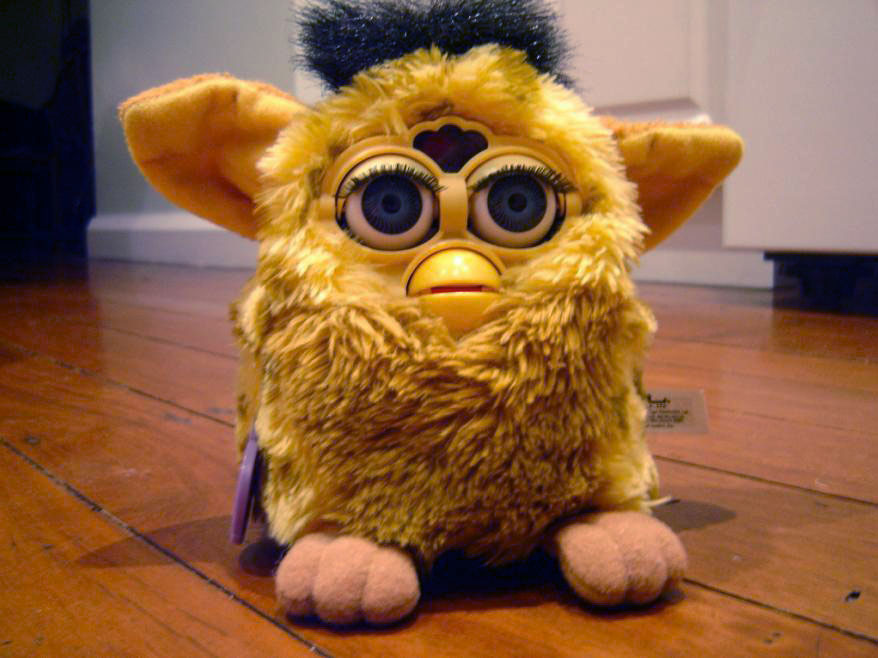
Thus the gross Furby is the embodiment of our too brightly coloured contemporary Christmas and the redundant gifts and trick effects that are part of it. The Marxist historian Eric Hobsbawm is rarely quoted, directly or indirectly, with approval in The Spectator, but here is an exception. Hobsbawm said that the less educated the consumer, the greater his taste for decoration. I do not know that Hobsbawm, who unfortunately died before the relaunch, was aware of the brightly coloured Furby, but he would surely agree that, if temporary decoration may be compared to ludicrous merchandise, his idea applied here.


Perhaps next year the Spectator might like to give someone the space to make the case for house bling, tinny carols and artificial snow rather than giving this so-called "cultural commentator" another chance to parade his ghastly prejudice.

....